
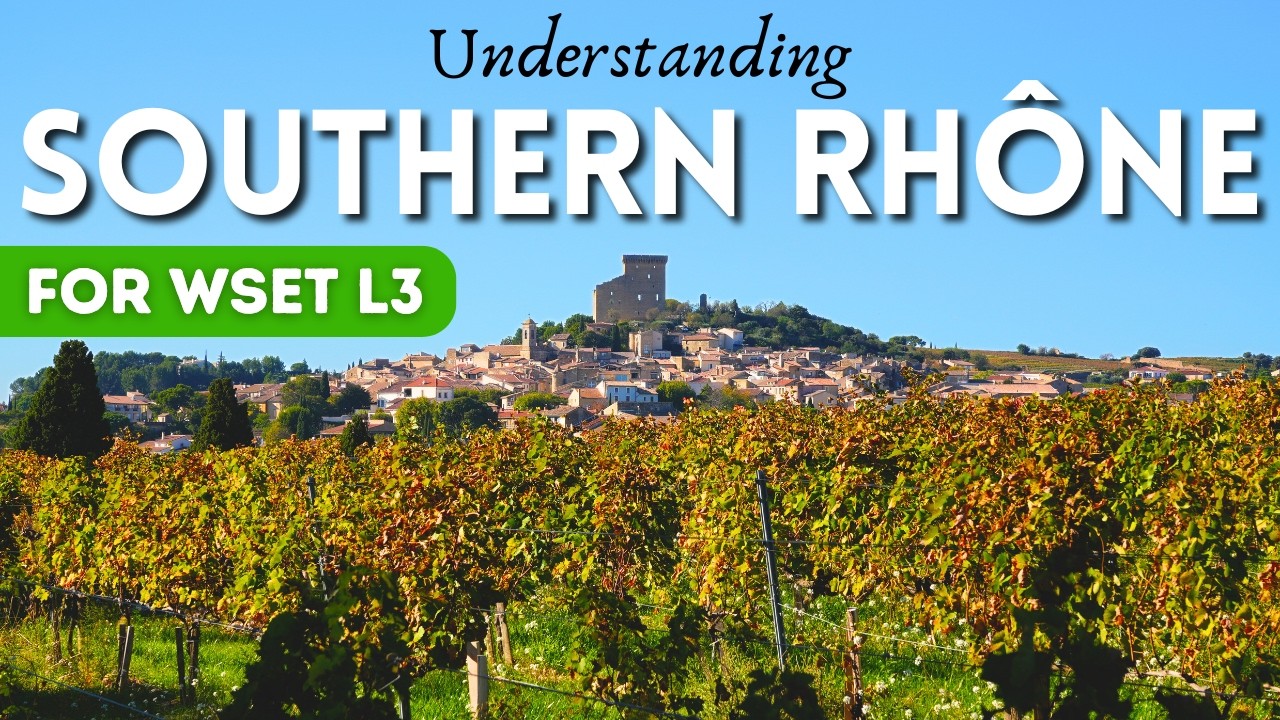
The Southern Rhône is famous for heat, wind, and complex blends. But reading about the “Mistral Wind” is very different from actually standing in it.
In this video, we break down WSET Level 3 Chapter 20 using insights from our recent trip to the region. We explore how the famous Galets Roulés stones actually work, why Grenache is the undisputed king of the region, and the key differences between Châteauneuf-du-Pape and its neighbors like Gigondas and Vacqueyras.
If you are studying for your exams or planning a trip to Avignon, this visual guide will help you understand the landscape, the laws, and the wines.
⏱️ TIMESTAMPS
00:00 – Intro: Southern Rhône Explained
00:45 – Geography: North vs. South Rhône
01:30 – Climate: The Mistral Wind & Galets Roulés
03:10 – The Grapes: Why Grenache is King (GSM Blends)
05:15 – Winemaking: Oak, Concrete & “Anything Goes”
06:50 – Appellations: Côtes du Rhône vs. Villages
07:45 – The Crus: Châteauneuf-du-Pape Deep Dive
09:10 – Alternatives: Gigondas & Vacqueyras
09:55 – The Rosé Crus: Tavel & Lirac
10:45 – Summary & Study Tips
📝 WSET Chapter 20 Study Notes
Climate & Geography: The Mistral Effect The Southern Rhône is much flatter than the North. It has a Mediterranean climate defined by heat and the fierce Mistral Wind.
* The Benefit: The wind dries the vines, preventing fungal disease and allowing for organic farming.
* The Danger: It can break vines. This is why you often see Grenache bush-trained (Gobelet) low to the ground for stability.
* Galets Roulés: The famous large stones of Châteauneuf-du-Pape that absorb heat during the day and radiate it back at night to aid ripening.
The “GSM” Blend Unlike the Northern Rhône (Syrah only), the South is about blending.
1. Grenache (The King): Pale color, red fruit (strawberry/raspberry), high alcohol, low tannin. It provides the “warmth” and body.
2. Syrah: Adds structure, color, and black fruit notes.
3. Mourvèdre: Adds tannin, gamey/meaty flavors, and complexity.
* Other Players: Cinsault (for Rosé and fruitiness) and white grapes like Viognier, Roussanne, and Clairette.
The Hierarchy of Appellations
1. Côtes du Rhône: The baseline. Fruit-forward, simple, mostly red.
2. Côtes du Rhône Villages: stricter yields, higher alcohol, specific zones (e.g., Cairanne).
3. The Crus: The top tier. Includes Châteauneuf-du-Pape (the first AOC), Gigondas, Vacqueyras, Lirac, and Tavel (Rosé only).
—
📍 WATCH NEXT
* WSET Level 3 Study Guides | Visual Learning: https://www.youtube.com/playlist?list=PLHnTZ9m3WPv4VY0whvHWGeqsW22kxTj15
* Châteauneuf-du-Pape Masterclass: https://youtu.be/10o9v_vdQs0
* Southern Rhône Travel Tips: https://youtu.be/viaOojrl9QY
👇 SUBSCRIBE FOR MORE WINE EDUCATION 👇 www.youtube.com/@UCu4Fa-JgtT9gLpgIgtMrHiA
🥂 ABOUT HOURGLASS OF WINE
We are Jacqueline (an american expat working in the wine industry) and Andrea (a native italian with a serious passion for wine), two certified sommeliers (AIS – Associazione Italiana Sommelier and WSET Level 2 & Level 3 holders) on a mission to make the world of wine accessible, fun, and completely snob-free.
Whether you are a total beginner overwhelmed by the wine aisle, a WSET student, or a seasoned winelover wanting to expand your wine knowledge, you have found your home. We break down the barriers of wine with a dynamic mix of education, entertainment, and travel.
We are based in Alba (Piedmont, Italy), right in the heart of the iconic Langhe wine region – home to the famous Barolo & Barbaresco wines.
#SouthernRhone #WSETLevel3 #FrenchWine #ChateauneufDuPape #Grenache #WineEducation #Sommelier #WineStudy #HourglassOfWine
1 Comment
I love your videos – so helpful to see graphics as you explain!