
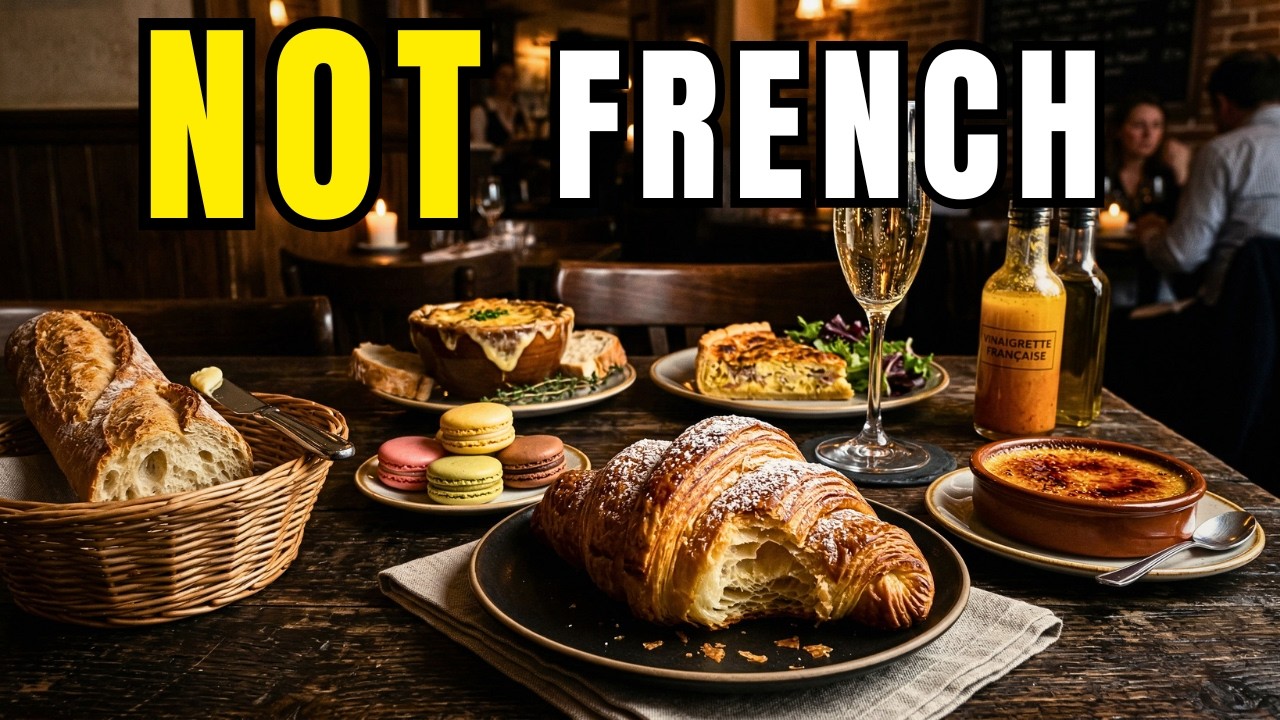
The croissant isn’t French. Neither is crème brûlée. And the baguette? Yeah, we need to talk.
French cuisine is considered the gold standard of the culinary world — but what if some of its most iconic dishes were never actually French to begin with? In this video, we’re uncovering the real origins of 10 foods the world has always assumed belong to France — and the answers are going to surprise you.
From the croissant’s Austrian roots and the Italian origins of the macaron, to a German quiche and a hollandaise sauce that literally named itself after another country — French food history is way more complicated (and way more fascinating) than your average bistro menu lets on.
This isn’t about taking anything away from France. The French are masters of refinement — they took borrowed ideas and turned them into something the whole world fell in love with. But the full story deserves to be told.
In this episode of Where Food Began, we’re tracing these dishes back to their true birthplaces — through medieval Arab kitchens, Viennese bakeries, Catalan dessert tables, and the courts of the Holy Roman Empire — to show you just how far food really travels before it becomes “iconic.”
Whether you’re a food history nerd, a French cuisine lover, a travel foodie, or just someone who can’t resist a good origin story — this one’s for you.
🔔 Subscribe to Where Food Began for deep dives into the surprising, dramatic, and often deliciously complicated histories behind the world’s most beloved foods. New episodes drop regularly.
5 Comments
I realize that the video is an generated, but the images don't always match the food discussed. A bowl of hummus when the food is supposed to be creme brulee?
Stop being lazy!
What if turns into so what😅😅😅
Just wonderful, the script and photography too.😮😮😮😮
👍👍👍🙏🏻💗
The Tasting HIstory with Max Miller YouTube channel has a more deep-dive explanation of how Viennese bakers opened a bake shop in Paris selling Viennese style breads and how that those techniques evolved into the croissant and baguette breads common in France today.