
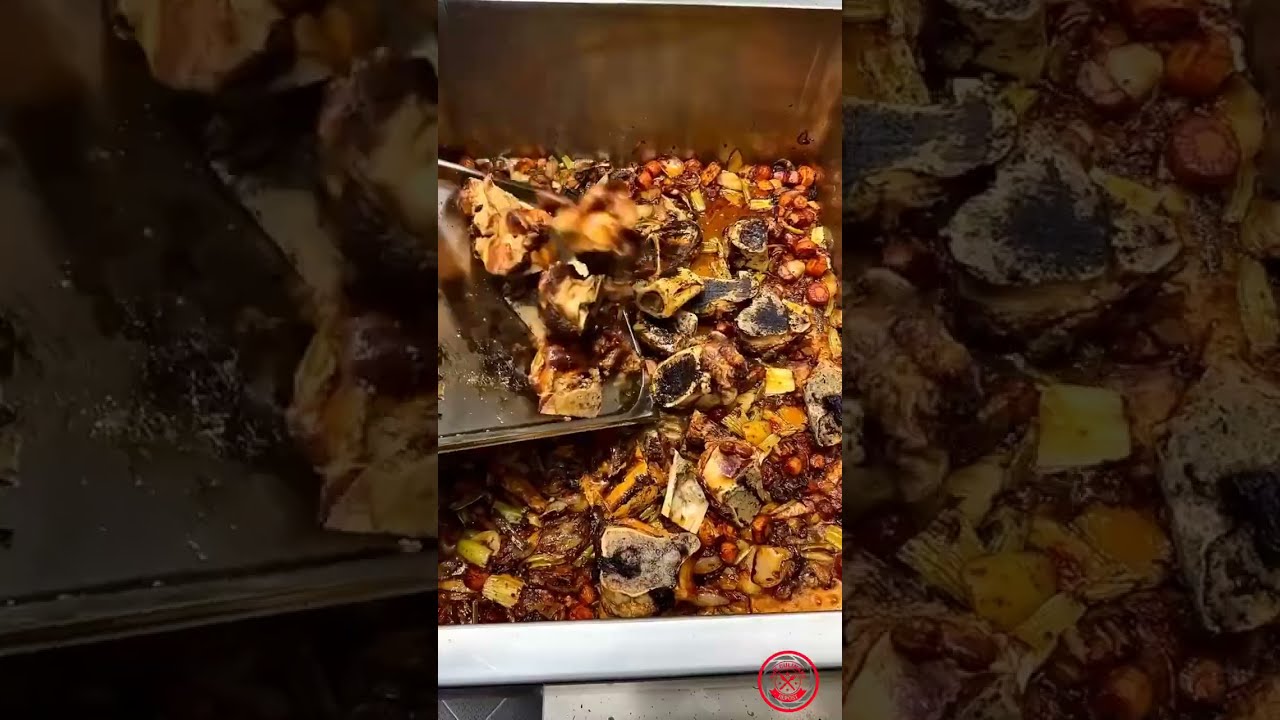
Demi-glace is a foundational sauce in classical French cuisine, built through controlled roasting, extraction, and long reduction. This process is not about speed, but precision—transforming bones and aromatics into a sauce defined by depth, clarity, and structure.
As demonstrated by Osama Saad, the critical skill lies in understanding reduction: knowing when the liquid has reached the point where flavor, viscosity, and balance align. This is where technique separates a simple stock from a true demi-glace.
In professional kitchens, demi-glace is more than a preparation—it is a benchmark. It reflects discipline, patience, and respect for classical method.
Key Takeaway:
Reduction is not just evaporation. It is concentration with control. Push too far and you lose balance; stop too early and you lack intensity.
🔥 Love Culinary Content? Join the Journey! 🔪
If you’re passionate about food, fine dining, and the brilliant minds behind the kitchen — you’re in the right place.
🍽 Subscribe for exclusive chef interviews, culinary storytelling, and inspiring reels from around the world.
• Watch next: https://www.youtube.com/playlist?list=PLNnSv0r3eMxDQ94S8o_utfB6TYCEdh7pO
📲 Follow me on Instagram for daily inspiration, beautiful plating, and behind-the-scenes moments:
👉 @theculinaryrepost
https://www.instagram.com/theculinaryrepost/
Your support helps shine a light on the chefs who inspire us all.
Don’t forget to like, comment, and share — let’s grow this food-loving community together!
#demiglace #frenchcuisine #saucetechnique #culinaryfundamentals #cheflife #finedining #classicalcooking
7 Comments
Sauces❤❤
Why add the ice?
🎉🎉🎉🎉
So the question is how much do you charge for something like that at a restaurant? Just curious cuz I’m poor.
What’s with the ice?
chefs use ice during the clarification phase to help proteins form a “raft” that traps impurities.
It’s the same principle as consommé, but gentler.
The ice encourages the raft to form slowly and evenly.
Ai