
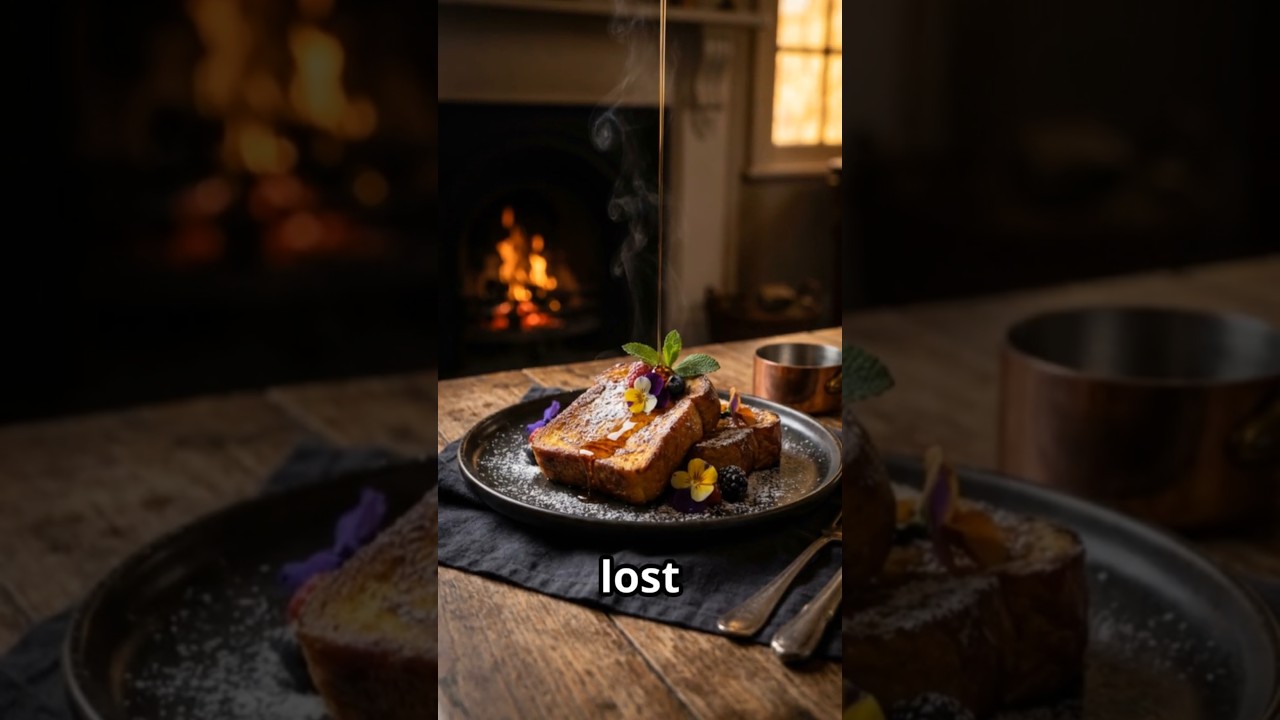
French toast isn’t French. It never was.
The earliest recipe that resembles what we call French toast today comes from a Roman cookbook compiled around the 4th century CE. It was called “Aliter Dulcia” — which just means “Another Sweet Dish.” The instructions were simple: soak crustless bread in milk, fry it in oil, drizzle it with honey. No eggs. No syrup. No France.
Over the next thousand years, every culture in Europe made it their own. Germany called it “Arme Ritter” — Poor Knights bread. France called it “pain perdu” — lost bread. The English gave it the name “French toast” in 1660, in a cookbook that didn’t even use eggs — just wine, sugar, and orange juice.
Today, the dish looks completely different depending on where you are. Spain soaks it in honey and wine during Lent. Hong Kong deep-fries it with peanut butter and drowns it in condensed milk. India skips the sugar entirely and loads it with chilis, onions, and ketchup.
1,600 years. Dozens of cultures. One idea: don’t waste bread.
🔔 Subscribe to Meal Mysteries for more surprising food origin stories.
#FrenchToast #FoodHistory #MealMysteries #PainPerdu #AncientRome #FoodOrigins #Breakfast #Brunch #FoodFacts #HistoryOfFood #Shorts #FoodTok #DidYouKnow #LearnOnYouTube #RomanEmpire #MedievalFood #Torrijas #HongKongFood #IndianStreetFood #BombayToast #ArmeRitter #LostBread #FoodMyths #BreakfastHistory #Apicius
2 Comments
The 1660 English recipe for "French toast" used wine, sugar, and orange juice. No eggs. No milk. Basically a Renaissance cocktail on bread. 🍷🍊 What's YOUR go-to French toast order? Drop it below 👇
Crispy on the outside, custardy on the inside — French toast is the breakfast that makes you feel like you're eating dessert guilt-free.