
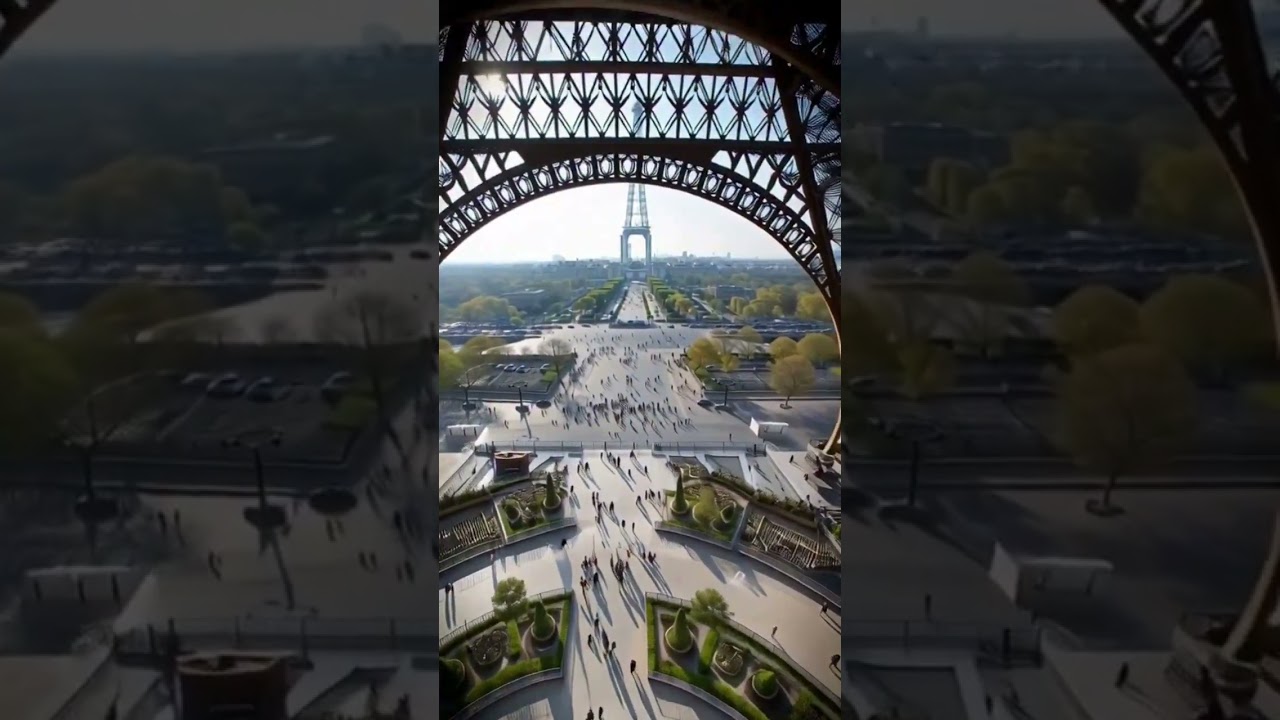
The Eiffel Tower was built between 1887 and 1889 as the centerpiece of the 1889 Exposition Universelle in Paris, marking the centenary of the French Revolution. Designed by Gustave Eiffel, it was initially controversial but became a global symbol of France and modern engineering.
Origins and Purpose
– Commissioned for: The 1889 World’s Fair (Exposition Universelle) celebrating 100 years since the French Revolution.
– Competition: Over 100 designs were submitted; Gustave Eiffel’s plan was chosen.
– Symbolism: Served as the entrance gateway to the exposition and a demonstration of French industrial prowess.
Construction Timeline
– Start date: 28 January 1887
– Completion: 31 March 1889 (just over 2 years, 2 months, 5 days)
– Opening to public: 15 May 1889
Technical Details
– Height: Originally 300 m (984 ft); today with antennas it reaches 330 m (1,083 ft).
– Materials: 7,300 tonnes of iron, held together by 2.5 million rivets.
– Workforce: 150–300 workers on-site, plus 150 in Eiffel’s factory.
– Design: 18,038 metallic parts, 5,300 workshop drawings, 50 engineers and designers.
Early Reception
– Criticism: Many artists and intellectuals called it an eyesore, nicknaming it “the iron monstrosity.”
– Defense: Gustave Eiffel argued it was a triumph of engineering and modern aesthetics.
– Temporary status: Initially planned to be dismantled after 20 years, but its usefulness as a radio transmission tower saved it.
Historical Significance
– Tallest structure in the world from 1889 until 1930 (surpassed by the Chrysler Building in New York).
– Role in science: Used for meteorology, radio, and later television broadcasting.
– Cultural icon: Today, it is one of the most visited monuments worldwide, with millions of visitors annually.
Quick Comparison Table
| Aspect | Detail |
|———————|——–|
| Designer | Gustave Eiffel (bridge engineer) |
| Construction | 1887–1889 |
| Height (current)| 330 m (1,083 ft) |
| Material | Wrought iron, 7,300 tonnes |
| Purpose | Gateway to 1889 World’s Fair |
| Legacy | Symbol of Paris, global tourism icon |
Key Takeaway
The Eiffel Tower began as a temporary exhibition piece but evolved into a permanent global landmark, blending engineering innovation with cultural symbolism. Its survival and transformation into a broadcasting hub ensured its place as the enduring emblem of Paris.
The Eiffel Tower has several restaurants and dining options inside it, offering a unique experience with amazing views over Paris.
🍽️ Main restaurants in the Eiffel Tower
🍷 Le Jules Verne (luxury restaurant)
Located on the second floor (about 125 meters high)
Michelin-starred gourmet restaurant
Led by chef Frédéric Anton
Offers high-end French cuisine with panoramic views of Paris
👉 This is the most prestigious restaurant in the tower, known for fine dining and a very exclusive atmosphere.
La Tour Eiffel +1
🥂 Madame Brasserie (modern Parisian restaurant)
Located on the first floor
Run by chef Thierry Marx
Serves modern French cuisine made with seasonal ingredients
Beautiful views of the Seine and Trocadéro
👉 It is more accessible than Jules Verne, but still elegant and very popular.
La Tour Eiffel
☕ Other dining options
Buffets (on multiple levels): quick meals, snacks, drinks
Macaron Bar (by Pierre Hermé): famous French macarons
Champagne Bar (at the top): enjoy champagne with a breathtaking view
👉 These options are perfect for casual visitors who don’t want a full restaurant experience.
La Tour Eiffel
✨ Experience
Eating in the Eiffel Tower is not just about food—it’s about:
– Dining high above the city
– Enjoying romantic views, especially at night
– Experiencing French gastronomy in a unique setting.