
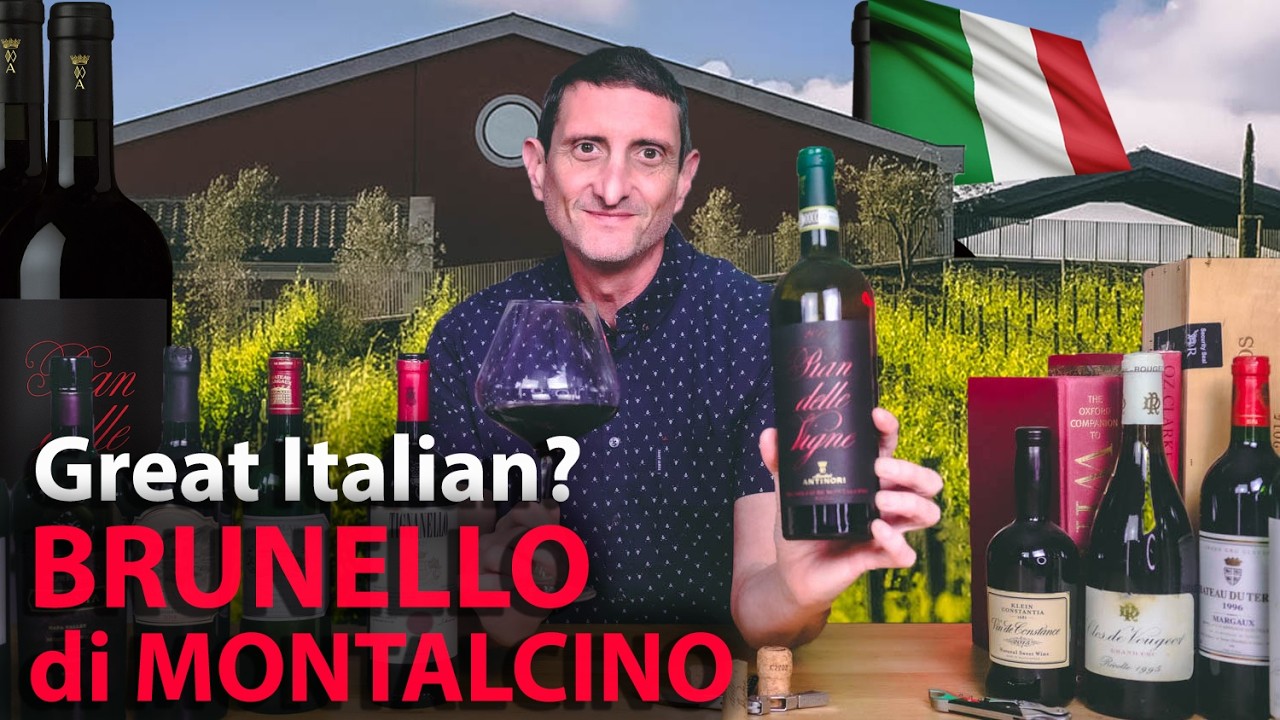
Today, Julien switches from a overview of the Brunello di Montalcino appellation to a practical tasting of a 2017 vintage. The goal is to define the sensory characteristics—flavor, aroma, body, and texture—that constitute a “quintessential” Brunello.
00:00 – Tasting Brunello di Montalcino Intro
01:53 – Marchesi Antinori’s Pian delle Vigne
04:28 – How good is Brunello di Montalcino?
____________
BECOME A WINE EXPLORER!
Want to Taste Rare, Small Batch Wines from Argentina & Around the World?
🍷Click here: https://bit.ly/3T9UI6y
EXPERIENCE EXTREME ALTITUDE WINES!
Want to Taste Wine from the Most Remote Vineyards in the World? (Think 6,000 ft+!!)
🍷Click here: https://bit.ly/3T9UI6y
____________
𝗧𝗵𝗲 𝗣𝗿𝗼𝗱𝘂𝗰𝗲𝗿: 𝗠𝗮𝗿𝗰𝗵𝗲𝘀𝗶 𝗔𝗻𝘁𝗶𝗻𝗼𝗿𝗶
The tasting features a wine from Pian delle Vigne, a 460-acre estate owned by the prestigious Marchesi Antinori family. As the pioneers of the “Super Tuscan” movement (Tignanello), Antinori is cited as a benchmark for quality and consistency. At approximately $70 per bottle, this specific wine sits in the mid-to-high price range for the region, serving as a reliable reference point for the appellation’s standards.
𝗩𝗶𝘀𝘂𝗮𝗹 𝗮𝗻𝗱 𝗢𝗹𝗳𝗮𝗰𝘁𝗼𝗿𝘆 𝗣𝗿𝗼𝗳𝗶𝗹𝗲
The wine is made from 100% Sangiovese, the signature grape of Tuscany. The host notes several key observations:
𝗔𝗽𝗽𝗲𝗮𝗿𝗮𝗻𝗰𝗲: It lacks the deep density of a Cabernet or Malbec, showing a “thinner” intensity. Due to its age (nearly nine years) and time spent in oak, it displays a characteristic brick or orange hue.
𝗔𝗿𝗼𝗺𝗮: The nose is described as “intense yet confusing.” It balances fruit notes, like aged cherry liqueur, with savory elements such as black pepper and black olive. This “funky” aromatic profile initially suggests a tired bottle, but reflects the wine’s complex evolution.
𝗣𝗮𝗹𝗮𝘁𝗲 𝗮𝗻𝗱 𝗧𝗲𝘅𝘁𝘂𝗿𝗲
Upon tasting, the wine reveals the classic structural hallmarks of Sangiovese:
𝗦𝘁𝗿𝘂𝗰𝘁𝘂𝗿𝗲: High acidity provides freshness, while “big, chunky tannins” offer a grippy, food-friendly texture.
𝗕𝗼𝗱𝘆: With 14.5% alcohol, the wine is opulent, warming, and oily.
𝗙𝗹𝗮𝘃𝗼𝗿𝘀: The palate is clearer than the nose, offering a mix of strawberry and fruit jellies alongside stone fruits like apricot and peach. These are underscored by earthy, oaky, and slightly oxidized notes from its maturation process.
𝗖𝗼𝗻𝗰𝗹𝘂𝘀𝗶𝗼𝗻: 𝗔𝗻 𝗔𝗰𝗾𝘂𝗶𝗿𝗲𝗱 𝗧𝗮𝘀𝘁𝗲
The host concludes that Brunello is a complex, “sweet/savory” wine designed primarily for food pairing. Because of its heterogeneous quality and its sophisticated, sometimes polarizing profile, it is characterized as an acquired taste. While not always immediately approachable—even when produced by a major estate—it remains a necessary exploration for any serious wine connoisseur.