
Breath-taking scenery, warm hospitality, world-class cuisine and fine wines: These are the hallmarks of the beautiful Franschhoek Valley in the heart of the Cape Winelands.
When the Huguenots first settled in this spectacular valley over 300 years ago they bought with them their traditions and knowledge in winemaking and viticulture from their native France and transformed the wilderness around them into one of the most beautiful valleys in the world. This proud heritage can be seen and felt today in the Village and on the surrounding farms.
There are a variety of cellars, from small boutique wineries that cater for those in search of something unique, to large cellars that offer organised tours and conducted tastings. Award-winning wines range from plump reds to elegant whites and delicious sparkling wines.
This longstanding tradition of wine making is a perfect complement to the excellent food that is served in any one of Franschhoek’s more than 40 restaurants. Franschhoek is known as the Wine & Gourmet Capital of South Africa and has among its truly talented chefs several who have been awarded the highest national and international culinary honors.
Franschoek Wine Tram
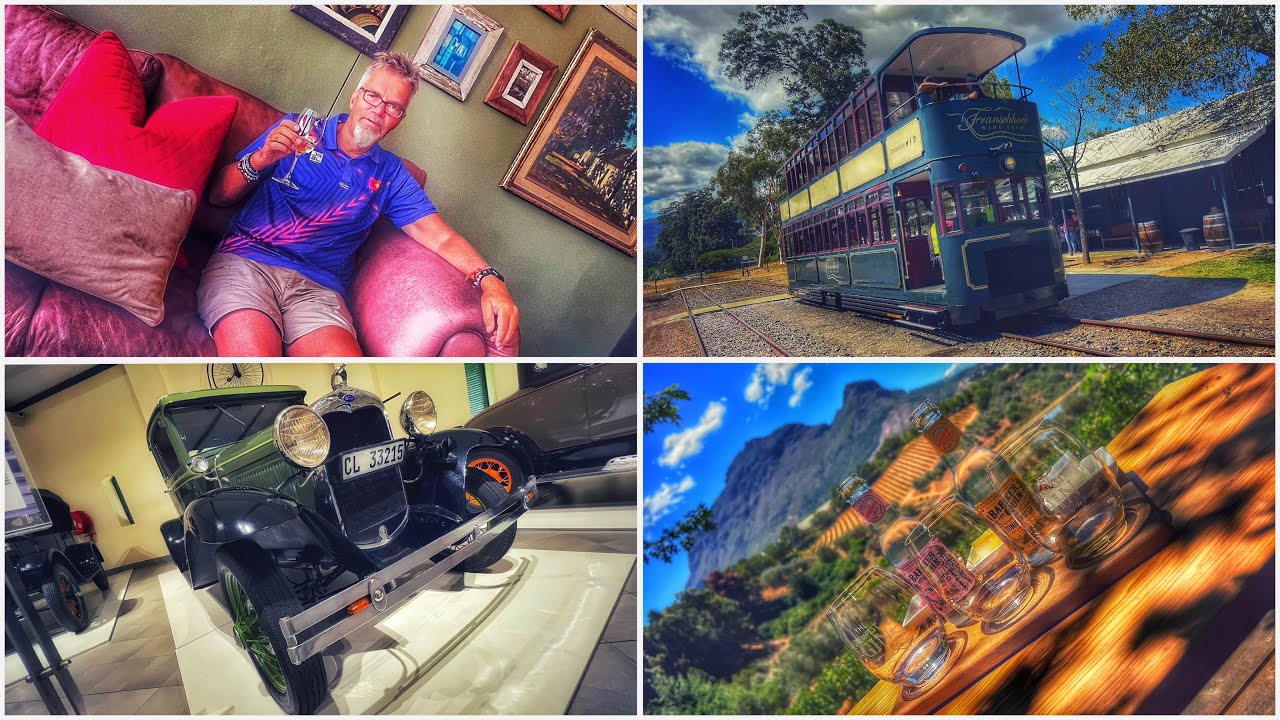
Experience a unique and leisurely way to see the Franschhoek Valley as you journey through rolling vineyards in a double-decker tram and open-air tram-bus stopping at some of South Africa’s oldest and most distinguished wine estates.
This combination of tram and bus transports passengers around a loop of stops allowing you to hop off and experience activities like wine tastings, cellar tours, lunch or simply a stroll through the vineyards. Franschhoek Wine Tram offers eight hop-on hop-off tours giving passengers a variety of wines, views and experiences to enjoy. Each tour is colour coded to make it easy to choose and follow. The tour takes passengers right into the heart of the Franschhoek Valley, with a narration focusing on the history of Franschhoek and wine cultivation in the valley and unparalleled views of the valley and vineyards.
Franschoek
Franschhoek is a small town in the Western Cape Province and one of the oldest towns in South Africa. It was formerly known as Oliphants hoek (as there were vast groups of elephants roaming the valley). It is situated about 75 kilometres (47 mi) from Cape Town, a 45 minute drive away. The whole area, including townships such as Groendal and suburbs such as Wemmershoek, has a population of slightly over 20,000 people while the town proper, known as Hugenote, has a population of around 1,000. Since 2000, it has been incorporated into Stellenbosch Municipality. In 2022, Franschhoek was mentioned in Time magazine as one of the top 50 places in the world to visit.
Franschhoek’s original inhabitants are the Khoisan peoples. They are now mostly extinct, but their descendants continue to live in the area as mixed race (Khoisan and French/Dutch) people. In 1685, King Louis XIV banned Protestantism in France. Hundreds of French Huguenots were forced to flee their country. In 1688, almost 300 French Huguenots arrived at the Cape of Good Hope by ship and they were given the Franschhoek Valley to settle.[citation needed]
The French Huguenot refugees populated the valley establishing farms and businesses, bringing with them their French culture and experience in agriculture. The name of the area soon changed to le Coin Français (“the French Corner”), and later to Franschhoek (Dutch for “French Corner”), with many of the settlers naming their new farms after the areas in France from which they came.[4] La Motte, Champagne, La Cotte, Cabrière, La Provence, Bourgogne, La Terra de Luc and La Dauphine were among some of the first established farms — most of which still retain their original Cape Dutch farm houses today. These farms have grown into renowned wineries. Many of the surnames in the area are of French origin, e.g. Du Toit, Marais, Du Plessis, Malan, Malherbe, and Joubert. The French settlers tried fiercely to hold onto their language, but were forced over generations by the Dutch and British colonialists through schooling to integrate into local society.[citation needed]
This heritage is shown today by the Huguenot Monument which stands at the end of the town. The nearby Huguenot Memorial Museum adjacent to the monument explores the history of the French Huguenots who settled in the Cape, and especially in the Franschhoek Valley. On exhibition are the various tools they used to make wine, the clothes they wore, and interpretation of their culture and goals.
The Cape Dutch architecture in much of the village is unspoiled, as restrictions have been placed on the extent of renovations and new construction in order to preserve the spirit of the original French settlers to the area.
Good morning from Gordon’s Bay which is just along the F Bay Coastline from Cape Town from mberg um and I’m on route to another weekend away this time going to fruk and going to be checking around there a couple of motor museums and it’s a wine District the Hogan hugan o wine
Uh area so there be some wine drank over the next couple of days let’s see what else we get up to check you Later [Applause] For You You J Sh PR Back [Applause] Oh