
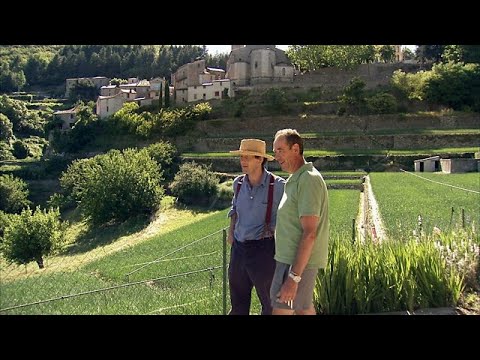
In this, the second programme, he turns to the French love of food and finds out how this has influenced their gardens. Monty travels to some of the most famous ‘potager’ or kitchen gardens, where vegetables and flowers are planted together in elaborate and beautiful displays.
He talks to gardeners about this style of planting which has been copied the world over. He also visits allotments, learns to pick asparagus, enjoys some of the best produce from the land and learns about the importance the French attach to the soil.
Foreign what images does France conjure up for you now for me there are beautiful houses and Gardens of all kinds but also glorious markets Street cafes and some very formative experiences when I was 19 I came to the south of France and lived in Exxon Provence for
Six months and ever since then I’ve Loved France and everything to do with it and I want to share that passion for the country with you through its Gardens I’ll discover what their Gardens reveal about French history the love of food the soil and the Arts and why they value order and structure
So highly I’ll be traveling the byways of the French Countryside this is eating local gardeners tasting the very best of our Harvest sometimes this job is really good getting to turn on huge fountains I can hear the water and trying to find out what makes French Gardens and indeed the French
Today I’m looking into how the famous French love of food translates into their kitchen Gardens It’s a busy weekday Market in Exxon Provost beneath the shade of the plane trees the Stalls are rich with delicious looking fruit and vegetables oh I love a cherry bonjour huh this is not just a tourists let’s see unlike the UK where we buy more of our
Food from supermarkets about a third of French people still buy their fruit and veg from markets like these where the display is all part of the shopping experience if you look at that that’s just beautiful well wouldn’t we just want to have that at home 40 years ago when I first came here it was complete transforming I’d grown up in a Britain where the food was remorselessly dreary and regarded as a bodily function rather than one of life’s great Pleasures so to come here and be exposed to the market and all these Incredible
Vegetables and tastes and the smell of it and to eat food that I’d only heard about and then to connect that with the vegetables that I was already growing at home and realized that perhaps I could grow these too and the connection between what I was doing with my hands
In the soil and what I was eating was life now all these years later I want to see how these fabulous fruit and vegetables are grown The story of the French kitchen garden begins in medieval monasteries and unfolds via the decorative vegetable gardens of the Grand Chateau to Modern Day rules small Holdings one in two French people regularly Buy Local produce because the attachment to a particular region and its soil still has real meaning foreign
Of course it’s fun to drive but in fact a 2cv is exactly the right car for the job hello developed before the last war as an agricultural vehicle are now designed to take uh farmer and his family with a load of eggs to market across rutted Cloud ground without
Damaging the produce that was the important thing they had to be reliable and tough and so it seems to me it’s the ideal car to drive around France looking for that connection between growing gardens food and the land foreign call is in the rugged landscape of the seven
It’s a remote and largely impoverished area and many years ago I made a long walk right across it But today I’m here to visit a nunnery the monastere de Sono which is a first for me The reason I wanted to come to a monastery was because the root of vegetable growing started in the monastic tradition where nuns monks will grow vegetables and herbs for the kitchen and also for medicine and also the process of doing it was a kind of prayer it was devotion
So that tradition actually has continued through to the present day but it starts or started in the monasteries oh in fact they’ve got contact number because they don’t speak so I can only ring them once a week so God they’re there I must remember not to pass him mustn’t
Say hope to goal of stuff bonjour bonjour actually let’s see today is one of the rare days when they break their silence to receive visitors there’s been a monastery on this site since 1300 and the Mother Superior who spoke perfect English showed me around a vegetable garden is very how can we
Say that modest and we can’t really say that it is exemplary on the aesthetic point of view excuse me I’ll just hat as well so how many how many of you work in this vegetable garden There are 16 nuns living here and as well as a rigorous
Regime of prayer they run a winery and they still manage to be almost entirely self-sufficient so you say it’s not a big area I mean it’s a big vegetable garden it is it is it must have worked it is a lot of work but we are a lot of people eating here
That’s fine a lot of people eating is one thing you have to have a lot of people working as well yes yes that’s true these are courgettes are they all squashes or um pumpkins yes pumpkins and courgette we have two cups or everything is sort of like mixed up you’ve got a lot
Yes do we have about one ton production of pumpkins per year what’d you do with them we eat them during the whole winter okay sorry ask a silly question I love all vegetables so you I’m not bored I’ll look at anything you look at anything yeah no so here we have our
Cucumbers right so cucumbers you see growing so lushely and so well outside we struggle to grow cucumbers outside would it be very rude if I cut one and taste it ah not at all whoops I’m dropping my phone I have my glasses so everything always drops out
My pocket I do it at home the whole time so that’s nice oh it’s smell that it’s just yes refreshing all cucumber refreshing so this it’s good it’s not quite right but it’s good do you want some yes I would thanks a lot thank you not quite ready a little bit bitter
I’m afraid I’ve wasted it because it should have been left for a little bit longer don’t worry I suspect that this monastic scene has changed little since his medieval Inception and has the same workman-like mixture a fruit vegetables a medicinal herbs that set the model for all subsequent French kitchen Gardens this is for Real they do not grow vegetables because they like the experience or because it peps
Up their diet they grow a vegetables so that is what they eat if they don’t grow they don’t eat and their choice of vegetables is influenced by that so an awful lot of things that will store a lot of things that grow well here they can’t afford
Play at it in any sense of the world so there is an edge to this a kind of really deep survival seriousness which yet they seem to go through with extraordinary Grace but these are very hard-working efficient busy people yeah a bell marks the start of the brief 20
Minutes break allocated for dinner and I joined the nuns to share their homegrown meal Food is simple but good although alas it’s not a Saints day so no wine and everyone tucks in with Guster accompanied by devotional reading The highly practical medieval monastic guns led to the development of the pottery the French style of kitchen gardening where looks as much as the quality or quantity of food that’s grown and I’m visiting a beautiful example in the liberal a couple of hours East of the Savannah after the unmanicured harshness of this
Event the lubrah seems more affluent sun is still scorching and my little car isn’t made for long-haul Journeys classic 2cb experience caught between two gears I’ve come to the vineyard of vale Johannes to visit its ornate pottery flowers elegantly combine with fruit and vegetables that is a healthy happy hollyhock
Just shows you what they like lots and lots of sunshine The word Protege comes from the French potage meaning soup and originally referred to the patch where the ingredients were grown for the bowl soup that was the Mainstay of most people’s midday meal but this has evolved to become something much more elaborate and has meticulously controlled as the vines that grow all
Around the garden here at valjeinis all the skills and discipline of growing and training Vines can be seen in this Garden they have oak trees trained and growing as very tight strict triangles in fact the smoke trees over there which are just thin little columns with finials on top and joining in lattice
Work and the whole thing the whole garden is a display and expression of the skills of man in controlling plants and that really is the root of the French Pottery it’s controlling food production so not only it looks good but it does what it’s told so this Garden takes the idea of a
Monastic garden and then turns it on its head Rather than existing to grow enough food to see you through winter it is an ostentatious demonstration of wealth power and taste this style of garden began in the north of France but before I head up that way I want to try and get to grips with the
French love of soil okay let’s have a look my guide is Arno Murray valjeanese’s winemaker or Vino we yeah very dry this here is very dry the key to this respect for the soil is the word tawa which is an almost mystical combination of soil and place and gives everyone its
Distinct local character now the soil here it’s very dry laundry perfect lime lime um and how important is it is foreign or can you learn it from a book feeling a good feeling yeah so how does this Alchemy of soil sun and the vine distill itself into a glass
You see here we are improvals beautiful day A Fine Wine chills cheers yes be safe tawa is an elusive concept but it is at the heart of the French relationship to their food and I’ll be seeing how it applies to growing vegetables and other fruit later
Your soil is so stunning yes we have a lot of stone yes yeah yeah yeah well that’s very good but now it’s time to leave the sunshine for a while head north and visit the most famous Protege in the world foreign 500 miles away from Provence and another climate entirely Garden which looks very old was in fact only created just over a hundred years ago based on the notion of what the kitchen Garden might have been like when the Chateau was in its Renaissance Heyday in the 16th century Foreign Gardener I get distracted and be dazzled by the sheer number of celery seedlings 39 40. so there are 40 times four trays that’s 160 trades and each tray takes 20 so that’s one thousand three thousand two hundred pounds how about that I find law in the lovely 18th century
Greenhouse shaped like an upturned boat potting up peppers so how many how many plants do you raise here for the potatoes yes of the 140 000 plants how much is eaten how much has grown to be eaten hello um foreign Told me that the vast majority of the vegetables end up on the compost heap including no less than 30 000 lettuces every year it’s been suggested that in the 16th century it was intended as a display of the exotic plants newly arrived from the Americas a kind of edible Cabinet of
Curiosities to be proudly displayed to visitors which is exactly what it is today of course V laundry has always been popular and very well known but it became especially popular in Britain in the 1980s I think because up until then the model for all the sparring vegetable Growers and social climbers was the
Victorian wall garden and inside that wall Garden you had your vegetables in Long rows and then in the 1980s Rosemary Theory made the potage really popular and that word entered in to gardening fashionable talk how’s your potato they would say in Hackney and Islington and the difference was that you chose your
Vegetables and you laid them out for decorative purposes you still ate them and you still wanted to grow them well but decoration and little box Hedges became part of the scene and of course the model of all that the Big Daddy of all potteries was here of the laundry
The pottages only part of a much bigger and wonderful garden of the laundry but its ornamental rigor sets the tone for the whole place they’re the herb God and even plants like horseradish has had its leaves trimmed on so that all uniform size and length and lovage which my God there’s great explosion
Reaching six foot tall and bursting out all over the place is marshaled into a sort of tight orderly battalion There’s no question to my mind the V laundry is one of the great Gardens of the world and if you’re in France and you have any interest in guns come here but I find the Protege disappointing it leaves me unsettled and I think that’s because function and form have grown too far apart
Where vegetables are not going to eat at all something really essential is lost there’s no sense of becoming of growing of evolving and then of course the pleasure and excitement of harvest and if it’s all just grown to be a static picture it’s just not enough and of course you
Realize it needn’t be vegetables it could be colored glass or wax works and have exactly the same effect nevertheless with its box hedged beds containing uniform ranks of ornamental vegetables there are a thousand gardens around the world including my own that owe a direct debt to V laundry foreign Hundreds of thousands of tourists flocked to Versailles home of France’s most flamboyant ruler Louis XIV he commissioned the Magnificent Gardens here which we saw last week but any of these visitors go just around the corner from the palace to another of Louie’s Creations which in its own way is just as extravagant
This is made for the Sun King Louis coutures in the 17th century and they’ve been growing fruit and vegetables here ever since Place is just huge covering over 23 Acres of wall Garden created to supply the king with fruit and vegetables that he adored I met up with Antoine Jacobson who is the current head guard there are 10 permanent gardeners right so not that many no no no no no no no no
The potato is a superb demonstration of one of France’s great contributions to Horticulture elaborate pruning which is based upon the principle of restricting growth whilst keeping as much fruit as possible and making it look as good as possible most of the tree shapes that we have in
This Garden yeah are 19th century though there’s one just over there that’s uh that is late 18th century which one you show me right here oh this one yes this one here which you never see but in in this case for this shape the idea is to have as
Much light getting to the interior as possible so that we have fruit along all the branches if we want this Branch to have some light we have to take well maybe take this one off and leave this one so that the top ones can continue to uh to be vigorous
So every Branch every stem needs consideration tree gets individual attention yeah and each tree has to be understood I consider it until the end of the 18th century all pruning was limited by what could be achieved with a single bladed curved pruning knife a serpat but then the secateurs were invented by a
Frenchman of course and it was the curved blade and the fact that you could use just one hand meant you could put your hand in holding a pair of Securities and make a very precise cut on quite floppy material and that had the effect of refining pruning and changing the shapes that
Were produced so by the mid 19th century people were pruning their fruit into much more ornative and sometimes really Fantastical shapes all because they could this Protege works for me in a way that V laundry doesn’t and this is precisely because it is a working gun Form and
Function meat and nowadays when the fruit is harvested it’s sold at the Garden gates to pass Us by that’s what a revolution can do for you the decorative Prodigy is France’s most famous kitchen Garden tradition but the urge to grow one’s food is deep in the French psyche These are the Jada or workers Gardens and one of the poorest districts of Paris over 40 percent of those out of work or retired grow some produce for their table as in Britain the allotment movement followed the drift of workers coming from the country into the cities bringing with them their skills and
Experience of growing food eliane W has had a plot longer than most and I’m paying her a visit bonjour hey okay well let’s slip don’t worry foreign potassium foreign Merciable [Laughter] [Laughter] oh that feels like a job it’s so nice even Chutney I think hun 2011. actually Jam that looks like there is something about the Freemasonry of gardeners and particularly allotment ears that transcends nation and age and Circumstance and it’s just filled with a kind of benign easy generosity um
Of course it makes you feel like a bit of a heel turning off well I want to also got I’m taking gifts not leaving anything in return but actually it sows the seeds of something good look there’s other pots of jam in there there’s lettuce there’s all kinds of things me a stranger
And actually the Goodwill that produces does Ripple through and you know there’s something about allotments in these places that is this a lingua Franca it’s different all the flowers and trees are different during the allotment I’ve seen in England but you know where you are you feel at home
Like most of her fellow allotment is Elian was not born in Paris the allotments are the urban version of a tradition that comes from the deep rural heart of France it is nowadays found most readily here back down in the south okay foreign It’s easy to underestimate how very different these two cultures are if the classic kitchen Garden of the north is the rich man’s decorative Prodigy then the South has the productive plot of the PESA who supports his family off the small piece of land I’ve come back to the seven to visit a
Couple I’ve got to know who live a 21st century version of this paisana way of life One of the things that fascinates me but Hazel or peasant is an honorable state in France whereas if you call someone a peasant in England you’re not really being flattering and the peasant culture was very simply just living off the land The Peasants for people who fed themselves
And fertilize their fields and looked after animals off the land they had and it might have been very small indeed now do I go left or right I think I go left and that that Still Remains something that the French practice and more importantly respect and all the food culture
Stems from that that you grow your food on the patch of land you have this is brookin out of Rocky land which was once her grandmother’s Chicken Run they have a small Cafe here and grow almost all the food for it themselves here we are this is where I’m supposed to go
I think I’m lucky okay Here we are God’s grown Nicola Monty how are you I’m very well and very nice to see you’ve got your tooth yeah it took a long time I have them now you look very handsome ah you remember that when I came here last time Nicola was missing one front tooth and he looked
Very dashing and platical I was looking like a pirate you were exactly what I heard how are you watching it’s very nice to see you you’re too hot no way it’s hot it is hot it’s going to be very hot is it is it the Savannah has long attracted an
Alternative lifestyle and the garden does have a touch of the hippie about it but there’s a real charm in the stone paths that Corkscrew around the slopes the loose untrammeled planting The garden Nestles into the wild landscape that surrounds it and provides precious shade from the Searing Sun but unlike the elaborate decorative pottages of the north the vegetables are grown separately on a plot down the road foreign it’s 40 degrees today and yet last winter it went down to -17 ah
A little bit of air hidden Rings yeah a little bit and yet Nicola manages to grow all the fruit and vegetables for his family and for their small Cafe and I want to see how he goes about it the strawberries have they been good this year yes yes perfect
Perfect strawberry likes cold winter cold winter hot summer and water and water what variety are these that’s very good yes it’s like perfume I just look your soil is so Stony yes we have a lot of stone yes yeah yeah yeah but that’s very good because it Heats it hits the Earth so
The stone heats up heats up the Earth and it keeps the water also we have a natural mulch smashes yeah stone is very good for mulching yeah but but quite hard work yes it’s it’s not a easy swipe yes okay they used to say where where I live
They say the soil will break your back yeah maybe break your heart but never break your bank mouth oh yeah yeah I like your tools yes this is more a sap probably yes we say method or in fact where I come from it’s called a stalker and what do you do with
That you chop you chop with you how’s the weed yeah but it must be much more sharp yeah yeah like that or you turn the soil okay okay you you okay like that oh yeah yeah okay so it digs it’s good but here we have this one this is a special seven
Here everybody has one everywhere everyone everyone yeah you see that in England you’re very really nice typical typically from here it’s heavy yes hard work yes hard work it’s quite a hard land so it goes together but this goes really well this is broken one of course yeah like that Nicola doesn’t just grow strawberries he cultivates everything from potatoes to aubergines for 15 different varieties of tomatoes and it’s all organic do you grow all the vegetables or do you have to buy something we buy some in at the beginning of the Season yeah because
We go most of our vegetables but in the beginning of season we have to buy a fuel because we don’t have any plastic tunnel and what about in winter when when you um have this very cold harsh weather do you have enough vegetables for yourselves oh yes we have about potatoes
We eat a lot of soups soups every day yeah midday midday in the evening to think about it and then we eat a little bit more meat or so in Winter to get a little bit fatter yeah past the winter the way that Nikola coaxes so much from
This difficult soil and climate is truly impressive it seems to me to be the embodiment of modern Paisan self-sufficiency and then anyas transforms it all into a pretty playful oh that looks so good wow let’s have a small meal let’s after this walk let’s have a look in the garden
These are goat’s cheese rolled in in a month foreign the trend here as in the UK is for merging smaller Farms to create larger ones although more than a quarter of French Farmers still own less than 15 Acres most of Nicholas neighbors grow just one thing the specialty of the region I go up the other side of the valley to meet his friend Bruno to take a look forward City foreign Oh wow Bruno harvests his entire crop of onions by hand in August and sells them via a small local cooperative it’s interesting what Bruno was saying because his fifth generation of his family to grow onions here and also what I find amazing what’s nice to hear about The 5.6 bill what I find amazing is that not only are onions produced in this very specific region that are acknowledged to be the finest in France but also they have no rotation there have been onions on these Terraces continuously for over a hundred years and they still grow wonderfully well I love the idea of terroir that specific specific combination of place soil and climate which means that one location can produce onions distinct from anywhere else and of course it’s not just onions you see it’s really interesting here you’ve got strawberries from Carpenter and from the ardesh and then different variety there
Now the English Gardener is really familiar with growing different varieties of strawberry and choosing which one they want but the English Shopper tends to just buy strawberries and the real difference to the plants is that the housewife the share the consumer will very deliberately select the variety or the region that food come
Same care that we grow it in England it’s said to be exceptionally proven and they really are you know how the strawberry there’s that moment of bliss when you realize that it’s not just as good as you thought it was going to be but a lot better This love of provenance and terroir is still alive in modern France 26 of farms have disappeared in the last 10 years mostly small Holdings being absorbed by larger farms and for these small farms it can prove a lifeline the dodoin for example used to be a major tobacco
Growing area but now Farmers have had to adapt The Boya family in kazakaya like many others are using the land for a regional specialty I’ve come to see Theory Boya in the old tobacco Fields by the river let’s see let’s see ah voila on plants hey man that’s it a special bronze right the same SASE a good vet is a down downstairs I will let’s see going underneath on the side until I feel it
Oh there’s it right a mist voila good and then another game now these white asparagus are more expensive than our own green asparagus okay in here but the French love them and we’ll pay accordingly um light drains well Rich perfect but what’s also interesting about these asparagus is that they are organic beer
As the French call it and the amount of Bo production has more than doubled in the last 10 years I’m probably a one-way Road who cares there’s one statistic which I find truly enviable the French spend more time eating and drinking than anyone else in the western world
So I want to see what happens when you marry the traditional values of self-sufficiency and respect for local varieties with modern organic production and a Michela starred restaurant there is however a minor hitch I’d run out of cash to pay the ferryman There is something about going by ferry even if it is going across a little Waterway a river exciting it’s it’s an unmodern thing to do it’s an adventure I don’t know what you expect to happen at the other end but it’s different life is going to change somehow
And it’s so short I can get back in the cars I’ll be left stranded hearing into trouble but that’s fine that’s good Although I couldn’t bear this I was allowed across the river Rhone on my way to the camarga marshy stretch of land that merges into the Mediterranean famous for its wild rice and white horses and I’ve come here to visit a restaurant with an unusually intimate relationship with its kitchen guard
Now this is the reason that I’ve come to the command because this restaurant is beer meaning it’s organic it grows all its own veg and was one of the first Organic restaurants to get a Michelin star as the guests eat they look out onto a garden that not only provides most of
The ingredients for their meal it’s also lovely nice to see the cosmos this is Cosmos dazzler am I actually funnily enough just before coming out here planted mine out back home and nothing like as big but look at the way that the new flower is that very rich
Ready color and was Plumbing it fades to a pink it looks lovely just scattered through the vegetables I’m looking for Claude the gardener Claude bonjour way trivia tonight foreign Because it never gets that ripe they have an English Market seem to be much firmer and although it may look less than perfect I can tell you the tea I just want to bite into that and when the taste is fantastic guys it’s enormous that is a Whopper it’s the size of a
Great big baking apple or a small melon and of course what you have is the warmth of the Sun tomato a cold tomato has has far less taste so this is this smells of days of sunshine foreign the flesh here is really solid there’s no there is no
Sort of wet pippy section wait wait it’s got It’s called body this is a muscular tomato this has been in the weight room pumping iron and the result it’s and it’s like a watermelon in in sort of scale it’s got a different protection on it and it’s very very nice it’s lovely These Tomatoes go from the vine to the kitchen in minutes no food could be fresher hello I’m more bonjour how are you good good very good so what are you cooking today we prepare a fish with the tomatoes yeah so we have a these tomatoes olive oil
So that’s just olive oil olive oil and basil and the basil is from the garden yes go ahead ready okay just with the fish with the olive oil like this tomato gonna be used as a seasoning right of the fish does it matter which variety you use for this today
We use because we want to not to acid but concentrate in a lot of density on the Tomato okay so you choose your variety for the day yeah and I also prepare some onions so you just that is all so far all from the garden everything’s from the garden right
So when you organize your menu do you see what’s in the garden exactly is there we can season it’s a garden or detect dictate what what’s going to be in the car okay yeah the idea is to have a restaurant who helps the the garden and not the garden for the restaurant but
That’s unusual isn’t it yes I mean it’s a gardener someone who grows food that is wonderful because when you’re cooking at home you’re going to the Garden you see what’s good you’ve gathered and you cook it yeah so it’s a gallon of decide yeah it’s gonna what’s gonna be for you
Did you did was it did you at home did your parents grow vegetables no but my uh my grandparents used to sell vegetables on the market okay so vegetables is always a part of my life that’s very good I’ll let you get home because I know you’re going to be very
Very busy but thank you very much place is a sample of how the directness of paison culture can be maintained and celebrated without compromising the highest culinary standards foreign it’s been a fascinating Journey from the self-sufficiency of the nuns to the embellishment of valjonis and the uncomplicated flavors of the Savannah
And I’ve seen how the French love of order and control turns pruning into a fine art and vegetables into formal bedding and there is no doubt that the French passion for food goes hand in hand with a pride in terroir and an appreciation that choosing the particular and
Specific will always translate into the best you can eat simple but it’s time to pay a visit to the French kitchen Garden that I think combines all these qualities into one triumphant performance Zin Berry which is in La France profond right in the middle of the country here we go I think this
Seeds in marrying the virtues of a high level of productivity theatrical and playful display and the French Delight in good food all in one glorious Garden The Protege at the ancient Monastery of pra Notre Dame is only 20 years old but it takes its inspiration from the sight and the tenets of medieval monastic Gardens where everything should be both useful and beautiful this is a block of wheat growing in the lawn now you might think that that is
Quirky fun a little bit eccentric but actually it’s very very practical like everything else in this Garden is growing to eat it’ll be harvested and the grains will be ground and made into bread and there’s no reason why you can’t grow anything edible in a garden there isn’t
An area that’s suitable for farming an area that’s suitable for gardening the two can come together and I think that gives an energy to a garden if you’re really going to use it you’re really going to grow it as well as you can but here weather is eaten or not everything
Down just to protection around the crop down to the little snails on top of the bamboos must look good the owner Patrick talavela is an architect turned Garden designer and he’s asked me to lunch I hope you you like the vegetables I love vegetables all these from the garden all is from the garden yes how did you begin the garden there why did you begin the garden here the first summer it was so warm so that I say we have to plant a tree because we
Need shade uh it was everywhere I was reading we had no roof no shed everywhere and we want shade and uh one three two three three trees and then if we make a garden just like that and you’ve never made a garden no no never it’s my first Garden
So why did you want to make a garden that included food vegetables and food because for me a flower I like the flour on the tree because I say there is a fruit after yeah not the flower to cut to put in on the table
I I can do but it’s not my interest Converted Monastery as a small hotel and everything that is grown in the garden is served to the guests as it comes into season there isn’t the gardener that doesn’t use support of some kind of I’ve ever seen a garden where the support systems look so good particularly original but the way that
It’s all put together actually is really inspiring and exciting so this for example these are tomatoes and they’re in wigwams there’s this nice sort of tent-like structure which I’m going to copy a roller coaster lattice work there all to support Tomatoes there’s a playfulness about it that I like because it’s all practical
It’s all standard stuff but there’s a little spark to it although the garden is not particularly big it feels big because it’s subdivided into dozens of compartments it’s easy to get lost with peepholes and Views and a maze of hedge line paths now there’s a reference to Medieval symbolism in all
This following a tortuous road to salvation but it is above all a brilliant manipulation of space space is constricted it’s expanded you’re LED down certain alleys that lead nowhere there are dead ends you have to retrace your steps or little Windows there are doors all this makes it very
Lively and energetic and exciting because you don’t know what’s around the corner I think this Garden weaves together its different strands brilliantly you’ve got the monastic element where monks grow food with devotion we’ve got serious food production which is served to paying members of the public to a very high standard and
You’ve got a garden that is just purely sets out to look beautiful and they all come together I love the way nothing is wasted everything be it a rose or a cabbage is grown with great seriousness but the tone and the way the garden looks and feels has a real playful element
It’s elegant and it’s useful now surely that’s the definition of apology next time I’ll be looking at Gardens of great French artists and considering the question of whether a garden can be a work of art in itself my goodness Foreign
2 Comments
I love this. It makes me yearn for foliage.
Un pur plaisir, cet homme est un prince!