
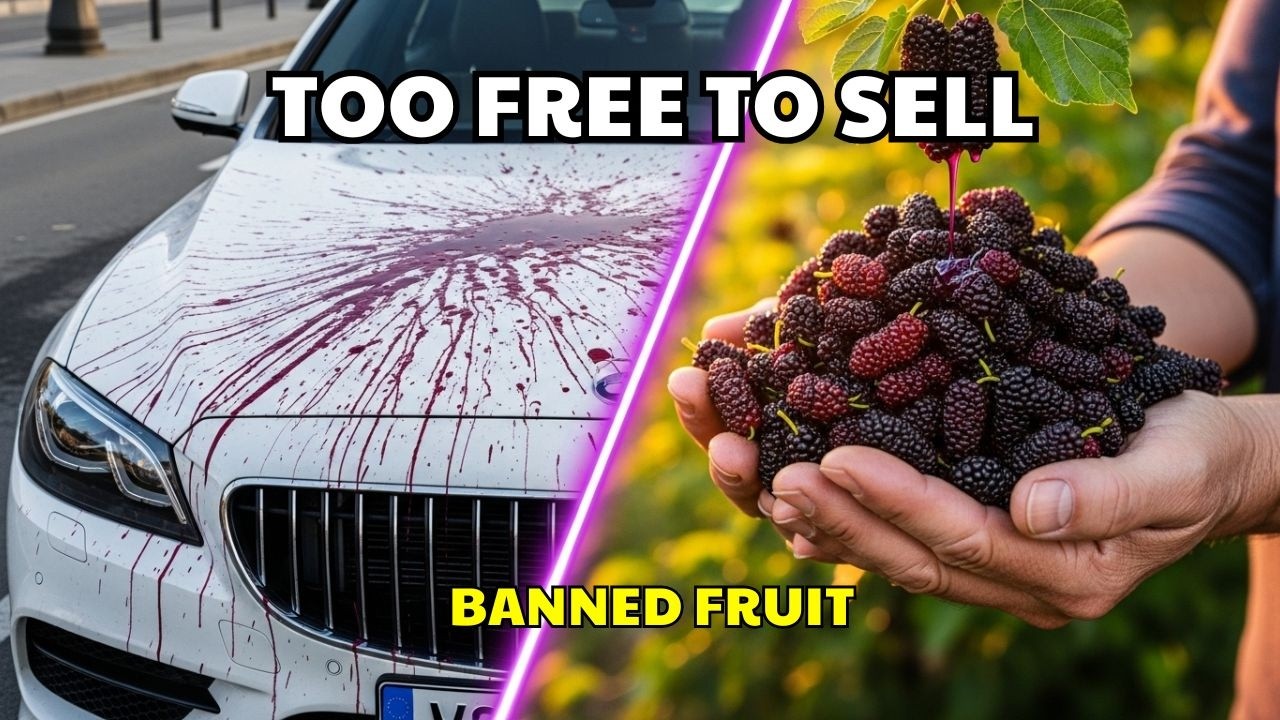
Every June, sidewalks across the Northern Hemisphere are stained deep purple.
It looks like a mess. Most people step over it. Some complain. Cities even ban the trees responsible.
But those stains come from Mulberries — one of the sweetest, most nutritious fruits on Earth… and one you almost never see in a grocery store.
In this video, we uncover the strange paradox of the Mulberry: a fruit that grows so abundantly it rots on sidewalks, yet is completely absent from supermarkets. Sweeter than strawberries, more complex than blackberries, rich in antioxidants and resveratrol — and still labeled a “trash tree.”
Why?
The answer exposes a dark truth about our food system. We don’t eat what’s best for us. We eat what ships well.
Mulberries bleed when picked. Their skin is paper-thin. They crush under their own weight. They last less than 24 hours. In a system built for trucks, plastic clamshells, and global logistics, the Mulberry refuses to cooperate.
We trace this fruit’s forgotten history from the Silk Road to royal gardens, from Indigenous food systems to modern urban planning. You’ll learn how cities banned female trees to avoid “mess,” triggering pollen overload and allergy epidemics — a phenomenon known as botanical sexism.
We also compare Mulberries to the fruits we pay premium prices for, like blueberries, and ask a hard question:
Why do we subsidize fragile, flavorless fruit while destroying one that thrives with zero care?
From foraging tricks and old bedsheet harvests to permaculture, agroforestry, and food commons, this is a story about abundance hiding in plain sight.
The Mulberry isn’t rare.
It’s just too free to sell.
If you believe food should be valued for nutrition and flavor—not shipping durability—share this video.
And if you want to uncover more forgotten food systems and lost abundance, subscribe to Forgotten Crops.
TIMESTAMPS
00:00 The Sidewalk Paradox: Crime Scene or Superfood?
02:14 The Royal Blunder: How King James Failed To Make Silk
03:58 The Villain: Why The Supply Chain Hates Thin Skin
05:41 Botanical Sexism: Why Cities Banned Female Trees
07:48 The Comparison: Why Blueberries Taste Like Cardboard
13:21 The Protocol: How To Harvest 5 Lbs In 10 Minutes
#Mulberry #BotanicalSexism #Foraging
Welcome to [Forgotten Crops] – where we explore the fascinating history of agriculture and the hidden power of plants. 🎙️ This video utilizes AI technology (Text-to-Speech & AI Art) to bring these educational stories to life. The visuals and narration are AI-generated representations. 🔒 We do NOT use deepfakes or replicate the voice/likeness of real private individuals.
Disclaimer: This video is for educational and entertainment purposes only. It is not intended as medical advice. Always consult a professional before foraging or changing your diet. Please note: While historical facts and figures are real, this video uses AI-generated voices and imagery for storytelling.
3 Comments
-;- -:- -;-
-:- -;- -:-
I had forgotten about Mulberry trees as they are now a distant childhood memory
My grandparents had one on their farm in MO. Loved driving the tractor under it to pick the dark purple berries off the tree. It was taken out when my grandfather decided he needed more area for the soybeans and corn. I was livid when I learned what happed. My father killed the grape vine that was planted by our great, great grandfather. So we lost a lot of history back then.