
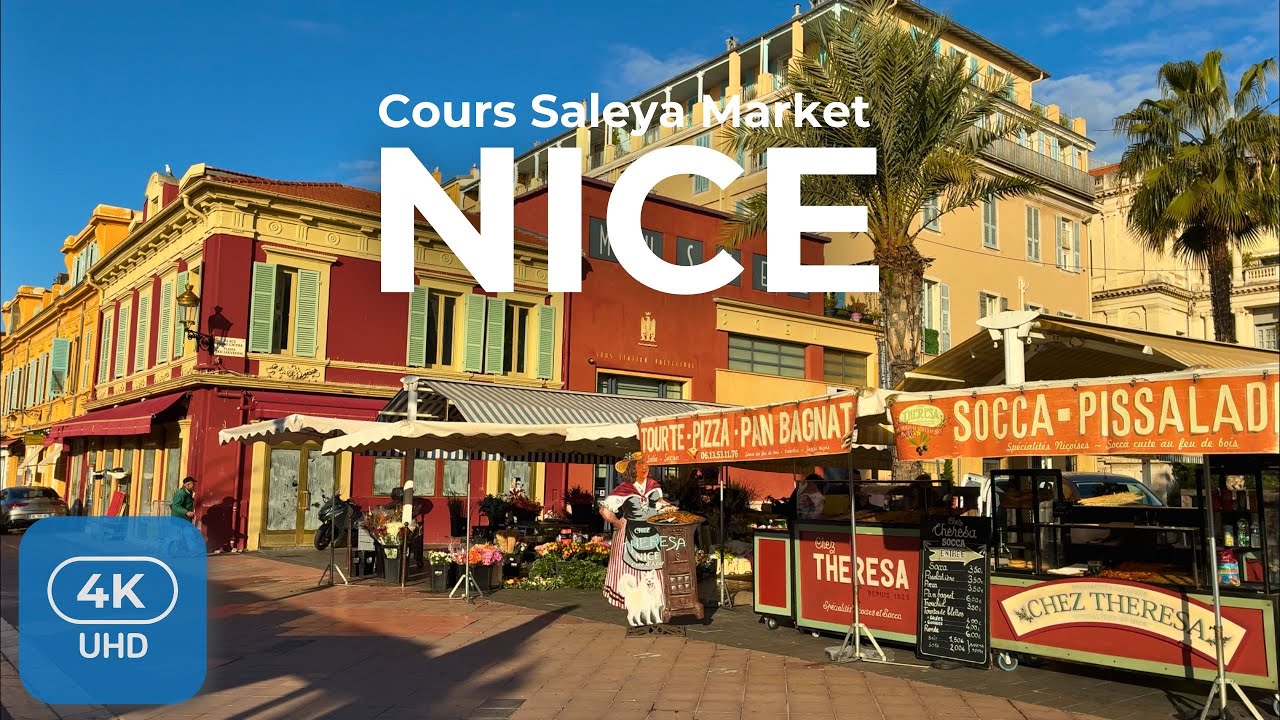
Cours Saleya is not merely a market; it is a living chronicle of Nice’s transformation from a Sardinian stronghold to the crown jewel of the French Riviera. In the 18th century, this area served as an aristocratic promenade where the elite would take their “meridienne” (afternoon stroll). The distinctive low-roofed buildings on the southern side, known as Les Ponchettes, were originally designed as rooftop terraces where the nobility could walk and enjoy the sea breeze, long before the Promenade des Anglais existed.
The market’s global fame was cemented in 1897, when Nice established the world’s first wholesale cut-flower market here. For nearly a century, train cars filled with blooms would depart daily from nearby stations to florists across Europe. Even the great Henri Matisse was captivated by this square, living in the yellow building at the eastern end, where the market’s vibrant colors directly influenced his late-period palette. Today, it remains one of the few places in France classified by the National Council of Culinary Arts as an “Exceptional Market”.
Market Highlights: A Feast for the Senses
Strolling through the rows of striped awnings, you will encounter the very best of Provence and the Côte d’Azur:
Local Delicacies: Massive blocks of traditional Nougat filled with nuts and honey, alongside the famous “Le Côte d’Azur” biscuits, which capture the authentic taste of the south.
Olives & Oils: Dozens of olive varieties—from classic local picks to spicy blends like “Antillaise” or “Marocain”—as well as premium truffles, dried mushrooms, and aromatic olive oils.
Spices & Teas: Collections of rare salts, specialized BBQ rubs, and delicate rose buds used for gourmet cocktails or desserts.
Scents of Provence: A true symbol of the region—mountains of lavender sachets filling the air with a calming scent, and legendary handcrafted Savon de Marseille (Marseille soap) made with shea butter, lavender, or olive oil.
Flower Paradise: Vibrant rows of fresh orchids, poinsettias, and amaryllis, serving as a reminder of the floral heritage that brought this square worldwide fame.
Authentic Street Food: You cannot miss the stalls serving Socca (a savory chickpea pancake) and Pissaladière (onion tart with anchovies), prepared fresh right before your eyes.
Architectural Landmarks of the Square
Chapelle de la Miséricorde (Mercy Chapel) Towering over the market, this chapel is considered one of the ten most beautiful Baroque churches in the world. Built in the mid-18th century, it features a stunning elliptical dome and a lavish gold-trimmed interior. It belongs to the Archconfraternity of the “Black Penitents,” a group historically dedicated to helping the poor in Nice.
Palais des Rois Sardes (Palace of the Kings of Sardinia) The grand building with the colonnade and the French flag is the former winter residence of the House of Savoy and the Kings of Sardinia. It was here in 1860 that the official ceremony for the annexation of Nice to France took place. Today, it serves as the Prefecture, and in 2001, it was the site where EU leaders signed the historic Treaty of Nice.
3 Comments
Welcome to the vibrant heart of Old Nice! 🌸 We hope you enjoyed this morning stroll through Cours Saleya. From the golden walls of the Chapelle de la Miséricorde to the legendary scent of lavender and fresh Socca, this place truly captures the soul of the French Riviera.
We’d love to hear from you: 1⃣ Which part of the market was your favorite? The flowers, the local treats, or the stunning architecture? 2⃣ If you’ve been to Nice, what is the one thing everyone MUST try here?
Let me know in the comments! 👇
Très beau marché avec de belles couleurs 🥰 un travail encore magnifique que vous avez effectué 🥰
Bonjour😊Je connais un peu Nice.C'est magnifique❤Merci pour ta très belle vidéo👏👏