
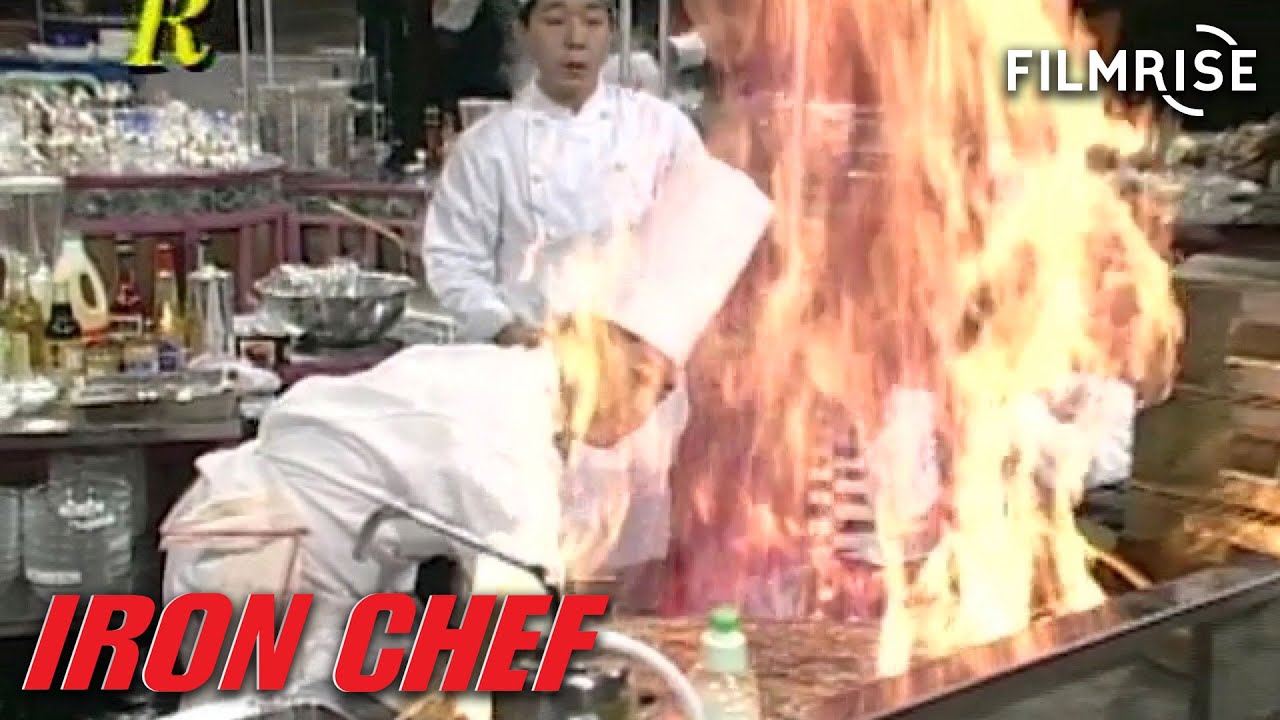
Shigeo Yuasa is the head chef of the Okayama International Hotel. With test tubes and litmus papers, Yuasa uses shocking cooking techniques to get his meals to exacting pH levels.
“Iron Chef” is an innovative cooking competition from Japan combining the excitement of a one-on-one sports competition with gourmet cooking.
#IronChef #cooking #competition #cookingshow #cookingcompetition #clips #best #classic #kobe #gameshow #Japan #Englishdub #chefs #culinary #battle #gourmet #announcer #comedy
[MUSIC PLAYING] KENJI FUKUI: Nearly a decade ago, a man’s fantasy became reality in a form never seen before, Kitchen Stadium, a giant cooking arena. The motivation for spending his fortune to create Kitchen Stadium was to encounter new original cuisines which could be called true artistic creations. Allez cuisine!
KENJI FUKUI: To realize his dream, he started choosing the top chefs of various styles of cooking. And he named his men the Iron Chefs, the invincible men of culinary skills. Iron Chef Japanese is Rokusaburo Michiba. Iron Chef French is Hiroyuki Sakai. Iron Chef Chinese is Chen Kenichi.
And Masahiko Kobe is Iron Chef Italian. Kitchen Stadium is the arena where Iron Chefs await the challenges of master chefs from all over the world. Both the Iron Chef and challenger have one hour to tackle the theme ingredient of the day. Using all their senses, skills, creativity,
They’re to prepare artistic dishes never tasted before. And if ever a challenger wins over the Iron Chef, he or she will gain the people’s ovation and fame forever. Every battle, reputations are on the line in Kitchen Stadium where master chefs pit their artistic creations against each other. What inspiration will today’s challenger bring?
And how will the Iron Chef fight back? The heat will be on! TAKESHI KAGA: If memory serves me right, when the Japanese royal family visits Western Japan, they often stay at a certain hotel, Okayama International Hotel, otherwise referred to as the state guesthouse of the West.
The royal family enjoys their meals in this very room. And the man who is in charge of all the dishes served is quite an interesting person, a veteran French chef. But curiously, he has a set of litmus papers in his kitchen and is always checking the acidity and alkalinity
Of the food that is served. Today’s challenger hails from the guesthouse of the West, head chef of Okayama International Hotel, Shigeo Yuasa. He left for France when he was 23 years old. His aggressive style of trying to absorb all the skills he’s ever encountered earned him the nickname Kamikaze in the kitchen.
Counting the next two sets of long stays in France, he received training for a total of four years at top restaurants. And it was when he was in France for the third time that he was exposed to a new philosophy of cooking. At that time in France, the word cuisine minceur
Was becoming a buzzword. It was the arrival of health consciousness in the world of French cuisine as well. And Yuasa was more than influenced. And after returning to Japan in 1987, recruited to head the kitchen of Okayama International Hotel, he started to adjust the acidity and alkalinity of his dishes,
Tailored to the health conditions of his guests by teaming up with a physician, thus establishing his original style of cuisine minceur. And his ultimate goal is to complete a protocol of French cuisine that is perfect for Japanese people. We need to design food that matches Japanese people in an ethnic sense.
All sorts of health problems will arise if we don’t. We may be entering an age where we are not able to say French is the king of cuisine. TAKESHI KAGA: This man is making a difference. And he proves this with his dishes, suggesting new French recipes that suit
Japanese people’s physical conditions as well as tastes. His approach and personality are quite well known among the royal family. Prince and Princess Akishino enjoyed their visit to Okayama when the princess was pregnant. Yuasa prepared a special dish, taking into consideration the physical condition of the princess. This was highly appreciated.
So now, Yuasa, I look forward to your creations that the royal family speak highly of. I compete against myself. Winning or losing is not important. Well, I’ll give it all I have [MUSIC PLAYING] KENJI FUKUI: Once again, we have a chef with an impressive resumé stepping into the stadium.
And our guest for today’s battle is actress Yasuko Matsuyuki Thanks for coming in. Nice to be here. KENJI FUKUI: I understand you often go abroad for many of the films in which you appear. So what kind of food do you like best since you’ve had all kinds? Well, let’s see.
I guess Japanese food. KENJI FUKUI: Oh, still Japanese. – . Yes. – OK. Well, today’s challenger has a novel approach to French. So enjoy that today. Yes Thank you. And as always, our commentator Dr. Yukio Hattori. Doc. Always a pleasure. All right let’s bring him on. Chairman Kaga. [APPLAUSE]
KENJI FUKUI: All right. A man who resides next to the calm waters of the Seto Inland Sea, facing the crashing waves of battle in Kitchen Stadium, Yuasa, with his new style French food fit for royalty. Yes. I sure do. KENJI FUKUI: Making their ascent in the Kitchen
Stadium, the nation’s culinary leaders, your Iron Chefs– Iron Chef Chinese Chen Kenichi, Iron Chef French Hiroyuki Sakai, and Iron Chef Japanese Rokusaburo Michiba. Here they stand, the invincible men of culinary skills. Sakai-san, please. KENJI FUKUI: Yes, sir, . a strictly French affair. Yuasa, no hesitation going for Iron Chef French Hiroyuki
Sakai, one of the first chefs to fuse Japanese techniques and French recipes. And for his artistic use of color, he’s known as the Delacroix of French cuisine. And already, Sakai is getting fired up for this one. [MUSIC PLAYING] KENJI FUKUI: A chef who cooks for the imperial family
When members visit Western Japan, challenger Yuasa, taking on Iron Chef Sakai. All French cod, the theme. We are set. Let’s get it on! Allez cuisine! KENJI FUKUI: Bang a gong. We are on. Iron Chef French Hiroyuki Sakai, challenged today like he hasn’t been in some time.
Top flight opponent on the other side. And the fish up there, the cod, they are humongous. YUKIO HATTORI: Yes, they are. KENJI FUKUI: Males, females up there. Any way which– can you catch which ones they’re taking? YUKIO HATTORI: Well, you can’t really know. Actually, you have to open it up because they’re
Very similar in size. KENJI FUKUI: All right. They don’t get any fresher, on ice, still kicking. And today’s challenger serves the imperial family. Matsuyuki-san, I think I’ve seen you play one of those roles somewhere along the way. And also when you think of cod, what dishes spring to mind?
YASUKO MATSUYUKI: Well, soft roe. YUKIO HATTORI: OK. Yeah. Well, that’s what we’re looking at right there. KENJI FUKUI: All right. A load of roe. YUKIO HATTORI: Yep. That’s the soft roe of codfish. KENJI FUKUI: Man alive, look at that. YASUKO MATSUYUKI: This is the first time for me to see this.
YUKIO HATTORI: Some fishers– fishmongers they call it kikuko because it looks like chrysanthemum flowers. KENJI FUKUI: All right. YASUKO MATSUYUKI: I see. KENJI FUKUI: And so this would be a male. YUKIO HATTORI: Right. And the males are actually more expensive, probably twice that of the females. KENJI FUKUI: Incredible.
YUKIO HATTORI: Especially during the wintertime. KENJI FUKUI: So the challenger, quickly in and right away getting the soft roe. YUKIO HATTORI: Well, in France, cod is a delicacy. KENJI FUKUI: And on the other side, Iron Chef Sakai looks like the same thing here. YUKIO HATTORI: You’re right. He’s going a male there.
KENJI FUKUI: He’s liberating the roe. YUKIO HATTORI: Yeah. He chose right as well. KENJI FUKUI: Right off the bat, soft roe versus soft roe. Both choosing males. YUKIO HATTORI: Exactly. Yeah. SHINICHIRO OHTA: Fukui-san. KENJI FUKUI: Yes. SHINICHIRO OHTA: When challenger Yuasa heard the theme
Ingredient was going to be cod, he said, cod, I’ve never even touched one before. I don’t know how to use that. OK. Fine. He was not a happy camper. Back to you. KENJI FUKUI: Well, what do you know? YUKIO HATTORI: Well, you know in French cuisine, sauces are the key to everything, right?
So like, for fish dishes, sauvignon, beurre blanc, or hollandaise sauces are common. So I think we’ll probably see some of those today. KENJI FUKUI: All right. From the men on each side. And I imagine when he’s making sauces, Yuasa also will use his litmus paper, test that out. YUKIO HATTORI: Yeah.
I imagine he will, to check the alkalinity of the sauces. KENJI FUKUI: All right. Now the challenger. Whoa! Look at this. YASUKO MATSUYUKI: So dynamic. KENJI FUKUI: Putting some muscle behind that. For what, though? YUKIO HATTORI: I’m guessing probably for a broth, as a soup. The bones are–
KENJI FUKUI: Is he throwing them away? YUKIO HATTORI: No. KENJI FUKUI: That is wild and sounds more like a rumble in the jungle there. Does not fit the image of the genteel world of French cuisine. He has his own style, this man. Yuasa, on the attack, boom, boom, boom.
YUKIO HATTORI: Rather a primitive use of a knife, isn’t it? KENJI FUKUI: You know, I’ve never seen that particular kind of knife here in the Kitchen, that one Yuasa has. YUKIO HATTORI: No. I imagine that he brought it along with him. KENJI FUKUI: Looks like it’d be just right on a pirate ship.
All right. Now back to Sakai YUKIO HATTORI: Oh. We’ve got Omar lobster. KENJI FUKUI: OK. Omar lobster, a French variety, boiling away right there. Sakai with lobster. And here the– YUKIO HATTORI: The claws only, right? KENJI FUKUI: And these are prawns, perhaps? YUKIO HATTORI: No. I think that’s actually lobster meat.
KENJI FUKUI: OK. And he’s dropped that in too. YUKIO HATTORI: Yeah. Boiling those up. KENJI FUKUI: Got it. Now on Yuasa side. And I think he’s got a bowl of dough there beside that. YUKIO HATTORI: Oh, really. KENJI FUKUI: Yeah. Next to this one. And what do you think this is?
YUKIO HATTORI: Well, he’d be marinating the fillets with herbs and other things. KENJI FUKUI: There’s the dough right there, if I’m not mistaken. YUKIO HATTORI: Yes. It is a dough. KENJI FUKUI: I wonder what that’s for. A pie, perhaps. YUKIO HATTORI: It could be. It might be making a paté pantin.
KENJI FUKUI: In words we can understand, please. YUKIO HATTORI: Anything with a meat, fish, or pretty much anything, wrapped in pie sheets. KENJI FUKUI: OK. YUKIO HATTORI: It’s called paté pantin. KENJI FUKUI: All right. YUKIO HATTORI: So wrapped up. And the dough by itself is different. SHINICHIRO OHTA: Fukui-san.
KENJI FUKUI: Here’s the Iron Chef. Yes. SHINICHIRO OHTA: Getting back to the Iron Chef’s reaction upon hearing that the ingredient was going to be codfish. By the stunned look on his face, I thought he was a little shocked at first. But later when I actually asked him,
He said, well I don’t use it that often in my kitchen. But I think I can do lots of interesting things with it. Just leave it to me. He sounds like he’s OK with it. KENJI FUKUI: All right. So Sakai, sounding a bit more confident than Yuasa. And look at this
YUKIO HATTORI: Hay, hay, hay. KENJI FUKUI: Hay. Is he losing it already? YUKIO HATTORI: I have– I have no idea. Making– he wouldn’t be making natto, would he? KENJI FUKUI: I don’t know what he’s going to be doing with this. . My goodness. And now the hay on the ground.
What is going on here? YUKIO HATTORI: Oh, boy. I have no idea. What’s he doing? KENJI FUKUI: A picture is worth a thousand words, huh? Sometimes 1,000 aren’t enough. YUKIO HATTORI: Interesting. SHINICHIRO OHTA: Fukui-san. KENJI FUKUI: Yes. SHINICHIRO OHTA: First of all, the dough the challenger had
Set aside earlier was made from flour, egg whites, water, and salt. And he plans to encase a whole cod in it and bake or grill it somehow. But the way he’s going to do it is a surprise. This hay was being used for decoration. And he’s evidently going to burn it as fuel.
KENJI FUKUI: Well, that’s going to be a first. YUKIO HATTORI: Definitely. KENJI FUKUI: Wish for good luck on that. YUKIO HATTORI: Oh, boy. Never seen that. KENJI FUKUI: Now back with the Iron Chef, the more sedate Sakai here. YUKIO HATTORI: I believe this will be for steaming later. KENJI FUKUI: OK.
A more conventional approach there from the Iron Chef. And now what is happening with this one? YUKIO HATTORI: Oh. Those are the innards. KENJI FUKUI: All right. YUKIO HATTORI: Yeah. KENJI FUKUI: You know, which one exactly? YUKIO HATTORI: I believe it’s the stomach. SHINICHIRO OHTA: Fukui-san. It is the stomach, yes.
KENJI FUKUI: All right. YUKIO HATTORI: All right. KENJI FUKUI: Oh, look at this. Now right here challenger’s side, YUKIO HATTORI: Bamboo leaves. KENJI FUKUI: OK. Laying them on the dough right there. YUKIO HATTORI: Yeah. KENJI FUKUI: This man does not lack for originality. And I wonder if this is the first time
Where he has tried this before. YUKIO HATTORI: It doesn’t really matter. It’s certainly fun to watch. KENJI FUKUI: OK. And this is the one we saw earlier, the marinated cod filet, onto the bamboo leaves. YUKIO HATTORI: Yeah. KENJI FUKUI: All right. Continuing with that. YUKIO HATTORI: That looks good.
SHINICHIRO OHTA: Fukui-san. KENJI FUKUI: Yes. SHINICHIRO OHTA: I can give you the seasonings for those cod fillets– garlic, tarragon, olive oil, ginger, scallions, shallots. And let’s see what else. No, that’s it. Back to you. KENJI FUKUI: All right. Thanks, Ohta. YUKIO HATTORI: OK. That’s interesting. KENJI FUKUI: And that’s where the garlic aroma
Has been coming from. YUKIO HATTORI: Yeah. I noticed that too. It’s getting pretty– pretty strong over here. KENJI FUKUI: Although maybe the Iron Chef too has contributed to the aroma of garlic wafting over our way. 15 minutes gone now. Challenger Yuasa, fashioning a pie here, getting the dough
Folded over and paper towel in it. Matsayuki-san, have you ever seen anything like this? YASUKO MATSUYUKI: Oh, never. Not at all. He added a sheet of paper. KENJI FUKUI: Yeah. Like a paper towel. I guess that would be there to absorb any excess liquid inside as it cooks. YUKIO HATTORI: You’re right.
KENJI FUKUI: Yeah? YUKIO HATTORI: Yeah. Do you remember, boy, when was that? A while ago, someone made a pie using sea bass. KENJI FUKUI: Oh, yeah. YUKIO HATTORI: You remember that with the choron sauce. Remember that? KENJI FUKUI: Yeah, yeah. YUKIO HATTORI: It’s kind of the same as that. KENJI FUKUI: OK.
And going to be roasting this one in the oven with the straw there. YUKIO HATTORI: I imagine so, string it together and into the oven. KENJI FUKUI: Hay now, all you cookers, heat to penetrate inside there. YUKIO HATTORI: So this whole thing will be roasted then. YASUKO MATSUYUKI: Interesting.
YUKIO HATTORI: So you know, the visual pattern too is going to be very interesting, the way this is done. KENJI FUKUI: OK. And now Yuasa, look at that. YUKIO HATTORI: OK. So he’s going to char the surface first, I guess. KENJI FUKUI: So this first and then in the oven.
YUKIO HATTORI: That would be my guess. Because I don’t think this by itself will cook it KENJI FUKUI: No way. YUKIO HATTORI: I don’t think so. KENJI FUKUI: And safe to say so far, the two chefs in different operating modes. The challenger, he has been the wild and bold one so far.
YUKIO HATTORI: And look at this. He’s pouring oil all over– KENJI FUKUI: Is he going to set that thing off right here? YUKIO HATTORI: That’s what it looks like. KENJI FUKUI: Unbelievable. Watch out over there. YASUKO MATSUYUKI: Oh. KENJI FUKUI: Let’s see. YUKIO HATTORI: Let’s see. Whoa. YASUKO MATSUYUKI: Oh, it’s a bonfire.
KENJI FUKUI: No, no. This is a forest fire. Watch out over there, people. That one’s on fire big time. YASUKO MATSUYUKI: Oh, my gosh. KENJI FUKUI: Watch out over there, people. That one’s on fire big time. YASUKO MATSUYUKI: This is amazing. KENJI FUKUI: I might have to call 911.
That is some serious flammola. Man alive, it’s getting warm in here. But the dish, isn’t that one going to get burnt? YUKIO HATTORI: Well, you know after– after he does this, I still think he’s going to have to put it in the oven to follow it up. KENJI FUKUI: Unbelievable.
And man, here is the moment. Those flames, just shooting up. Look at the size. YASUKO MATSUYUKI: Incredible. KENJI FUKUI: Let’s see it again. Almost 10 feet up, I’d say. That’s it. That’s the record here, the flammability factor. And that fire is still going over there on his side.
YUKIO HATTORI: Wow. KENJI FUKUI: Incredible. YUKIO HATTORI: It is. KENJI FUKUI: Yuasa– SHINICHIRO OHTA: Fukui-san. KENJI FUKUI: Yes. SHINICHIRO OHTA: You know, I asked Iron Chef Sakai what he thinks about the challenger’s dynamic way of doing things. And he just kept going about his business,
Saying that doesn’t have anything to do with me. I’ll just stay on track making my own dishes my own way. KENJI FUKUI: All right. Well, while we were all fired up by Yuasa’s wild display there– it’s still burning too– the Iron Chef, oblivious to all this Kitchen Stadium,
Barbecuing going on over this way. Yuasa has definitely garnered some style points through the first half. But no category in the scoring for those. And Sakai, just focusing on doing his thing as way. The Iron Chef French has won his last four battles– the strawberry, desert, turnip, apple, asparagus battles SHINICHIRO OHTA: Fukui-san.
KENJI FUKUI: Yes. YUKIO HATTORI: In this blender, Iron Chef Sakai has scallops and soft roe. KENJI FUKUI: All right. Thanks. YUKIO HATTORI: OK. KENJI FUKUI: And also a processed blend of scallops and soft roe. That would lead one to think– YUKIO HATTORI: Probably a soup or something that’s going to be steamed.
It can go either way on that one. KENJI FUKUI: All right. The Iron Chef trying to win his fifth in a row. And now the fire on the challenger side, dying down. The crackling of the burning straw, I don’t hear that anymore. And we’re up close, looks like some detail
Work being done by Yuasa. I believe this might have come out of the steamer, Correct? YUKIO HATTORI: I think you’re right, Yeah. And I’m assuming a royale or a soup. KENJI FUKUI: OK. You know the fire, I said it was dying, it’s not yet dead. YUKIO HATTORI: No.
You can still see the burn– KENJI FUKUI: Unbelievable. YUKIO HATTORI: I didn’t think he’d be doing it this long. KENJI FUKUI: That’s enough to have cooked it all the way through. YUKIO HATTORI: You know, that might just be his plan. KENJI FUKUI: So this might not end up going over to the oven
After all. YUKIO HATTORI: I thought so. But maybe not. KENJI FUKUI: OK. But when would you know to stop? And still on that side, OK, truffles, truffles and foie gras, both in there. YUKIO HATTORI: Oh, boy. That’s a nice combination. KENJI FUKUI: I’m sure he served something like this to members
Of the imperial family before. YUKIO HATTORI: He’s being very bold, throwing in those two things. KENJI FUKUI: All right. Challenger Yuasa, now back with the Iron Chef. Looks like his scallops soft roe plastic wrap below. YUKIO HATTORI: Yeah. I imagine this is to dip into boiling water.
KENJI FUKUI: Boil these then. YUKIO HATTORI: Right. That would be boiling the whole thing. KENJI FUKUI: All right. The stuff that he blended. YUKIO HATTORI: Right. Straight out the blender. SHINICHIRO OHTA: Fukui-san. KENJI FUKUI: Yes. SHINICHIRO OHTA: Yeah. You’re exactly right. This is the purée from the blender,
The scallops and the soft roe, with the addition of salt and pepper, fresh cream, and eggs. KENJI FUKUI: All right. And after these are cooked, I wonder which way he will finish them. He could prepare a sauce or something, in that order. YUKIO HATTORI: OK.
And you’ll see him here with the filet he’s adding. KENJI FUKUI: OK. Right in there. Yes. YUKIO HATTORI: Or is that lobster? KENJI FUKUI: OK. Or maybe the Omar. YUKIO HATTORI: Yeah. I think it is. KENJI FUKUI: OK. That he had boiled early. YUKIO HATTORI: Exactly. He boiled this.
YASUKO MATSUYUKI: He’s doing something. KENJI FUKUI: Let’s see. Yuasa. OK. And adding this here. YUKIO HATTORI: It’s a jelly of some sort. SHINICHIRO OHTA: Fukui-san, he says it’s kudzu starch. YUKIO HATTORI: Oh. OK. YASUKO MATSUYUKI: Kudzu starch. YUKIO HATTORI: All right So he’s going that way. Interesting. KENJI FUKUI: All right.
And check that out right there, this French cuisine chef with the Japanese touch. YUKIO HATTORI: Yeah. KENJI FUKUI: See if he does anything else with that. SHINICHIRO OHTA: Fukui-san. KENJI FUKUI: Yes. SHINICHIRO OHTA: Yeah. I asked Iron Chef French how he feels doing a French duel for the seventh time.
And he replied, yeah, why is that? Why do I always get the duels? Then he said the challenger did work under me at the Shin Osaka Hotel once. So I can’t afford to lose this one. KENJI FUKUI: Oh. Didn’t know that. So these guys have a little history together, Sakai and Yuasa.
Iron Chef got his game face on today. YUKIO HATTORI: You know, it’s getting kind of smoky in here. Have you noticed that? YASUKO MATSUYUKI: From the challenger. KENJI FUKUI: Well, I’ll tell you. Where there’s fire there’s smoke. And Yuasa also with some long onions on the sautéed pieces of cod right there.
YUKIO HATTORI: That’s a very wise choice because the long onions are in season right now. And he’s making a very good impression here. I’m liking this. KENJI FUKUI: Yes. This chef making a very strong impression today. YASUKO MATSUYUKI: Oh, wow. YUKIO HATTORI: That looks good. I wonder– oh, I know exactly what
This will taste like, though. This is really good. YASUKO MATSUYUKI: I can’t get– I can’t wait. KENJI FUKUI: All right. Still on the challenger side, another ingredient used in Japanese cuisine. YASUKO MATSUYUKI: A miso. KENJI FUKUI: Red miso, I think. YUKIO HATTORI: OK. Hatcho miso.
Yeah, if you want to be technical about it. YASUKO MATSUYUKI: I see. KENJI FUKUI: And what will the application be with that? Miso and cod as a rule, go well together. YUKIO HATTORI: Very well. Yeah. KENJI FUKUI: And getting that mixed up right there. YUKIO HATTORI: Cod is pretty subtle.
YASUKO MATSUYUKI: Oh, look. KENJI FUKUI: OK, here’s Yuasa, pH indicator. YUKIO HATTORI: All right. Here we go. Litmus paper is out. KENJI FUKUI: And I think we will soon see him do a pH test. Meantime, Iron Chef side, shifting the contents of this one into the pressure cooker. YUKIO HATTORI: I think yeah.
He’s trying to reduce the time there. KENJI FUKUI: Pieces of daikon radish and burdock there. YUKIO HATTORI: Yeah. SHINICHIRO OHTA: Fukui-san. KENJI FUKUI: Yes. SHINICHIRO OHTA: Iron Chef Sakai tells me that is if he has time, he is shooting for a total of four dishes today. KENJI FUKUI: All right. Thanks, Ohta.
Sakai, gunning for four. YUKIO HATTORI: OK. Now the challenger, I believe, has added the miso now into this. KENJI FUKUI: All right. Yes. Check this out. YUKIO HATTORI: , Boy you know, he’s had a Japanese miso to what looked like a French sauce. I’ve never seen anybody do this.
KENJI FUKUI: Coming out a left field on this one, dispensing with the book today. YUKIO HATTORI: Yeah, exactly. But you know, I’m not really sure what– oh, hang on. YASUKO MATSUYUKI: Oh. He’s doing it. KENJI FUKUI: OK. He’s got his litmus paper, a little fumbling with that, tear it off.
And at the halfway point, doing his first pH test. I wonder if he can read the results with all the sauce on there. YUKIO HATTORI: It’s probably easier than just licking the whole thing, I guess. YASUKO MATSUYUKI: And that’s it. What did he confirm? KENJI FUKUI: Well, it was pretty quick.
But he must have got what he wanted to know from that. SHINICHIRO OHTA: Fukui-san. KENJI FUKUI: Yes. SHINICHIRO OHTA: The contents of this bowl are as follows– hatcho miso, olive oil, egg yolks, Japanese sake, sweet cooking sake, and sugar. And the results of the litmus paper test
Indicated the contents were neutral in acidity. So two thumbs up. KENJI FUKUI: All right. He did find out, not acidic. And so– YUKIO HATTORI: This one will be more of a Japanese flavor. YASUKO MATSUYUKI: Oh, really? YUKIO HATTORI: Kind of a fusion, I guess, between Japanese and French. KENJI FUKUI: The flavor, yes.
YUKIO HATTORI: Yeah. YASUKO MATSUYUKI: But this looks good. KENJI FUKUI: All right. Now back with Sakai, some asparagus there and the one in plastic wrap, all in the steamer. YUKIO HATTORI: Yeah. I was looking for that. KENJI FUKUI: Omar lobster inside. YUKIO HATTORI: Yeah. Some rape leaves as well.
KENJI FUKUI: OK. And you said, Doc. It would go for a soup, as we see Sakai here. And– YUKIO HATTORI: So it will almost be like a dumpling, cooking in the soup. KENJI FUKUI: Or as I said, might have a sauce over it. YUKIO HATTORI: That’s very possible.
KENJI FUKUI: Could go either way. And now Yuasa, ditching the hat. And without it, kind of, looks like your every day Japanese chef. He might look better in a sushi chef’s outfit. YUKIO HATTORI: Put the little headband on there, he’d be great. SHINICHIRO OHTA: Fukui-san. KENJI FUKUI: Yes.
SHINICHIRO OHTA: Iron Chef Sakai was told that the challenger was using litmus paper. And his comments were, litmus paper, for heaven’s sakes, don’t show off, don’t try to be cute, just carry all that information in your head. KENJI FUKUI: Well, some words with some bite from Sakai.
Well, it’s been a while since we’ve had a little battle with an edge to it. And Yuasa, having once worked under Sakai in Osaka, didn’t know that until after we started. Doesn’t seem to be an abundance of affection between the two. And now the Iron Chef, let’s see,
The soft roe being added here. YUKIO HATTORI: Oh, yeah. KENJI FUKUI: It’s already been cooked, this one. YUKIO HATTORI: Yeah. Oh, that’d be great. Lightly boiled, right? KENJI FUKUI: All right. YUKIO HATTORI: Looks so good. KENJI FUKUI: Checking that one out on the Iron Chef side.
And also there, I believe I see some gyoza skins to the side. YUKIO HATTORI: I think that’s for wrapping the bowl. It’s almost like a big lid pan. YASUKO MATSUYUKI: Spring roll sheets? YUKIO HATTORI: Right. KENJI FUKUI: Is that what they are? YUKIO HATTORI: The whole thing. I think that’s–
KENJI FUKUI: OK. Yes. YUKIO HATTORI: Yeah. There you go. KENJI FUKUI: So the idea there, just to lay them on and over. YUKIO HATTORI: Exactly. Yeah. KENJI FUKUI: All right. And what does he do that for, though? YUKIO HATTORI: Well, basically, what that does is it keeps the flavors inside while cooking,
Kind of caps at all. KENJI FUKUI: OK. Then how do you suppose he’d be cooking them? YUKIO HATTORI: It would have to be in the oven, right? KENJI FUKUI: All right. And the challenger side, he’s got that big load of soft roe
In the pot but hasn’t been cooked and taking some of it and chopping it up, just giving it several good whacks. Man’s using a number of Japanese techniques. Maybe you could put some vinegar in that one too, marinate it, perhaps. YUKIO HATTORI: Well, you know, if it’s fresh enough,
You can actually eat it raw. YASUKO MATSUYUKI: Oh. KENJI FUKUI: Just straight then. YUKIO HATTORI: Yeah. KENJI FUKUI: All right. YUKIO HATTORI: If we look at the Iron Chef here, he is using– YASUKO MATSUYUKI: Hot bean paste? KENJI FUKUI: Right. Sakai there [INAUDIBLE] right there, going in. YUKIO HATTORI: OK. Oh, watch this.
Here we go. KENJI FUKUI: Now what is that? Is that the Omar lobster in there? Szechuan hot bean paste, stealing a page from Iron Chef Chen’s playbook. SHINICHIRO OHTA: Fukui-san. KENJI FUKUI: This is a soup. Yes. SHINICHIRO OHTA: This soup that you’re talking about was made from a stewed codfish head, white wine
Vinegar, salt, and also the hot bean paste that just mentioned. YASUKO MATSUYUKI: Oh. KENJI FUKUI: All right. Codfish head soup. YUKIO HATTORI: That’ll really create an impact. KENJI FUKUI: And hot bean paste being used to accentuate right here by the Iron Chef French. YUKIO HATTORI: Oh. You see this is being served raw.
KENJI FUKUI: Cod roe, straight. No chaser. Cod roe straight. No chaser. YASUKO MATSUYUKI: Japanese in style. YUKIO HATTORI: Yeah, which is really no surprise. The royal family of Japan, being of course, Japanese, funny enough, he has to obviously serve some dishes with the Japanese roots. So I totally understand his approach here.
KENJI FUKUI: OK. YUKIO HATTORI: Now– YASUKO MATSUYUKI: Just like you said. YUKIO HATTORI: Check this out. KENJI FUKUI: What did you say, Doc? You said he would– YUKIO HATTORI: Spring– what did I say? YASUKO MATSUYUKI: Spring roll sheets. YUKIO HATTORI: Yeah. I think I said spring roll sheets, didn’t I? KENJI FUKUI: OK.
And now what’s he applying around the outside here of this one? YUKIO HATTORI: I think this is just basically a flour. KENJI FUKUI: OK. A flour mix right there. YUKIO HATTORI: Right. Normally, you use a pie dough or something along those lines for– KENJI FUKUI: So brushing that around the outside
Of the bowls. YUKIO HATTORI: Right, exactly. KENJI FUKUI: And I believe I’ve seen something like this in the past, either here in Kitchen Stadium or someplace else where I’ve dined out. SHINICHIRO OHTA: Fukui-san. KENJI FUKUI: Yes. SHINICHIRO OHTA: Challenger Yuasa also told us that besides
The soft roe dish that he made earlier, he’s also going to use soft roe to make a brulée. KENJI FUKUI: Brulée. A brulée is, Doc? YUKIO HATTORI: Well, it’s a French term for desserts like custards or things like puddings, things along those lines. KENJI FUKUI: OK.
YUKIO HATTORI: So and it’s always a little charred on the surface as well. It’s actually quite good. YASUKO MATSUYUKI: Yeah. With sugar, right? YUKIO HATTORI: Right, right, right. Yeah. And that’s actually where the name come from. It’s from the charring of the brown sugar on the top.
YASUKO MATSUYUKI: Oh, yes. I heard about that. YUKIO HATTORI: Oh. I’m impressed. YASUKO MATSUYUKI: I just love desserts. YUKIO HATTORI: Well, the word brulée means that. YASUKO MATSUYUKI: Yes. Using a torch. KENJI FUKUI: Matsuyuki-san, now I’m impressed. You could end up doing this job. YASUKO MATSUYUKI: I just love sweet things.
KENJI FUKUI: Oh, OK. And you just like to jump straight into dessert, right? YUKIO HATTORI: Well, they’re charred. It doesn’t necessarily have to be a torch, though. KENJI FUKUI: OK. All right. Now on Sakai side, going into the oven. SHINICHIRO OHTA: Fukui-san. KENJI FUKUI: 15 minutes left. Yes, Ohta. Go.
SHINICHIRO OHTA: I asked Iron Chef Sakai why we decided to use spring roll sheets for this dish. And he explained that he normally just uses pie dough. But that’s too common, everyday, and boring. So he just wanted to try something different today. KENJI FUKUI: All right. Sakai, getting into the spirit today,
Maybe spurred on by Yuasa. And there in the steamer– YASUKO MATSUYUKI: A brulée. KENJI FUKUI: OK. Here it is, dessert. YUKIO HATTORI: There you go. KENJI FUKUI: And this is on the sweet side? YUKIO HATTORI: Not yet, I don’t– KENJI FUKUI: OK. He’ll have to finish that later then. YUKIO HATTORI: Yeah.
He could leave it as is or sprinkle the brown sugar on top and char it like we mentioned before. KENJI FUKUI: OK. YUKIO HATTORI: And this is the one that he poured the kudzu starch over [INAUDIBLE].. KENJI FUKUI: Yes. Right there, scooping them out. Very rich combo, that one. All right.
With the foie gras. YUKIO HATTORI: Foie gras truffles, I believe, was in there. KENJI FUKUI: Right. Yes. YUKIO HATTORI: Yeah. Oh, yeah. There it is. KENJI FUKUI: OK. And right now, getting sauced with that. YUKIO HATTORI: Now what– what’s going on? KENJI FUKUI: Truffles, right? Truffle sauce.
YUKIO HATTORI: That was a truffle sauce? KENJI FUKUI: My guess, right? That would be my hope. YUKIO HATTORI: Yeah. KENJI FUKUI: Yes. Look. There it is. And now let’s get back to Iron Chef side. It looks like some tempura action here. YUKIO HATTORI: But it’s almost like stick-shaped, isn’t it?
KENJI FUKUI: I wonder if these could be burdock. YUKIO HATTORI: Oh, OK. That could very well be. SHINICHIRO OHTA: Fukui-san. KENJI FUKUI: Yes. SHINICHIRO OHTA: You’re absolutely right. Burdock tempura. YUKIO HATTORI: Oh, wow. KENJI FUKUI: All right. Burdock tempura looks like that could be another winner from Sakai, the Iron Chef French.
YASUKO MATSUYUKI: It should be good. YUKIO HATTORI: It looks great. KENJI FUKUI: And a rarity too, coming from a French cuisine chef. YUKIO HATTORI: True. I’ve never seen that. KENJI FUKUI: And what the hay over here, huh? YUKIO HATTORI: Well, I don’t think it’s
Going to be firing this one. KENJI FUKUI: All right. YASUKO MATSUYUKI: I don’t think so. KENJI FUKUI: Using the straw in a different way here. Maybe just for decorative purposes this time. YUKIO HATTORI: The man is quite the designer. KENJI FUKUI: And look what he’s doing here.
The charred, black, the burnt hay bundled around the dough, encrusted, marinated cod, to rest on a bed of unburned hay. And now here the Iron Chef, ooh, asparagus, holding a light green sauce together there. YUKIO HATTORI: Yeah, wow. KENJI FUKUI: And look, on top of that,
Dumplings of cod being laid down onto the plates. Nice presentation. YUKIO HATTORI: Yeah. KENJI FUKUI: Turning another colorful work. SHINICHIRO OHTA: Fukui-san. KENJI FUKUI: Yes. SHINICHIRO OHTA: The sauce of the Iron Chef has made for that dish contains broth from a stewed codfish head and boiled potatoes blended in the food processor.
KENJI FUKUI: All right Thanks. YUKIO HATTORI: All right. Well, Matsuyuki-san, you called that one, right? Here we go. YASUKO MATSUYUKI: He’s using a torch. YUKIO HATTORI: Yeah. He’s charring the surface. KENJI FUKUI: Well, you know, what I want to know, what about his hand under the bowl?
That must be getting warm, at least, right? YASUKO MATSUYUKI: I was going to say. KENJI FUKUI: Unbelievable. YUKIO HATTORI: Boy, this is hot. KENJI FUKUI: Yeah, I think so. All right. Now the assistant will take care of that and complete the rest. This is on Sakai side. YUKIO HATTORI: Right.
That’s the daikon radish. KENJI FUKUI: With the burdock tempura. YUKIO HATTORI: Right. The tempura in there. KENJI FUKUI: Less than 5 minutes left in the battle. YUKIO HATTORI: And he also has the chopped-up stomach, I believe, of the cod. Yeah. So he has that on top. KENJI FUKUI: All right.
The section we saw him cutting up earlier. YUKIO HATTORI: This man is using all available parts, doesn’t he? KENJI FUKUI: Yes, he is. Now they have opened up the oven over there. This one, the bowls of soup, which have spring roll skins over them, crispy looking, brown, they are.
YUKIO HATTORI: You can see one is mm, though. KENJI FUKUI: One of them appears to have been split open. YUKIO HATTORI: That indicates probably the temperature was maybe a bit too high. KENJI FUKUI: Still, you got to hang a star on that for trying it out. YUKIO HATTORI: Oh, yeah. Definitely.
KENJI FUKUI: It must have been his first go at it. Now look at how this one is filling out here. YUKIO HATTORI: OK. I see. KENJI FUKUI: On top of the cod, dumpling, more of the sauce, and even richer looking green it’s become and now adding some truffles, I believe.
YASUKO MATSUYUKI: It’s very pretty. YUKIO HATTORI: Wow. KENJI FUKUI: Unbelievable. SHINICHIRO OHTA: Fukui-san. KENJI FUKUI: Under two minutes. Quick, big fella. SHINICHIRO OHTA: Yeah. Just a quick update on that dish that was covered with spring roll sheets. Iron Chef Sakai was very pleased with the way it turned out. He said they’re perfect.
Back to you. KENJI FUKUI: All right. Good news there, despite the tear in one of them. YUKIO HATTORI: All right. And he’s taking them out without a minute– one minute to go. KENJI FUKUI: A little over a minute to go. He’s pulled out what? YUKIO HATTORI: A dry ice. Look at this.
KENJI FUKUI: Dry ice. What is going on over there? YUKIO HATTORI: Maybe going for that rock star smoke effect. KENJI FUKUI: Unbelievable. And starting to break it up. YASUKO MATSUYUKI: Wow. KENJI FUKUI: Steam there. Under a minute to go, he’s got it on overdrive there. YUKIO HATTORI: I guess he doesn’t
Want that smoking effect. Yeah KENJI FUKUI: A natural steam machine. YASUKO MATSUYUKI: Oh. He’s like a magician. KENJI FUKUI: I’ll tell you what. He has passed our litmus test today, creative, , innovative, fire and ice. YUKIO HATTORI: Yeah. Well, I was thinking that fire maybe had some religious connotations, but I guess not.
KENJI FUKUI: Well, when that big fire was going earlier, I thought about saying a prayer or two in here. And now let’s see the smoke but without the fire this time, the straw-wrapped dough-encased grilled cod, cooked over an open fire, duration of which turn this place into a flame-a-thon, the most
Intense flames we’ve ever seen here. And while all that was going on, the Iron Chef staying as cool as a cucumber, was not going to be drawn into any kind of gamesmanship with Yuasa, who for sure, has had a highlight filled performance today. And the cod grilled dish, the dry ice, the smoke
Is coming off that one. But keep in mind, it is still the taste of the dishes that will determine the outcome of this most spirited battle. Final seconds count down. And that’s it. The cooking is done. The cod battle is over. You only had an hour. But you really got creative, especially
With that pie dough dish. That dish? SHINICHIRO OHTA: Yes. You know, when you go to the beach, you find straw, right? It’s common, steaming something by cooking it in a fire using straw. I wanted to make that in a limited amount of time. SHINICHIRO OHTA: Oh, OK. I see.
And so all six of your dishes are perfect then? Perfect. How are your dishes today? They are OK today. SHINICHIRO OHTA: OK. I don’t use gone so often but– SHINICHIRO OHTA: Right. You know, I was able to make dishes that I want to eat myself.
SHINICHIRO OHTA: Oh, all right. I see. Yeah. KENJI FUKUI: Challenger Yuasa is offering six dishes. First, soft roe hors d’oeuvre, taking advantage of the noble sweetness of the soft roe of the cod. Japanese shiso leaves add a pleasing accent to the appetizer. Second, cod and truffles, foie gras and cod,
Layered and enveloped in kudzu starch, a direct pitch from Yuasa, a French dish designed for the Japanese people. Third, cod and pepper leaf buds salad. This mountain vegetable is cleverly combined with codfish through the use of anchovy, taking advantage of its saltiness. Cod with miso hollandaise sauce. Scallions do the job.
And the litmus-tested neutral miso sauce draws out of the subtle flavor of the cod filet. Fifth, grilled cod, beach style. Not just impressive visual appeal but a likely masterpiece in terms of its flavor. And the splendid sauce made from prawn heads only heightens the ethnic aspect of this experience.
And last, soft roe dessert. It’s not too sweet but sweet enough to let the combo of soft roe and eggs be enjoyed for dessert. Iron Chef Sakai counters with the set of three dishes. First, cod soup. Using a spring roll sheet lid, Sakai
Made the broth from cod heads and added Chinese hot bean paste, giving it a slight kick. Second, soft roe mousse. The heavy soft roe of the cod is gently presented, accompanied by lemon juice and a brilliant green rape blossom sauce. Last, sauteed cod, burdock flavor.
The soup, penetrating to the core of the daikon radish. Cod, burdock, and spicy flavored cod stomach pieces, which match well with all the elements of the dish. When visiting Western Japan, the imperial family often stays at Okayama International Hotel. The head chef there, who specializes in French cuisine,
Takes care of all their meals. He’s also developing healthy French cuisine for Japanese people, today’s challenger, Shigeo Yuasa. He targets a man with whom he’s got some history, Iron Chef French Hiroyuki Sakai. Chairman Kaga unveils the theme, a fish from the Seto Inland Sea but not used much in French cooking, cod.
Challenger Yuasa, on fire with his cooking, showers us with a set of six. Iron Chef Sakai will try to run the table with his set of three. And now the moment of truth, tasting and judgment. On the panel today for the cod battle are former lower house member Shinichiro Kurimoto,
Actress Yasuko Matsayuki, and Rosanjin scholar Masaaki Hirano. First the dishes of challenger Yuasa. SHINICHIRO KURIMOTO: There’s a subtle sweetness in the base and a hint of saltiness in there. This is really such a mild and, well, really a pleasant dish. Thank you very much. This has a deep, natural sweetness–
Yes. To it. And that level of sweetness is just right, I think. And the texture of the foie gras and the texture of the kudzu starch together is maybe a bit too heavy for me. Uh-huh, I think. The cod and the truffles are quite good when
You look at them individually. But thinking about this as a whole dish, I kind of, well, question what you’ve done. This sauce is so good. It is very cleverly used. Thank you. MASAAKI HIRANO: And you were such an entertainer. You added the scallions for aroma.
That tells me you have studied about Japanese cuisine very well. This dish is the very best among all I’ve tried today. This passes my test. KENJI FUKUI: And now Yuasa, breaking into his dough-encrusted cod grill. The aroma is, well, somewhat of North African, if I may say so. Yeah
It’s kind of like, burnt hay and well, bamboo leaves. While I’m eating this, I feel like I’m well, on the savanna. Yeah. Kind of like that. YASUKO MATSUYUKI: The aroma of the bamboo leaves seem to linger inside my mouth. This is very nice. Thanks. MASAAKI HIRANO: This is great.
You know, the egg white and the sauce are well harmonized. Good job, I say. SHINICHIRO KURIMOTO: This is a soft cod roe dessert. It’s delicious. But I can’t really tell if it’s cod or not. I don’t see the cod. It’s just kind of a sweet dessert using eggs that’s–
That’s all I see here. If you used less sugar, this could have been a perfect dish. You started by letting the ingredients speak for itself. So you should have done that at the end. If so, I could have given you a perfect score.
KENJI FUKUI: And now up, the dishes of Iron Chef Sakai. MASAAKI HIRANO: You tried hard not to damage the flavor of the soft roe, which is why I think you used the mushrooms. Your approach is so sophisticated. Sophisticated is an ultimate form of simplicity.
And you have succeeded to do that in this one. Very nice. When I was watching this from above, it didn’t really strike me as something to be so refined. But the flavor is so refined. It’s a Chinese style French soup. I thought it would taste a lot richer,
But it was actually light. I like it. This was really just a bit more subtle than I thought it would be. I wish there was more body to this dish. The sauce, yes, well, it represents spring. But I really wanted a bit more depth to this. It’s a bit weak.
You knew what you were doing in suppressing artificial seasoning as much as possible. I prefer flavors like this. SHINICHIRO KURIMOTO: This is such a creative dish. And it’s, well, it’s really good. But the stomach part, well, you know, if I was forced to say so, it’s good.
But if I had a choice, I wouldn’t eat it. This is a tough one here. Frankly, I liked the stomach part. The balance among all kinds of textures and flavors, of course, was so interesting. And how do you say? It was well-balanced, I think. KENJI FUKUI: The final litmus test for today.
Neutrality, not an option. [APPLAUSE] KENJI FUKUI: Battling within French cuisine with a seldom used ingredient, and now a terrifying moment, both men wondering, was their best good enough? Challenger Yuasa, fire and ice. Iron Chef Sakai, roll the dice. Who takes it? Whose cuisine reigned supreme? KENJI FUKUI: It is the Iron Chef Sakai.
Another close shave but getting by, conquering cod. All right. Yuasa, he doesn’t win this one but his dishes, his performance, making an impact today. A revolutionary, health conscious French food, but unable to overthrow this man, his fifth win in a row, Iron Chef French Hiroyuki Sakai. [MUSIC PLAYING]
10 Comments
I would eat food from the iron chefs
Ok I've seen so many of these. They are all interesting and makes me sad that I missed them the first time around. However, my question is: "Where on earth did the host get those jackets and tops?!"
Shout out filmrise for going on an upload streak and making the beginning of the new year fun
This would be two times Sakai had codfish as the theme. I know he won the second time.
Definitely one of the more memorable episodes, what with the grass fire.
Crazy challenger setting hay on fire and grabbing dry ice with bare hands.
did the narrator say the fish with the soft roe was a male? i thought it'd come from females?
also i wish they'd put the ingredient name in japanese in the subtitles the chairman screams out with such gusto 🙂
Challenger was just all gimmicks, no substance
That’s not roe. The announcer said earlier they both were cooking male fish. Those are sperm plugs
I wonder what the studio ceiling looked like after that blaze?