
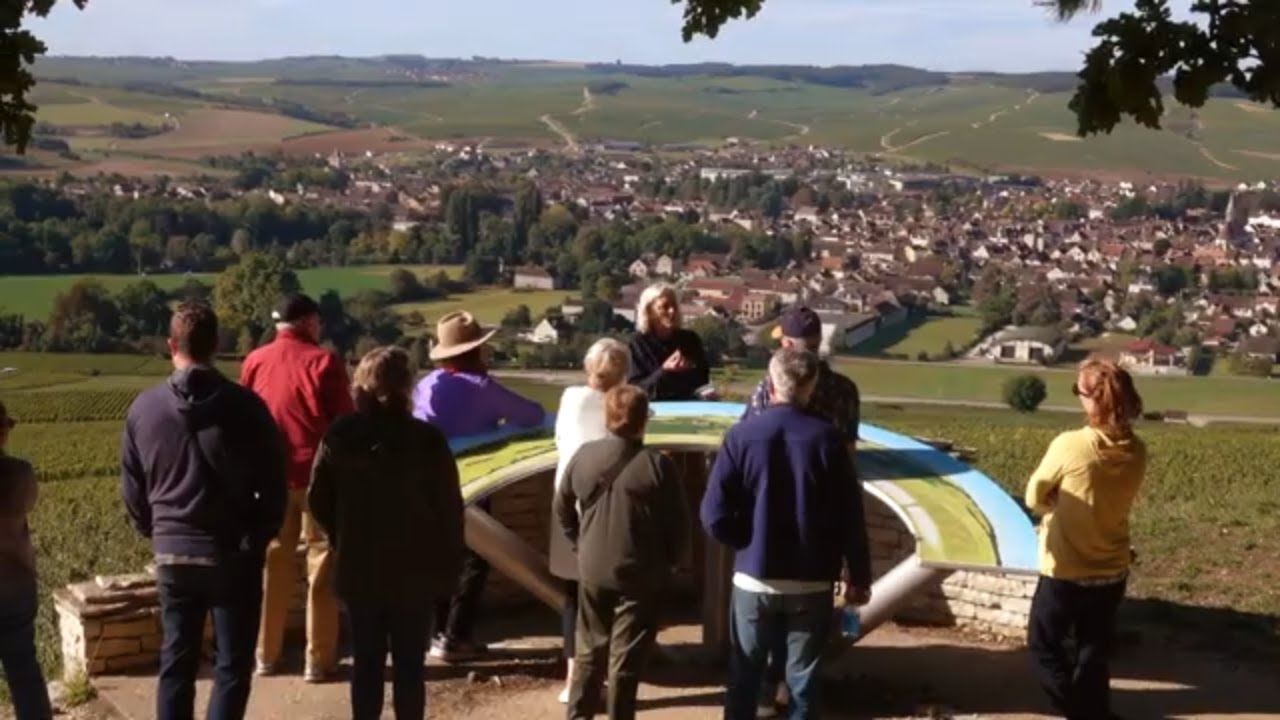
Guests who cruise aboard hotel barges La Belle Epoque or L’Art de Vivre will visit the town of Chablis and enjoy an upgraded private wine tasting at the prestigious Domaine Laroche. There, they will also tour the 1000-year-old Obédiencerie, originally part of the monastery of St. Martin, where the monks developed the craft of winemaking in the Middle Ages and where the wines are still aged today.
Its stunning vineyard is great for a relaxing walk through the fresh greenery. While touring their cellars, you can discover the secrets of the Chablis tipple through an interesting tasting session, here you’ll experience the entire process and learn how the wine makes its way from grape to glass. Chablis is a must-visit haven for every wine lover. Besides the winery, the gorgeous sights of the vineyards themselves offer a peaceful, rejuvenating sanctuary.
Chablis
On the banks of the River Serein, Chablis is a pretty little town. Known as the “Golden Gate” of Burgundy, it is famous the world over for its crisp dry white wines. Visitors enter through the turreted towers of the Porte Noël gateway, opening on to narrow stone streets and houses dating from the 14th to 16th century. St-Martin’s collegiate church, whose construction started in 1160, was one of the first French churches of Gothic design. It is a miniature copy of the cathedral of Sens. Saint Martin was known as the patron saint of travellers, and his relics are kept in the church to which he gave his name. The hospice, or Hôtel Dieu, dates from the 12th century.
The Petit Pontigny is a set of buildings, surrounded by walls, which is at the centre of all festivities and ceremonies of Chablis and its famous vineyards. Its cellar, also dating from the 12th century, is now the only original part of this property, which once belonged to the monks of Pontigny. Nearby is the St-Cosme priory, which was built in the 12th century by the monks of the Premontré order. It is said that Joan of Arc slept there, one night in February of 1429, on her way to Chinon.
What is Hotel Barging?
Despite the growing popularity of cruising, especially on large river vessels, hotel barging is still a little known niche concept. Most hotel barges started life as cargo vessels but have since been painstakingly converted to offer luxury boutique accommodation for small groups of up to 20 passengers.
This is cruising, but in a very different style to ships plying the big rivers or oceans. The pace is slow, with a 6 day cruise covering maybe just 50 miles along a rural canal. Passengers can walk or bike the towpaths as their floating hotel glides gently along. Guests enjoy an intimate atmosphere, high levels of personal service and immersion into the culture, history and gastronomy of regions of Europe such as Burgundy, the Midi, or the Italian Veneto.
Every day there is an excursion, perhaps to a chateau, a vineyard for a wine tasting, or some other ‘off the beaten track’ location. About half of European Waterways’ bookings are for whole boat charters, ideal for families. Otherwise, clients book a cabin to join other like-minded people. A ‘slow boat’ European Waterways barge cruise offers the ultimate in experiential travel. A truly unique experience!
European Waterways offer luxury hotel barge cruises on the beautiful canals and rivers of Europe, such as through Burgundy, the Midi, Alsace, the Po Valley, Holland and the Scottish Highlands.
The exclusive collection of hotel barges accommodate up to 20 passengers who may charter a whole barge with family or friends, or join a small group of like-minded travellers on an individual cabin basis.
Each barge is fully crewed with a Captain, chef, hostesses, deck-hand and tour guide. The 6-night cruises include gourmet meals, fine wines, open bar, excursions and the use of facilities such as bicycles and spa pools.