
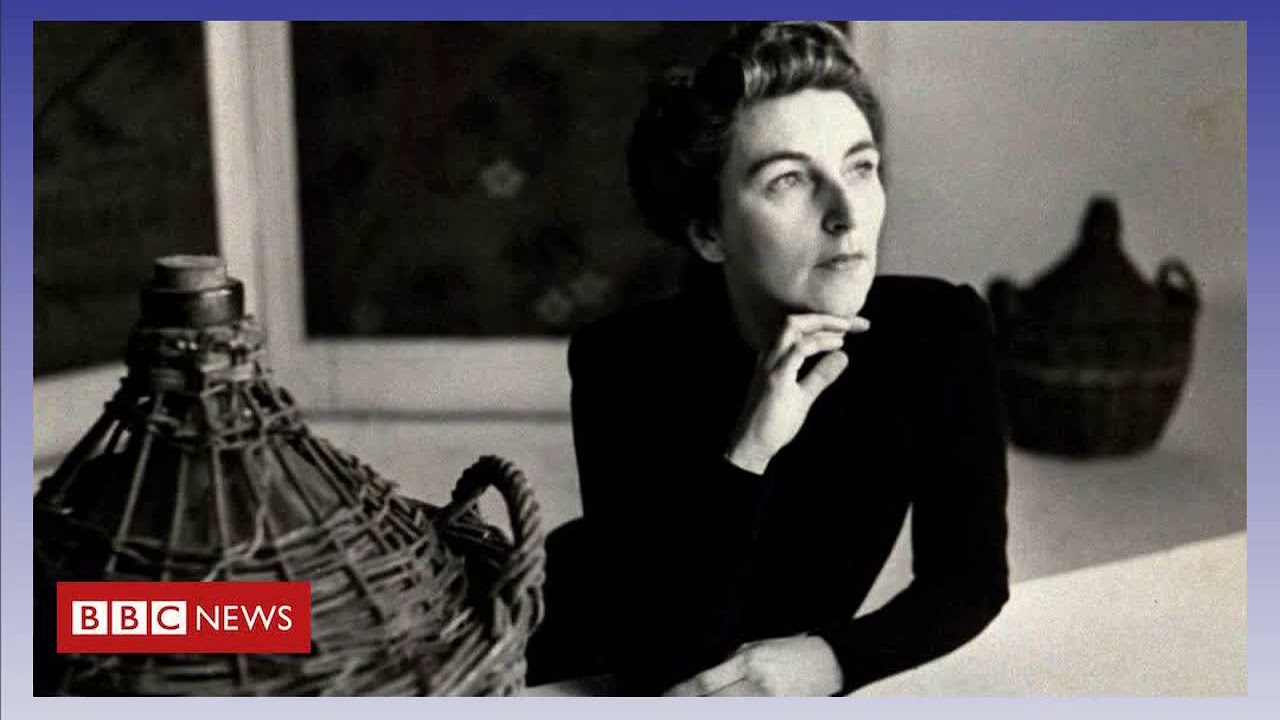
My search for novelist Rumer Godden’s famed French summer
In the summer of 1923 the novelist Rumer Godden, then a girl of 15, came with her mother and three sisters to a hotel in the town of Château-Thierry, near the Great War battlefields of the Marne. Their mother had grown irritated with the girls’ “selfishness” back home in Eastbourne in southern England, and wanted them to learn a lesson in self-sacrifice by contemplating the cemeteries of war dead. En route to Château-Thierry, however, the mother was taken ill with an infected horse-fly bite. Unable to move from her bed, she left the girls to shift for themselves. That holiday became immortalised many years later, when Rumer Godden wrote a novel called The Greengage Summer. It is a story of teenage discovery and awakening, set against the alien but alluring backdrop of a town in provincial France. In an introduction written when she was a very old lady, Rumer Godden said it was all basically true. In the novel the hotel was called Les Oeillets (The Carnations), but in reality, she said, it was the Hôtel des Violettes. Left to their own devices, the children enjoyed the run of the place throughout that hot, halcyon August. As in the book, she and her elder sister had their first brushes with sexuality and womanhood. And they became friends with a dashing Englishman who in a dramatic twist turned out later to be a wanted bank-robber. A fan of The Greengage Summer, as of all Rumer Godden’s books, I was on a mission to find what trace I could in the Château-Thierry of today. Was the hotel still there? And the greengage orchard at the bottom of the garden? And the bathing-place where the Englishman faked his alibi? And what of him? If – as Rumer Godden said – there had indeed been a raid on the hotel in search of an English crook, would that not be in newspapers of the day? In 1923, Château-Thierry was re-emerging from the horrors of the war. The American army had been based there and fought hard to stop the Germans’ last, desperate 1918 offensive. Much of the town had been wrecked. At war’s end an Anglo-Irishwoman called Violet Grierson, who had worked on the front with the Red Cross, came to the town. After initially running a tea-room she decided that there were opportunities in tourism, because of the growing numbers of veterans and families who were starting to visit. And so in 1920 Grierson opened the Hostellerie du Bonhomme et Violettes, in a grand rambling house on the Avenue de la République not far from the railway station, with a walled garden running down to the Marne. Despite the slight confusion over the name, there is no doubt that this is the hotel of the book. In her introduction Rumer Godden said her mother had asked a clergyman for advice on where to stay for a visit of the battlefields, and he had said there was no better place than the Hôtel des Violettes. We can presume that the hotel, with its English management, was winning a reputation at the time among English and American tourists. Later – according to an obituary of Violet Grierson in the records of the Château-Thierry historical society – it had such luminaries as Franklin D Roosevelt and Sir Anthony Eden among its guests. Rumer Godden described what felt to her young self like a château – really a bourgeois family mansion – and its summer smells of “warm dust and cool plaster… Gaston the chef’s cooking, furniture polish, damp linen, and always a little of drains”. A terrace gave on to a formal garden, and then beyond that to the greengage orchard, the eating of whose fruit by the narrator is an Eden-like entry into the mysteries of adolescence. And then through a blue door you were by the willows and reeds of the river. The place is easy enough to identify – but sadly the hotel has long gone. A gendarme barracks replaced the building, but then it too was abandoned. So now there is just tarmac and weeds where once the orchard grew. But the old wall is still there, and in the wall there is still a gate, and the gate still gives on to the reeds and willows. This is where Rumer Godden (Cecil in the book) came to walk and swim in 1923. What happened to the hotel is told in another document – a long-forgotten memoir written in 1945 by Violet Grierson’s sister, Helen, who lived with her and helped run the business. On May 19, 1940 they were giving lunch to guests in the dining-room when “we heard the cook running down the stairs and shouting “The Boches, the Boches!”…
►► Like and share more news!
►► Subscribe to 00Fast News!
►► See you in the next news! Goodbye!
Created By 00Fast News
#news #00fastnews #breakingnews #latestnews #newsupdate