
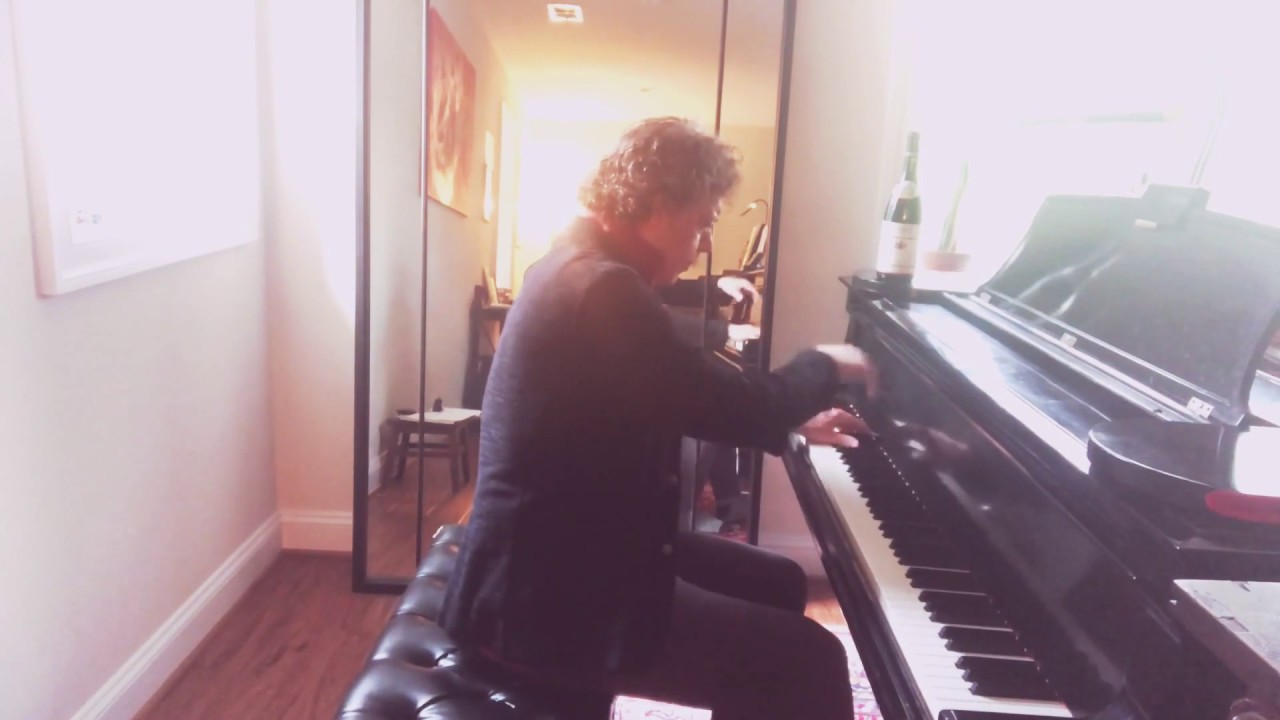
Claude Debussy La Puerta del Vino (Gate of Wine) from Preludes Book II (1913)
French composer Claude Debussy was fascinated with the sound of the piano, with the breadth of its range from highest to lowest tones, the myriad ways its pedals can manipulate the quality of the tone color, the brilliance within fast runs, the power of huge chords, and all the resonance of this very powerful instrument. His fascination with piano sound seems to have inspired the creation of his two books of Preludes at least as much as any poem or picture referenced in the pieces’ individual titles. In fact, Debussy placed his preludes’ titles at the end of each piece, not the beginning, which suggests they were, to some extent at least, afterthoughts. The Preludes are, essentially, experiments in sound.
La Puerta del Vino (Book II) (1913)
“Gate of the Wine” is the name of one of the gateways to the Alhambra Palace in Granada, and was written upon the receipt of a postcard of the Alhambra sent to Debussy by the Spanish composer, Manuel De Falla. With the intoxicating, sultry habanera rhythm of this work, we are bathed in the exotic Moorish atmosphere of Andalucía. Imagine, all this from a man who never even visited Spain!
“I have never heard more beautiful piano playing” so thought Louise Liebich, Debussy’s first biographer when she heard him play.
His piano playing was certainly very different from the dry highly articulated style of many of his French contemporaries. It is likely that his tone sensitive approach was fostered early on by his teacher Madame Fleurville who claimed to have been a student of Chopin.
Debussy preferred to play with the piano lid down
He preferred the rich sounding German pianos to the thin-sounding French ones of the period.
In 1904 he had a small Bluthner grand in his salon. It was a special model with an extra set of strings placed over the others permitting an enriched sound through sympathetic vibrations.
He also had a Bechstein upright.
An interesting description of Debussy’s playing by the Italian pianist Alfred Casella who knew Debussy from 1910 to 1914 and who played works for two pianos with him offers some insight :
No words can give an idea of the way in which he played the piano Not that he had actual virtuosity
but his sensibility of touch was incomparable he made the impression of playing directly on the strings of the instrument with no intermediate mechanism the effect was a miracle of poetry .
Moreover, he uses the pedals in a way of all his own… often conveying a real sense of improvisation
Indeed Debussy used to often say: “one must forget that the piano has hammers…”
A CD of my playing Debussy works can be found at