
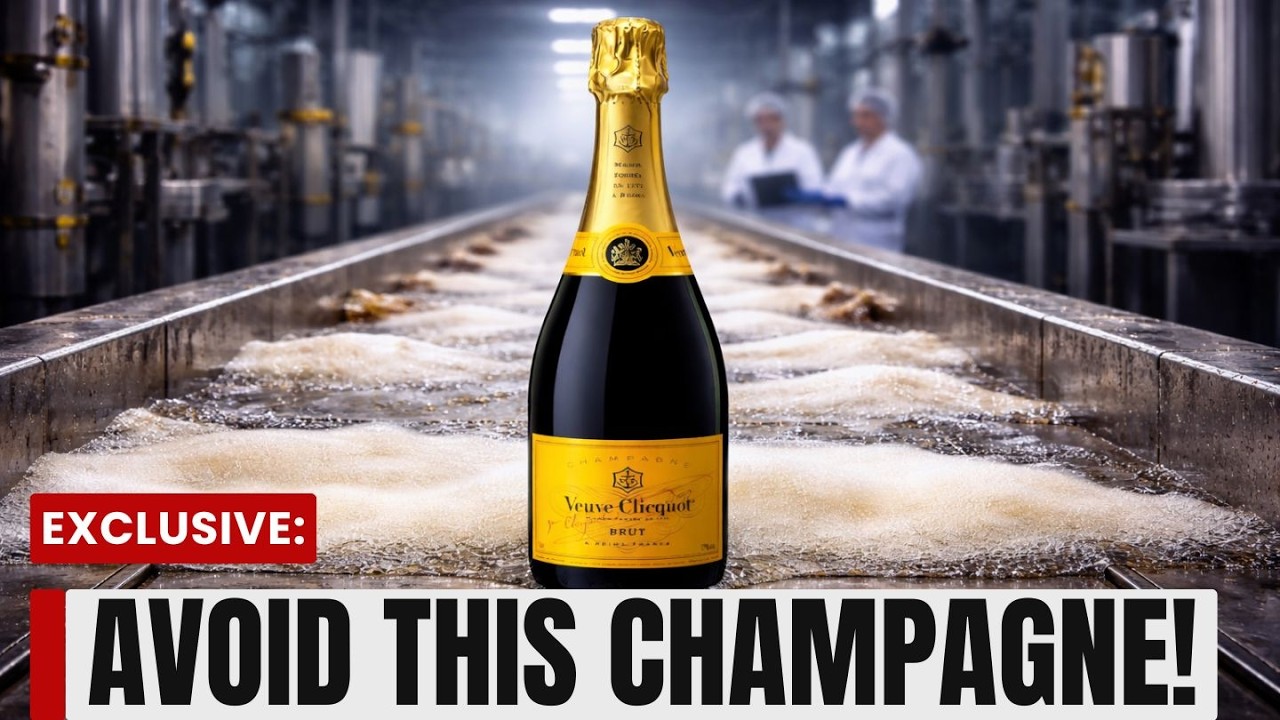
You’re about to pop a bottle of something you think is premium. Something prestigious. Something worth celebrating with. But what’s really inside that elegant bottle could be a cocktail of chemical additives, industrial shortcuts, and outright deception that the French champagne houses and their corporate owners absolutely do not want you to know about.
In the next few minutes, I’m going to expose eight champagne brands currently sitting on Australian bottle shop shelves that you need to stop buying immediately. We’re talking about sulphite overloading, synthetic dosage liqueurs, non-vintage blending tricks designed to mask poor-quality base wines, and brands caught misrepresenting their origins or production methods. These are the labels that look spectacular at a glance, but fall completely apart under scrutiny.
And here’s the good news. Stay with me until the end because I’m also going to reveal the four champagne brands that independent sommeliers, wine competition judges, and serious collectors in Australia actually trust. The ones made with integrity, minimal intervention, and honest labelling. Let’s pull the cork on the truth.
Disclaimer:
This video is intended for educational and informational purposes only. It contains commentary, analysis, and opinion based on publicly available information, including ingredient labels, nutrition facts, regulatory disclosures, and company-published materials.
This content does not allege illegal activity by any individual or company. Any references to brands or products are for the purpose of consumer education and public interest discussion. Viewers are encouraged to review official sources and make their own informed decisions.
2 Comments
They first started burning sulfur in Vineyards in 1487. As a result, practically no wine is sulfite free, particularly those from the Champagne region. If you want "organic" champagne, they are not made from the traditional grapes. Fungus-resistant grapes like Voltis are not traditional; they are modern hybrids. What they don't say is that while Sulfur dioxide is used, it oxidizes rapidly to form sulfate, which naturally occurs in all water.
All "organic" champagne uses sulfur, and most use a mixture of Bordeaux and fungicides.
In the EU, organic sparkling wine is permitted up to 155 mg/L of total sulfite, whereas conventional Champagne can go up to 185 mg/L. (Not a lot of difference) Sulfite is also a natural byproduct of fermentation.
All champagne, whether organic or otherwise carry a "Contains sulfite" warning.
As with all these revenue generating AI videos like this, take it with a grain of salt.
More AI slop. This is supposed to be Australia. They don't sell liquor in supermarkets as you show at 31.11.