
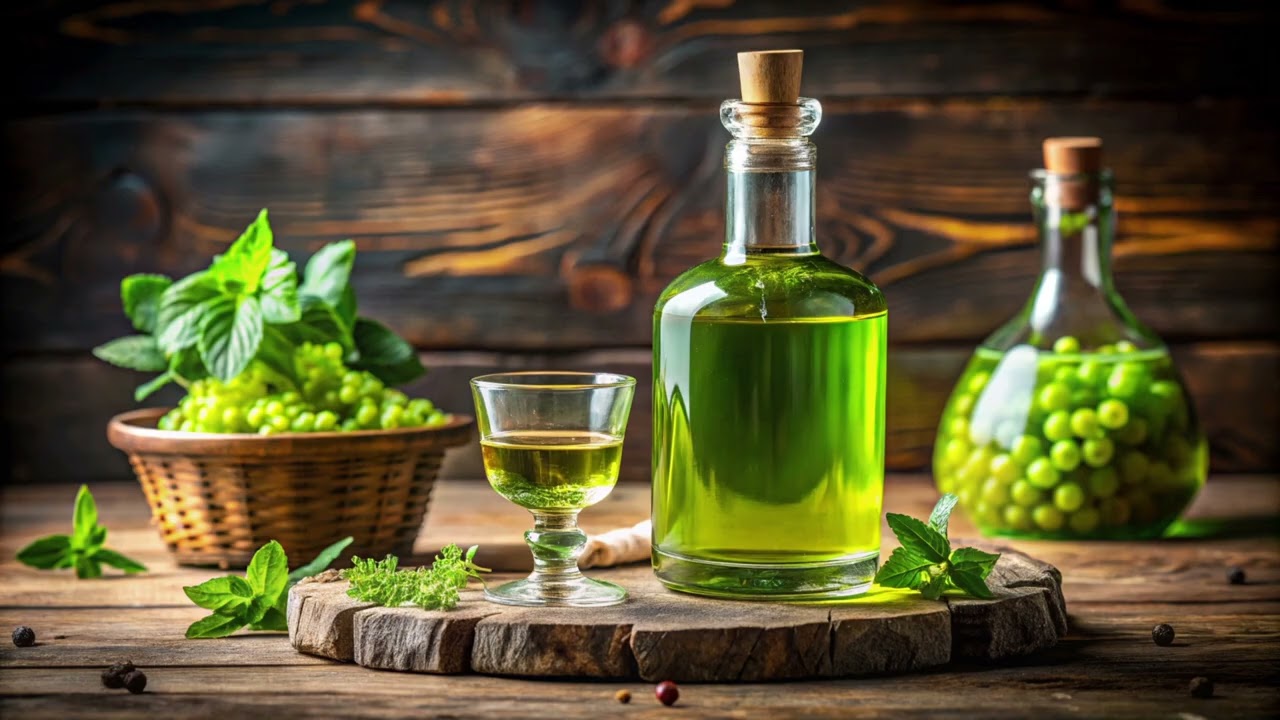
Chartreuse is one of the most well-known liqueurs in the world. But where did it come from and who invented it?
In 1605, Francois Annibal de Estrées, a marshal of artillery to French King Henry IV, gave the Carthusian monks at Vauert in southern France a recipe for what he called an “elixir of long life”. The recipe ended up at the order’s headquarters at the Grand Charteuse monastery near Grenoble.
Brother Gerome Maubec perfected it in 1737 and the recipe included 130 herbs, flowers and plants combined into a wine base. Ant-Catholic French governments expelled the monks from France twice and each time they eventually returned, bringing chartreuse distilling back with them.
Only three monks know the recipe at any one time. In recent years the liqueur has become scare and expensive, because the Carthusians decided to produce only 1.2 million bottles a year, so they could focus more on study and prayer. It nevertheless remains one of the most famous and sought-after French liqueurs.
Chartreuse liqueur, a Catholic idea, is a favorite among liqueur fans, mixologists and bartenders throughout the world.
Credits:
Organic Green Chartreuse Liquor, Brent Hofacker, Adobe Stock
Francois Annibal d’Estrées, Wikimedia Commons, Public Domain, https://commons.wikimedia.org/wiki/File:Francois_Annibal_d-Estrees.jpg
Monastery of the Grand Chartreuse (Monastère de la Grande Chartreuse), Floriel, Wikimedia Commons, https://commons.wikimedia.org/wiki/File:La_Grande_Chartreuse.JPG
Glass of Chartreuse, alex9500, Adobe Stock
The Chartreuse Cellars (Fûts de caves de la Chartreuse), David Monniaux, Wikimedia Commons, https://commons.wikimedia.org/wiki/File:Chartreuse_caves_img_5733.jpg
Desecration of a church during the French Revolution (Pillage d’une église pendant la révolution), Joseph François Schwebach, Wikimedia Commons, Public Domain, https://commons.wikimedia.org/wiki/File:Jacques_Fran%C3%A7ois_Joseph_Swebach-Desfontaines_-_Pillage_d%27une_%C3%A9glise_pendant_la_r%C3%A9volution_-_P317_-_Mus%C3%A9e_Carnavalet.jpg
La Valsainte Charterhouse (Chartreuse de la Valsainte), Joseph.valet, Wikimedia Commons, Public Domain, https://commons.wikimedia.org/wiki/File:Chartreuse_de_la_Valsainte.jpg
Campus of the University of Grenoble (Domaine universitaire de Grenoble), pedro, Wikimedia Commons, https://commons.wikimedia.org/wiki/File:Domaine_universitaire_Grenoble.jpg
Chartreuse – herbal liqueur made by monks, available in green or yellow varieties, Idea Lab, Adobe Stock
Carthusian monks leaving the Grand Chartreuse, Wikimedia Commons, Public Domain, https://commons.wikimedia.org/wiki/File:Carthusian_monks_leaving_the_Grande_Chartreuse.jpg
Building of historical Chartreuse factory in Tarragona, Munfarid1, Wikimedia Commons, https://commons.wikimedia.org/wiki/File:Building_of_historical_Chartreuse_factory_in_Tarragona.jpg
Old style pot stills of the Chartreuse (Alambics de distillation anciens modêles de caves de la Chartreuse), David Monniaux, Wikimedia Commons, https://commons.wikimedia.org/wiki/File:Chartreuse_alambics_img_5743.jpg
Chartreuse Bottles, M, Wikimedia Commons, https://commons.wikimedia.org/wiki/File:Chartreuse_bottles.jpg
Chartreuse liqueur in an elegant glass with lemon and herbs, Olena, Adobe Stock
St. Hugh in the Refectory (San Hugo en el Refectorio) Francisco de Zubarán, Wikimedia Commons, Public Domain, https://commons.wikimedia.org/wiki/File:San_Hugo_en_el_Refectorio.jpg