
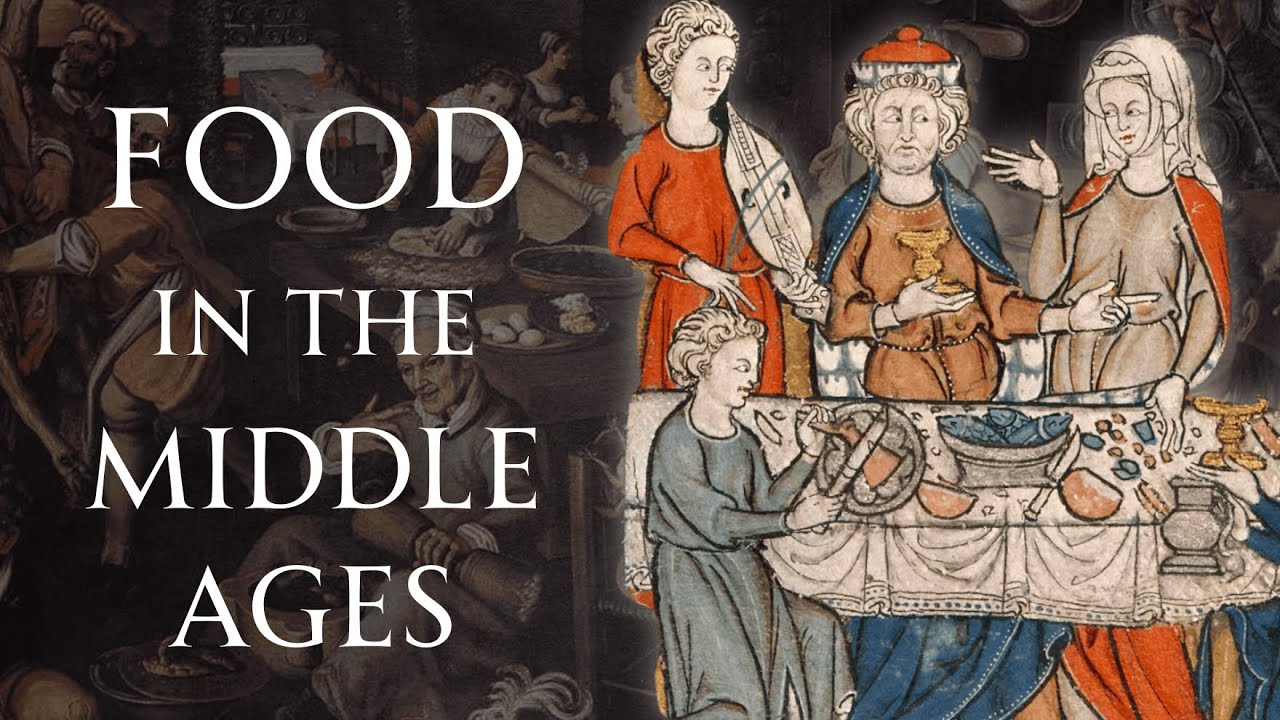
00:00:00 Intro and Welcome
00:02:27 Class and the Medieval Diet
00:06:12 Rethinking the Divide
00:10:41 Daily Staples
00:17:37 Vegetables, Legumes, and the Garden
00:27:48 Meat on the Table (Sometimes)
00:38:38 Fasting, Fish, and Holy Food Rules
00:50:09 Milk, Cheese, and “White Meats”
00:55:46 Ale, Beer, Wine, and Water
01:05:32 Feasts and Famine
01:13:17 Thoughts and Conclusion
Join this channel to get access to perks:
https://www.youtube.com/channel/UCXFf7OgCuOdcygnWp32Xk6g/join
Support the channel on Patreon:
https://www.patreon.com/ASMRHistorian
Merch:
https://histmerch.shop/
Information sourced from Wiki, Gutenburg, JSTOR, primary and secondary sources. All information is congruent with archaeological and history evidence at the time of recording.
Sources and Further Reading
Langland, William (c. 1378). Piers Plowman – (Middle English poem depicting a plowman’s humble diet and life).
Anonymous (1393). Le Ménagier de Paris – (Medieval French household manual with recipes and food advice).
Leggett, S., & Lambert, T. (2022). “Food and Power in Early Medieval England: a Lack of (Isotopic) Enrichment” – (Bioarchaeological study challenging assumptions about elite vs peasant diets).
Dunne, J. et al. (2019). “Diet and the Medieval Peasant at West Cotton, Northamptonshire” – Journal of Archaeological Science 107 – (Organic residue analysis revealing peasants’ stews and dairy usage).
Woolgar, C. M. (2016). The Culture of Food in England, 1200–1500 – (Scholarship on medieval English diet across classes).
Montanari, Massimo (1999). The Culture of Food – (Insights into medieval European food practices by a leading food historian).
Henisch, Bridget Ann (1976). Fast and Feast: Food in Medieval Society – (Detailed look at medieval eating, from daily bread to holiday feasts).
Capitulare de Villis (c. 800, attributed to Charlemagne) – (Royal ordinance listing plants and foods to be produced on estates, reflecting Carolingian diet).
Rule of St. Benedict (c. 530) – (Monastic rule including dietary regulations for monks – e.g., abstinence from meat).
Ibn Butlan (11th century). Tacuinum Sanitatis – (Medieval health handbook with illustrations of food and agriculture, e.g., harvesting cabbages).
25 Comments
Hey everyone, thanks so much for tuning in! If you enjoyed the video, drop a like and consider subscribing so you won’t miss future content, helps me out a ton in the algorithm.
All members and donations now get VOICE REPLIES (what a time to be alive!)
Sources and further reading in the description.
Also, if you’re interested, check out my merch store: https://histmerch.shop/
And the Patreon page: patreon.com/ASMRHistorian
Paypal donations: https://www.paypal.com/donate/?hosted_button_id=LBVV67KHLJU62
Your support means a ton to me, as always thanks and sweet dreams. Thank you for being part of the community!
hello
Liked and hyped from the beautiful Queen City of the Ozarks.
56:56 POLAND MENTIONED!!!1
Good morning Sir
We still eat pease pudding and bacon, black pudding, delicious stews and hotpots with mostly veg. I always knew I was a peasant 😂
Omg the kitty arrived!!!
Hello from Lancaster, SC at 4 pm. Im supposed to be working so I put this on to help get me in the right mindset, lmao
We have a Flemish historian here in the BeNeLux, and he's written a book and done a podcast on the Bourgondiërs (Burgundies) a.k.a the founding fathers and mothers of the Low Lands. He dedicated an entire episode on all the food pulled out on an elite wedding. Incredible! We still refer to exhuberant dining as "bourgondisch" dining. And what's the kitty's name?!!!!
Hello
hi from Amsterdam
Bet you all the other kitties think your cat sounds way suave and classy.
Thanks!
Goodnight everyone ❤ sleep tight and be safe out there xx
Thank you for being human
Hello!
I still eat a bit like a peasant, but with a lot of "exotic" spices! 😂 I had chickpea curry and rice for dinner, kind of a hybrid meal. I'm looking forward to my dense whole rye bread and cheese for breakfast. Hopefully I'll get some sleep before then. I have to work tomorrow!
4:36 😻they are sneaky like that, my zoom yoga class knows my cat more than me😊
jello
Just adding to the algorithm
I didn’t even know what leeks were until the elder scrolls games. Shows how much I eat vegetables. Those poor people back then.😏
Eat more cabbage for algorithm justice! || ❤️🐝💨, Bjs
❤
I remember reading somewhere that the divide between peasants and the upper classes in medieval England (post 1066) is the reason that live animals have Germanic names while the food that comes from them is derived from the French.
For example, the people raising the "cow" weren't the ones regularly eating the "beef." Or the people being served "ham" and "bacon" did not interact with the "pig." Always made sense to me.
Delightful video! Off to munch on some dark bread and sauerkraut. Show us your cat 😺