
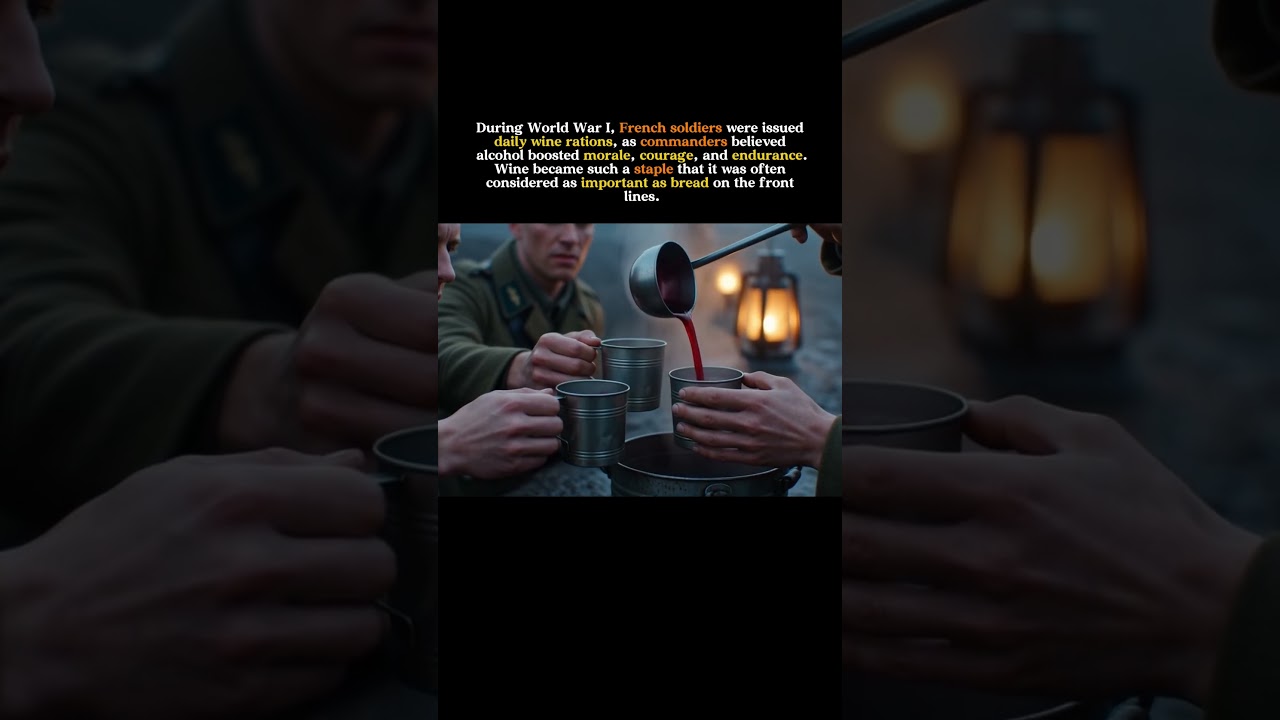
During World War I, French soldiers were issued daily wine rations as part of their standard field supply — not as a luxury, but as a necessity.
French commanders believed that wine boosted morale, courage, and physical endurance, especially under the brutal conditions of trench warfare. Faced with constant artillery fire, mud, cold, and exhaustion, soldiers relied on wine to steady nerves and maintain a sense of normalcy amid chaos.
So important was wine to the French Army that it was often considered as essential as bread. Massive logistical efforts were made to transport millions of liters of wine to the front lines, ensuring troops received their daily ration even during major offensives.
Beyond its physical effects, wine carried deep cultural meaning. It reminded soldiers of home, tradition, and civilian life — a small comfort in a war defined by industrial violence and loss.
The wine ration reveals how World War I wasn’t fought by weapons alone, but by morale, habit, and the psychological endurance of ordinary men.
This content is shared for educational and historical purposes only.