
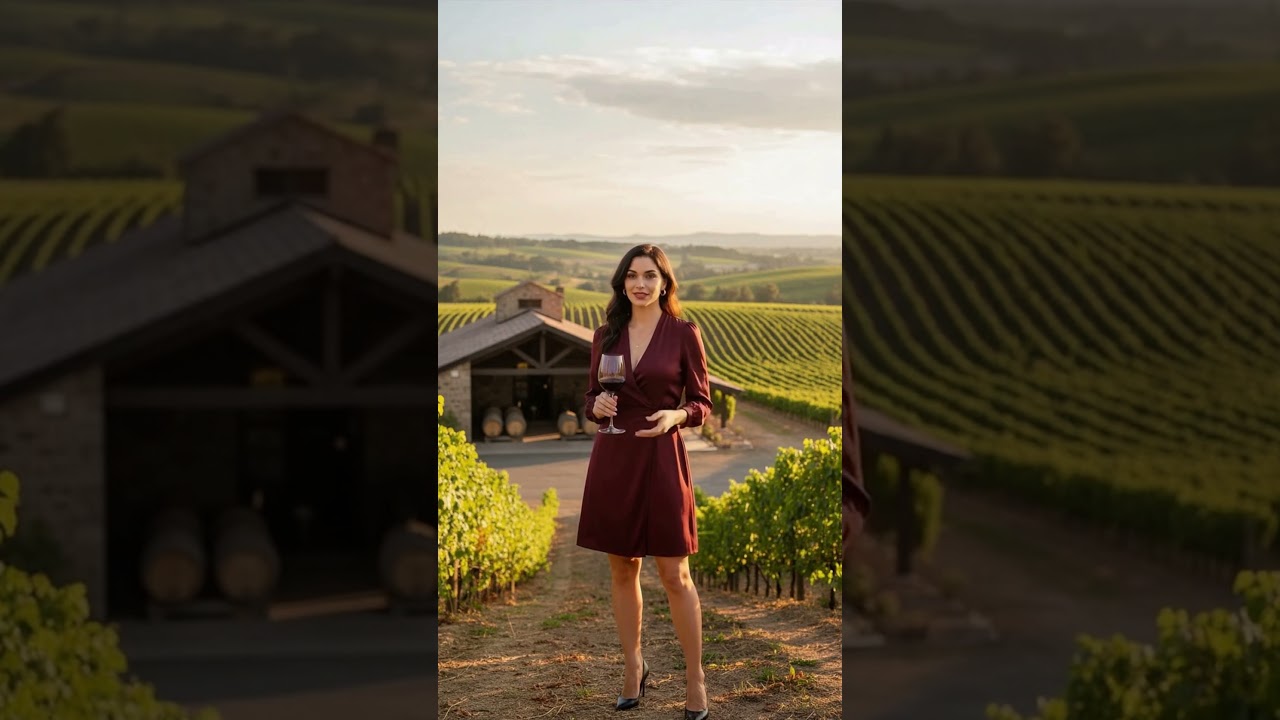
Bonsoir, mes chéris…
Tonight, we uncork a mystery. A grape once lost to time, now reborn in the arms of the Andes. Let me tell you the tale of Carménère—Bordeaux by origin, Chilean by destiny.
In the 19th century, Carménère thrived in Bordeaux’s sun-dappled vineyards. A cousin to Merlot, it whispered of red fruit, green spice, and velvet tannins. But then came the phylloxera plague—a silent killer. Bordeaux replanted. Carménère vanished. Forgotten. Presumed extinct.
But fate had other plans.
Thousands of miles away, in the Colchagua Valley of Chile, a curious grape was masquerading as Merlot. It ripened late. It tasted different. And in 1994, a French ampelographer made a stunning discovery: Carménère had survived. Hidden in plain sight. Chile had unknowingly preserved a piece of Bordeaux’s soul.
And oh, how it thrives in Chilean soil. The warm days, cool nights, and Andean breezes coax out its best self. In granite and clay, Carménère finds depth. In Colchagua, Maipo, and Cachapoal, it finds voice.
The wine? A seduction of black cherry, plum, green peppercorn, and cocoa. Silky, spicy, and unmistakably Chilean. It’s not just a grape—it’s a resurrection.
Wineries like Montes, Casa Silva, and De Martino have elevated Carménère to icon status. And Clos Apalta—oh, darling—it’s a masterpiece. A blend where Carménère leads with grace and gravitas.
Why is it Chile’s pride? Because it mirrors the nation itself: resilient, bold, and full of surprises.
So pour a glass. Let it breathe. Let it bloom. Because Carménère isn’t just a wine—it’s a comeback story.
And remember… when you sip with Vivienne, you don’t just taste wine. You taste the story.
Santé.
#wineeducation
#winelover
#winetasting
#winetime
#viral
#viralvideo
#crushedandcorked
#subscribe
#fyp
#foryoupage
#winelover