
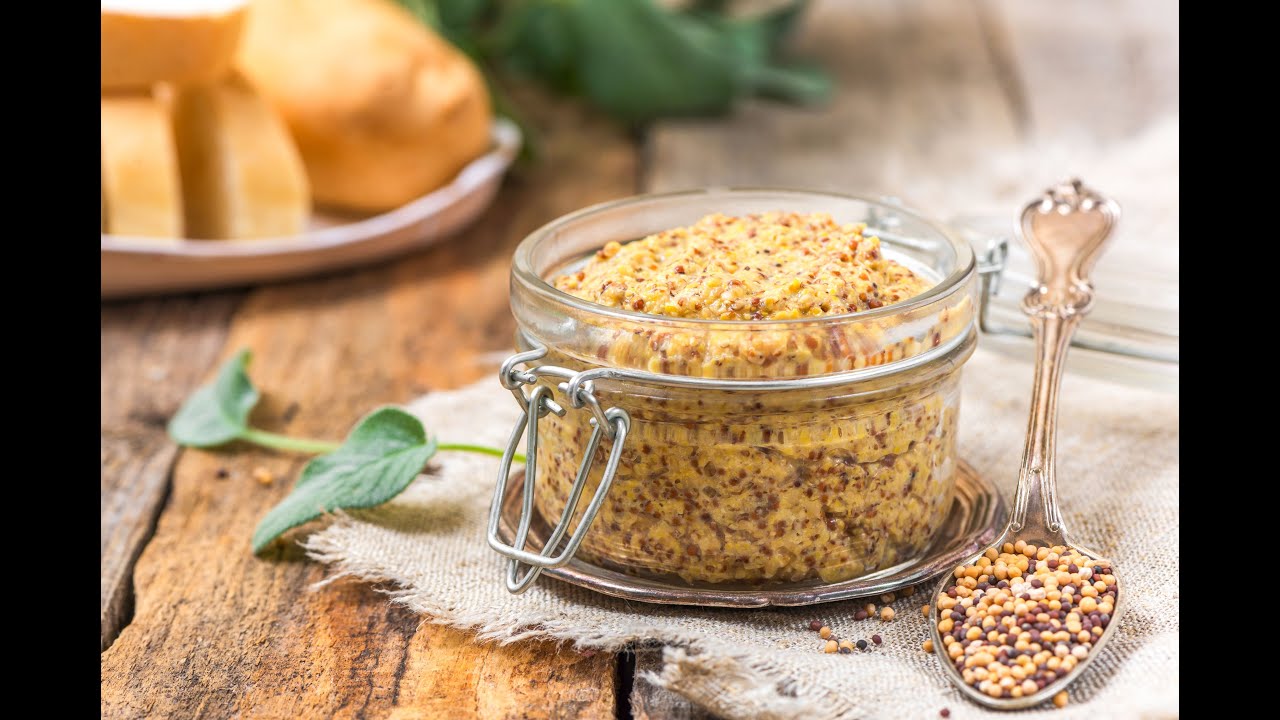
It was Jean Naigeon, a Dijon’s craftsman, who in the year 1752, substituted verjus for vinegar in his mustard recipe (verjus is the juice of unripe white wine grapes). This recipe made the fame of Dijon mustard.
Dijon mustard is basically made with brown mustard seeds (Brassica juncea) and verjus (salt, pepper and spices).
Certain additions like water, wine, vinegar, spices and other ingredients are allowed as defined in the Decree n° 2000-658 relative to A.O.C (Dijon) mustards.
Mustard seeds immersed in verjus (vinegar, white wine for other mustards) ferment over time. The mustard seed contains sinigrinase which, hydrolyzed in contact with the liquid by an enzyme (myrosynase), produces the essential oils which gives the mustard the strong spicy taste. This is synaptic fermentation
French mustard fabricants are still using millstone systems (little elevation of temperature) to produce mustard; as the essential oils are very volatile and sensible to heat
Nothing tastes better than Dijon mustard made at home, adjusting it to exactly what you like. It always impresses your guests as well which is a bonus.
I’ll take you through the step to make it at home. It’s extremely simple, and even a recipe you can remember for years to come.