
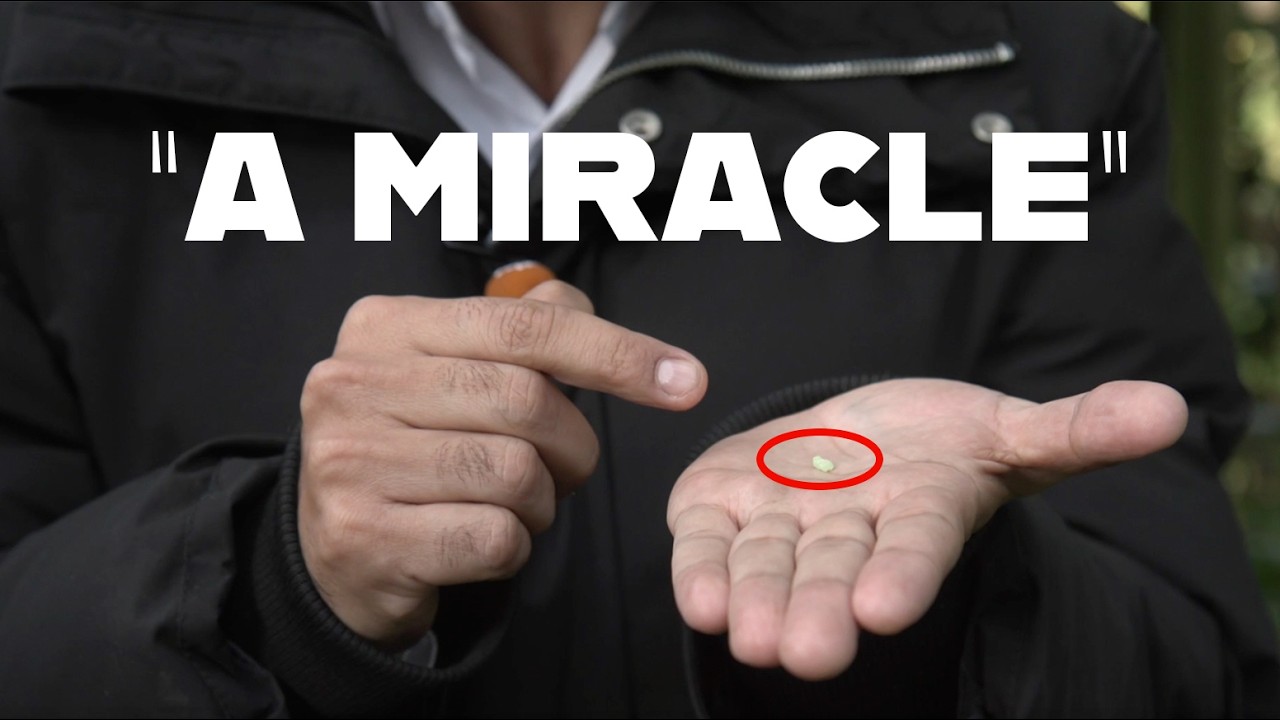
Rudaw Innovation’s Namo Abdulla travels to Tunisia and France to explore the impact of a recently invented French technology called Polyter on agriculture in drought-stricken areas. What he finds promises to mitigate the impacts of climate change on our food supply.
The Chapters:
00:00 – Intro – Polyter: “A Miracle Technology”
01:02 – Tunisia
01:48 – Tunisia’s Dangerous Drought
02:23 – Climate Refugees
03:11 – Country of Olive Trees
04:27 – A Novel Solution For the Dying Olive Trees
05:54 – What Exactly is Polyter? Its Inventor Explains
09:05 – “The Queen of All Dates”
10:35 – What Does The Science Say?
11:57 – Make Trees Grow Faster, Much Faster
26 Comments
thanks man useful info!
So it’s a diaper for trees
French and Africa?
Saved😢😢😢
French stool everything from Africa
he keeps saying (FRENCH) like yeah maybe stop sponsoring coups in africa
Burying plastic in the Earth seems to be a bad idea, at least to me. Saying it is a natural product that is safe and degradable also feels like false marketing; polymers break down into monomers but don't disappear.
Huge short term gains with no long term research.. wat could go wrong. Lets bury more plastic and then eat wat it produces lol. These guys are on to something i can tell
Stay away, Africa doesn't need the help of the West, you help by staying away! Please
Thanks for sharing that u guys using man made stuff. Now I will cut all my food supplies which will come from your countries 😢.
Indigenous olotón maize nitrogen-fixing maize grown in an indigenous region of Mexico has the ability to fertilize itself. The maize had aerial roots that grew a mucous-like gel just before harvest season.
Instead, Polyter seems to grow this maize that can help the olive trees to retain its moisture content.
They can even opt for Chinese soil that are e extensively used in desert that retains water.
They must start using fog net like Morocco for drip irrigation.
😤😰 I WANNE KNOW WHAT YOUR PRODUCKTS ARE . I DON. T WANNE EAT THEM OR BUY THEM ERALL , NOT YOUR DAT.E NOT ANNY OF YOU R CHEMICAL SHIT ,
It's Africa who saved the French, not the other way !
Your voice screams ignorance, problems in africa are caused by people who look like you mate. Shame.
Biochar is better
They want profit they don't care to put plastic in the soil and make people sick
It does make sense. That’s why mulching your plants saves you water (around 30%). However the method in the video is with added fertilizer. So it’s two jobs in one. Clever. I wonder what the long term research will tell us though. Very well put together documentary 🙏🏾👏🏾
A real world 'Getafix' ( Asterix: The Mansions of the Gods )…
Lol, they always hail new stuff like this. Then 20 years down the line we find out how it was an environmental disaster.
Great video however just to be super clear to those who are considering this option, polyter is NOT all organic. Polyacylate is a synthetic oil derivative.
Cela revient a mettre le contenu des couches bébé jetables après usage en retirant l' emballage plastique.. Ni plus ni moins.
Les Hydrorétenteurs de synthése tels le Plyter ne sont pas autorisés en France pour les cultures destinées à la consommation du fait du danger des briques élémentaires d' acrylamides cancérogènes, mutagènes, neurotoxiques et reprotoxiques. D' où la promotion hors territoire français ?
Utiliser des hydrorétenteurs naturels alliés au paillage peut s' avérer quasi aussi efficace sans les risques .
no french thing will ever be good for afrika. in all the colonizers french were the worst.
Not sustainable at all.
Non-biodegradable: They don’t break down naturally, which means they can persist in landfills and waterways.
Africa doesn't need more french corruption schemes and lies.
Polyter's main polymer is potassium polyacrylate ( NOT biodegradable) -a synthetic superabsorbent polymer (SAP) Classified as an environmental irritant in the EU, requiring careful disposal.
———-
Dangers- Dust may irritate eyes/skin. Chronic inhalation in rats caused lung inflammation at high doses, High-dose ingestion of related polymers (e.g., sodium polyacrylate) caused temporary neurological symptoms in dogs/rats, Overapplication may alter soil structure, reduce microbial activity, and affect nutrient availability, Potential to fragment into microplastics if degradation is incomplete. Can disrupt ecosystems if improperly disposed, May adsorb toxic chemicals, increasing their bioavailability
Tozeur has been desert for millennia. It has nothing to do with climate change. 🤬 Ask the Romans.
Devemos aqui denunciar, não é biodegradável ☠