
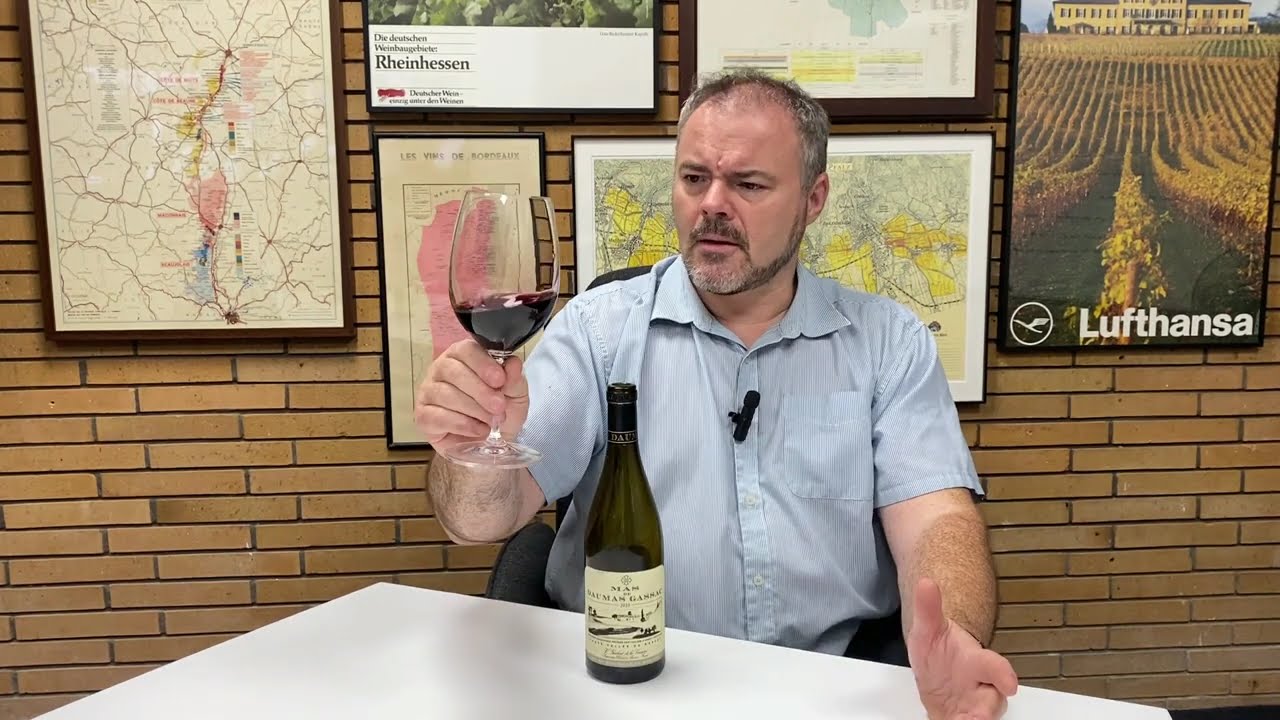
In our tasting today’s Wine-Searcher’s Wine Director, David Allen, Master of Wine tastes a recent vintage from leading Languedoc producer Mas de Daumas Gassac. The wine in question is the 2020 vintage of Mas de Daumas Gassac Rouge.
Mas de Daumas Gassac is a wine producer in the Languedoc region of France, around 40 kilometers (25 miles) west of Montpellier, near the town of Gignac. It is well-known for the high quality of its Cabernet Sauvignon-predominant flagship wine, earning the estate the nickname “the Lafite of the Languedoc”. The winery is built in the foundations of a Gallo-Roman mill and on the site of its former pond. Sited away from established, well-known appellations, the wine has been produced as a Vin de Pays, with recent vintages being classified as IGP St. Guilhem-le-Désert – Cité d’Aniane.
The first vines at Mas de Daumas Gassac were planted in 1972. Véronique and Aimé Guibert had found the property two years earlier while searching for a new rural home; in 1971 their friend, Professor Henri Enjalbert, a geologist with specialism in vineyards told them that they could make Grand Cru quality wines here. The renowned oenologist Emile Peynaud consulted on the first vintage in 1978. Aimé Guibert, who died in 2016 aged 91, was a champion of the Languedoc who became well known for his battles with the Robert Mondavi company. The estate remains family-owned and is run by four of Aimé and Véronique’s five children.
Wines are vinified in stainless steel vats with natural air conditioning provided by two springs running under the cellars. This slows down ferments, allowing complex flavor development.
The Mas de Daumas Gassac red is an aromatic, full-bodied wine made from around 70 to 80 percent Cabernet Sauvignon with a mix of 17 other indigenous and international varieties such as Merlot, Malbec, Pinot Noir, and Tannat. The wine is fermented in stainless steel tanks, aged for 12-15 months in oak barrels, and bottled unfiltered. It can be laid down for several decades, but is also approachable when young.
In exceptional vintages the estate has produced a limited-production wine made with 100 percent Cabernet Sauvignon called Cuvée Émile Peynaud. The estate also makes a white wine from Petit Manseng, Viognier, Chardonnay and Chenin Blanc, a Rosé ‘Frizant’ sparkling wine and a sweet wine called Vin de Laurence.
Discover more about this wine, see its pricing and find out where to by it on the Wine-Searcher website by following this link: https://www.wine-searcher.com/find/mas+de+daumas+gassac+igp+st+guilhem+le+dessert+pays+france/2020
#masdedaumasgassac #daumasgassac #languedoc #stguilhemledesert #masterofwine #winesearcher #winelovers #tastingredwine #winetasting #winesoffrance #frenchwine
hello there today I’m taking a look at a wine that is one of the leading wines from the southern French region the longer do this is Muma gasak Rouge the 2020 vintage of that and this is a wine that’s labeled as an igp from sanm Le desert now it was back in 1970 that Amber and his wife veronique bought a property about 40 km west of monel veronique was a lecturer at the University and amigu was a leather worker and they bought was was a very rundown property that had been owned by an old man who lived there with his two sisters he he farmed the area and there was livestock living in the ground floor of the of the house they kept animal feed in the top floor there was no electricity there was no running water this was an unspoiled location in the remote gasak Valley and it was here that the the G bears for some reason chose despite the fact they had no background in producing fine wine to set out to to make a wine that would be the equivalent of a gron crew and there was the Confluence of a number of things firstly some exceptional people with the vision to think that in an area where the majority of wines being made were sort of cheap everyday table wines that they could make a wine of this quality second it was the fact that there was a soil type here that was very particular a friend of amigu somebody called on angelar was a soil scientist and he pointed out to to his friend the the soils here were similar to the sort of soils that were found in some of the grown crews in burgundy there was a fractured Limestone with a an iron-rich L between it in the bottom part of the valley and that’s where cabinet Sor has been grown very successfully so there was a a fantastic soil type but at the same time the gasak valley actually again modifies the climate of this region giving a wonderful cooling influence so actually in what is an area with a quite a warm Mediterranean climate maduma gasak actually has quite a cool climate by comparison particularly cool evenings a very large dial temperature variation and these factors have combined to make this one of the most successful Estates in the longw do today the Bears were ahead of their time in many ways I mean the the approach that they’ve always taken has always been to be sustainable I I don’t think they’re actually certified as such but their approach has always been organic and they’ve always believed in biodiversity when they when they first came here the estate had been farmed but I believe the old man who who’d only ever used a horse to plow had found it more difficult and so had only been cultivating the areas closest to the house so most of the estate was actually overgrown but prior to that this area had really only been used by charcoal burners you know there are signs of there having been agriculture here there was sort of stone walls remaining once once the scrub had been cleared but for instance when they came to to clear space to plant Vineyards they decided I think largely as a result of veronique’s insistence that they wouldn’t cut down any trees I mean this wasn’t a forested area this was just scrub the gig and and so those trees that were there were left and today actually The Vineyards are now surrounded by by trees and that’s actually been a benefit in terms of the biodiversity it gives and actually in terms of how that modifies the climate the trees are very good at retaining some humidity and and also sometimes they they guide storms around The Vineyards but all these all these ideas were sort of way ahead of their time back in the early 70s also very impressive was the the care with which Amiga set out to produce his wine for instance the caban and this is a predominantly cabinet soal based wine normally about 70% the care with which he selected the vine cuttings was very impressive he managed to find a nursery that had cuttings that had come from Bordeaux from crew class Estates although the those names aren’t given but that had been collected prior to feler evidently this Nursery was in Leon something like that and so these were preoper cuttings of cabinet soval from Bordeaux that were planted here now the 2020 growing season season was preceded by a cold winter but there were no frosts and actually the development throughout the year was very regular and the fruit developed in balanced conditions when no summer heat spikes so temperatures would go up to about 28° during the day and then you know just to illustrate the the way that this particular location Works temperatures were coming down to nighttime temperatures of 10 to 12° just allowing the The Grapes to retain acidity and to retain their Aromas and the fruit was ripening well then on the 15th of August came a very welcome storm just providing enough water to The Vineyards to bring the vines back to life and to give them just a couple of weeks to finish ripening the the fruit picking for the Reds started on the 3rd of September and went on for 17 days finishing on the 21st and just that revigor that the rain had given was enough to turn this into quite an exceptional vintage now the blend of this wine as say typically this is about 70% cabinet oval so in 2020 there was 71% of cabinet oval there was then 6% of Sira 5% of tanat 4% of Merlo 3% of Cabernet Fran 3% of py Vero 2% of malbeck 2% of pinoir and then they say 4% of other varietals Vine age in the vineyard averages about 43 years so these are mature Vines giving quite concentrated fruit picking went on by hand all the picking at this the state is is done that way and the cabinet Soven is fermented separately and the other varieties are co-fermented fermentation goes on with temperature control in stainless steel tanks mation is traditional as per bordeau for a long period with certain amount of pump overs and that went on for about 20 days the wine then aged for 12 to 15 months in Oak the oak being used was French Oak a portion would have been new but there were equal proportions of barrels up to 7 years old so the not a huge proportion of new o going into this rather I think they prefer to allow the fruit to express itself so let’s have a look at the wine Shine the color is deep it’s dark it’s almost opaque I can just about make out the stem of the glass through it so that makes that quite deep and dark form moded in my GAC there’s a a slight purple note to the red color and it’s staining the glass now this is 13 1 12% alcohol and there’s a certain amount of viscosity there the the wine is slowly forming tears on the side of the glass as I swirl it the Aromas have a lovely fresh initially black current note there there actually is a sort of a a real ciss note ciss with touches of Plum but there’s there’s a almost a sort of a graphite note in there and a an underlying clean black cherry but not a sort of an enormous juicy note there are perhaps red current notes as well it’s that sort of lifted fresh red to Black fruit on on the on the Aromas very attractive indeed s of a taste on the palette there’s a freshness and a perfume that very Apparent from the outset I mean you start off again with that ciss no note but quite quickly go to a sort of a concentrated slight bitter licorice nose and a niece a freshness really still coming through there that’s stopping the core from being too concentrated and licoricey there really is a juicy freshness that’s taking it onto a black cherry note you’ve got hints of graphite coming in there and then you’re finishing with more of this sort of ciss fruit there’s a lovely m watering nature to this the tannins the structure is very fine it certainly has a grip but it’s not as stringent and drying you know there’s just enough bitterness there that the the richness is balancing it nicely the alcohol is not out of balance at all that’s adding a little bit of warmth and and roundness to the Finish but it’s certainly not smothering the fruit on the Finish because the fruit has good power and it’s lifted so nicely by that acidity that you’ve got that lovely CE freshness right to the end there I think this really is showing that the beautiful slow rening cool climate fruit particularly in 2020 is is very evident this is a very pretty wine it’s a very perfumed wine it’s got such lovely balance I’m sure it age very happily for at least 20 years if you want to but it’s very accessible very attractive now I took a look at the the wine Searcher aggregated critics score for this it gets 92 out of 100 I think there’d be an argument to say it could do slightly better than that but I think that’s a pretty fair score for it maybe as a wine it’s it’s elegance and it’s gentleness ring a p a wine of power and weight perhaps doesn’t quite Push It Forward in terms of people giving high scores but the lovely Persistence of the flavors and the freshness of the flavors I think are really quite special I do like this wine and I think this is a lovely example of maduma gasak so thank you so much for watching I do hope you’ve enjoyed the tasting if you have do please press the like button if you’d like to watch more of these tastings please do sign up and follow us it’ be fantastic to have your support there if you have any comments you’d like to leave please pop those in the comments box below we’d really appreciate your feedback on what we’re doing as far as tastings the wines we’re looking at and things things related to that I’ll leave a link in the notes so that you can follow that to the web page for this wine this vintage of this wine on the wine Searcher website and there you can find out about pricing of availability and any other background information we have if you’d like to share the the the tasting with friends that you think might be interested we’d really appreciate that as well that would be fantastic but most importantly I do hope you’ll manage to take some time and come and join us for another tasting in the very near future thanks again bye for now