
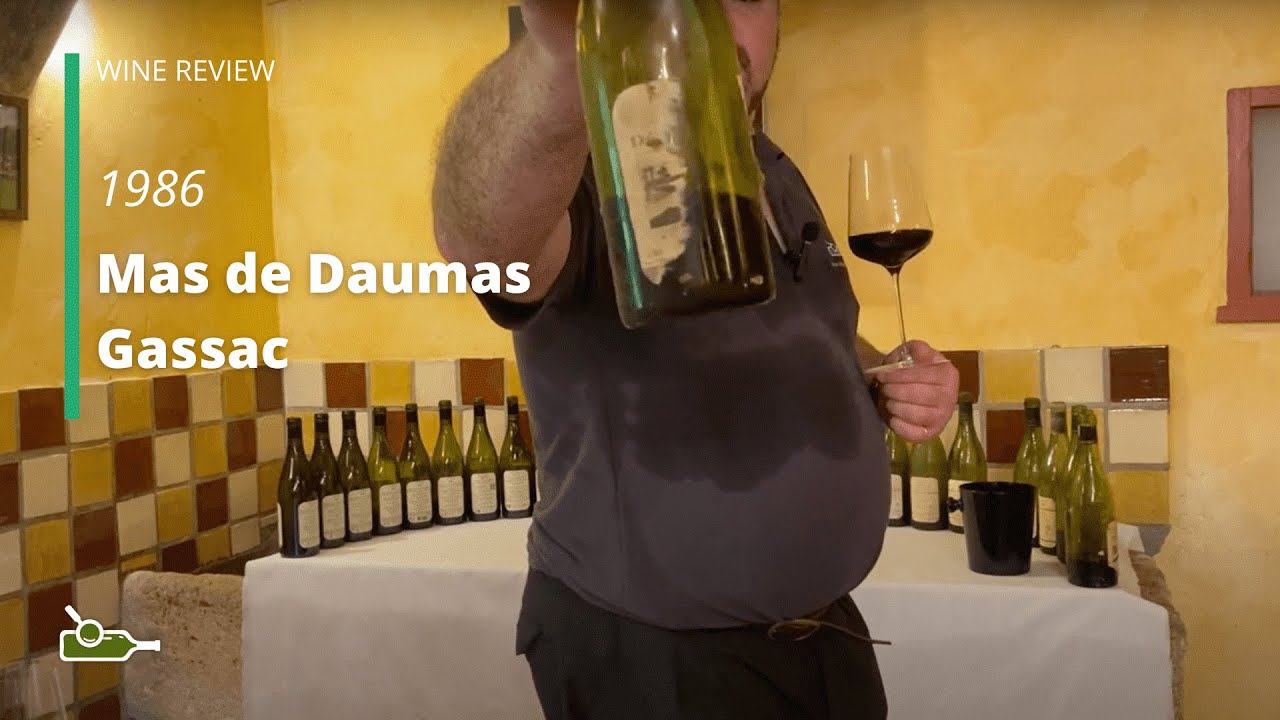
In our tasting for today we have the third in a set of tastings recorder by Wine-Searcher’s Wine Director David Allen MW, at a recent 27-wine vertical tasting. He was lucky enough to travel to the South of France to the cellars of one of the Languedoc region’s leading wine estate, Mas de Daumas Gassac. Here he tastes the 1986 vintage of Mas de Daumas Gassac Rouge.
Mas de Daumas Gassac is a wine producer in the Languedoc region of France, around 40 kilometers (25 miles) west of Montpellier, near the town of Gignac. It is well-known for the high quality of its Cabernet Sauvignon-predominant flagship wine, earning the estate the nickname “the Lafite of the Languedoc”. The winery is built in the foundations of a Gallo-Roman mill and on the site of its former pond. Sited away from established, well-known appellations, the wine has been produced as a Vin de Pays, with recent vintages being classified as IGP St. Guilhem-le-Désert – Cité d’Aniane.
The first vines at Mas de Daumas Gassac were planted in 1972. Véronique and Aimé Guibert had found the property two years earlier while searching for a new rural home; in 1971 their friend, Professor Henri Enjalbert, a geologist with specialism in vineyards told them that they could make Grand Cru quality wines here. The renowned oenologist Emile Peynaud consulted on the first vintage in 1978. Aimé Guibert, who died in 2016 aged 91, was a champion of the Languedoc who became well known for his battles with the Robert Mondavi company. The estate remains family-owned and is run by four of Aimé and Véronique’s five children.
Wines are vinified in stainless steel vats with natural air conditioning provided by two springs running under the cellars. This slows down ferments, allowing complex flavor development.
The Mas de Daumas Gassac red is an aromatic, full-bodied wine made from around 70 to 80 percent Cabernet Sauvignon with a mix of 17 other indigenous and international varieties such as Merlot, Malbec, Pinot Noir, and Tannat. The wine is fermented in stainless steel tanks, aged for 12-15 months in oak barrels, and bottled unfiltered. It can be laid down for several decades, but is also approachable when young.
In exceptional vintages the estate has produced a limited-production wine made with 100 percent Cabernet Sauvignon called Cuvée Émile Peynaud. The estate also makes a white wine from Petit Manseng, Viognier, Chardonnay and Chenin Blanc, a Rosé ‘Frizant’ sparkling wine and a sweet wine called Vin de Laurence.
Discover more about this wine, see its pricing and find out where to by it on the Wine-Searcher website by following this link: https://www.wine-searcher.com/find/mas+de+daumas+gassac+igp+st+guilhem+le+dessert+pays+france/1986
#masdedaumasgassac #daumasgassac #languedoc #stguilhemledesert #masterofwine #winesearcher #winelovers #tastingredwine #winetasting #winesoffrance #frenchwine
hi there today I’m lucky enough to be at maduma gasak an estate in the south of France in the longw dog and we’ve been tasting 27 vintages of their red wine it’s a wine that only goes back to 1978 which was the first vintage and therefore that’s 27 out of 47 vintages they’ve now produced now the one I’d like to look at here is the 1986 ventage now that label doesn’t show you a lot but the back label reveals it to be the 1986 it’s a wine that’s entitled to the designation of Ander deal it’s an estate produced wine and the estate was set up in the early’ 70s by em gber and his wife veronique em gber passed a few years ago but veronique still lives here and runs the estate with her her sons now M my gaset was probably one of the First Quality Estates to come from the Longwood dog and the family have worked hard to promote their estate as well over the years I mean for instance was told today over lunch that the nickname used to describe this wine in Chinese is that it is the king of the longw do red wines so I think that relates back to a track record of high quality the wine is predominantly cabinet Soven the blend for this is 65% of cabet sool with 11% of sirum there’s 10% of Malbec and 5% of Merlo in this it’s 4% of cabet Fran 2% of tanat two 2% of Pino and 1% of other varieties we’re not told what those are varieties are it could be nebiolo could be Petty the it could be a blend of both of those or some other varieties I’m not entirely sure so let’s have a look at the wine shall we the first thing to say is that 86 was quite a ripe vintage it’s got a good dark color for a wine of its age it’s not particularly Browning there’s still some vibrancy to the ruby red color there almost almost a slight purple Hue in fact swelling it the wine has 12.7% alcohol and yet it’s still actually forming some tears on the glass there so there’s a good viscosity the the the tannins there I think are doing that so let’s see we make of the aroma shall we the Aromas are developed there’s a mushroomy note there’s leather there’s touches of black olive and black cherry there’s almost a graphite hint in there it’s a powerful nose there’s plenty going on in there powerful and complex so let’s have a taste my first impression is that that’s got lovely freshness there’s an amount of black fruit it’s almost just a a juicy black cherry note then that’s being followed up by black olive notes by leathery notes by a touch of graphite there’s a sort of a slightly Dusty grip there’s almost a of a charcoal note on on the mid Panet now it’s been suggested to me that this wine may have a touch of a yeast infection called brettanomyces which would start to give a sort of a slight bardy note that is is noticeable here but then there’s also sort of more developed tertiary Aroma s of slightly mushroom Aromas of developed fruit so that’s all part of a s of a a complex Savory set of flavors and Aromas that that have come to develop in this wine now the wine I think is probably fully mature I very much doubt that it’s going to going to improve with age however at the same time I also think that its freshness its structure its fine tenin along with the balanced alcohol that’s letting the perfumes shine through gives this the potential that it can continue to hold in this condition for several years I should think quality wine providing some very enjoyable drinking and I think set to do so for a few years yet so thank you so much for watching I do hope you’ve enjoyed the video if you have do please press the like button if you think your friends will be interested in watching do please pass it on to them if you have any comments please leave those in the comments box below we would love to hear what you think about the wines we’re looking at tastings we’re doing or anything else that relates to that I’ll leave a link below so that you can follow that to the wine Searcher page for this vintage of this wine on our website there you’ll be able to see things like the critics notes pricing and availability any more background detail we have about the wine hopefully all you could need thank you so much for watching and I do hope you’ll manage to find some time come and join us for another tasting in the near future thanks again bye for now
2 Comments
Pinot in the blend is kind of shocking! Could it be like a field blend as the Portuguese do sometimes?
Fresh fruit on a 38yo, 12.7% wine is another impressive point. What do you think is underpinning this aging profile?
That’s impressive!