
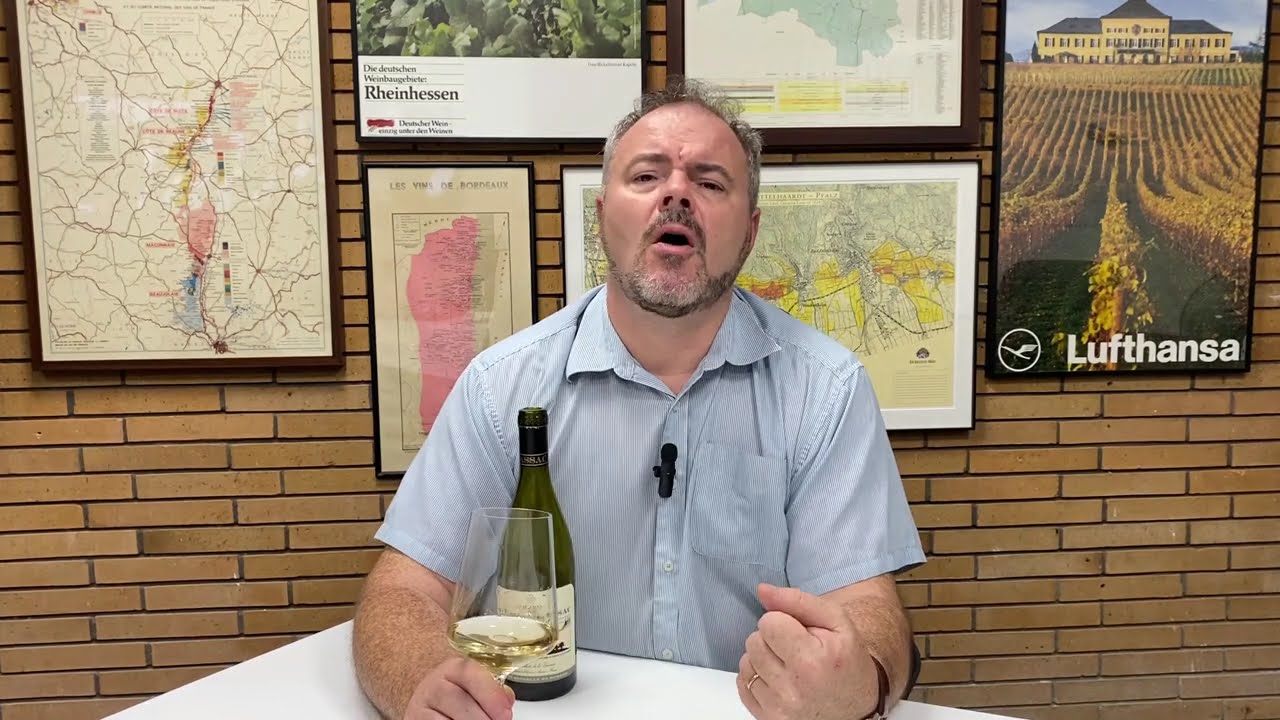
In our tasting for today Wine-Searcher’s Wine Director, David Allen MW reviews a top white wine from the Languedoc region in the south of France – The wine in question is Mas de Daumas Gassac Blanc 2021.
Mas de Daumas Gassac is a wine producer in the Languedoc region of France, around 40 kilometers (25 miles) west of Montpellier, near the town of Gignac. It is well-known for the high quality of its Cabernet Sauvignon-predominant flagship wine, earning the estate the nickname “the Lafite of the Languedoc”. The winery is built in the foundations of a Gallo-Roman mill and on the site of its former pond. Sited away from established, well-known appellations, the wine has been produced as a Vin de Pays, with recent vintages being classified as IGP St. Guilhem-le-Désert – Cité d’Aniane.
The first vines at Mas de Daumas Gassac were planted in 1972. Véronique and Aimé Guibert had found the property two years earlier while searching for a new rural home; in 1971 their friend, Professor Henri Enjalbert, a geologist with specialism in vineyards told them that they could make Grand Cru quality wines here. The renowned oenologist Emile Peynaud consulted on the first vintage in 1978. Aimé Guibert, who died in 2016 aged 91, was a champion of the Languedoc who became well known for his battles with the Robert Mondavi company. The estate remains family-owned and is run by four of Aimé and Véronique’s five children.
Wines are vinified in stainless steel vats with natural air conditioning provided by two springs running under the cellars. This slows down ferments, allowing complex flavor development.
The Mas de Daumas Gassac red is an aromatic, full-bodied wine made from around 70 to 80 percent Cabernet Sauvignon with a mix of 17 other indigenous and international varieties such as Merlot, Malbec, Pinot Noir, and Tannat. The wine is fermented in stainless steel tanks, aged for 12-15 months in oak barrels, and bottled unfiltered. It can be laid down for several decades, but is also approachable when young.
In exceptional vintages the estate has produced a limited-production wine made with 100 percent Cabernet Sauvignon called Cuvée Émile Peynaud. The estate also makes a white wine from Petit Manseng, Viognier, Chardonnay and Chenin Blanc, a Rosé ‘Frizant’ sparkling wine and a sweet wine called Vin de Laurence.
Discover more about this wine, see its pricing and find out where to by it on the Wine-Searcher website by following this link: https://www.wine-searcher.com/find/mas+de+daumas+gassac+blanc+igp+st+guilhem+le+dessert+pays+france/2021
#masdedaumasgassac #daumasgassac #languedoc #stguilhemledesert #masterofwine #winesearcher #winelovers #tastingwhitewine #winetasting #winesoffrance #frenchwine
hello there today I’m looking at a high quality white wine from the south of France maduma gasak is an estate that has an understandable reputation for making quality wine starting back in 1970 the late Uber and his wife veronique and family bought a house in the the gasak valley the maduma and set about renovating both house and estate and without any previous viticultural experience they they settled on the idea of creating a worldclass wine estate in in this remote Valley with the help of of many eminent collaborators for instance the soil scientist HRI anel and the wine maker Emil poo by 1978 they they produced their first vintage of a cabinet sovon based red which has gone on to to earn the subrica the lefit of the longu do so they really were Visionaries because at the time this was a region that just produced everyday table wine so having been successful with their Reds in 1983 they started planting Vines to produce a white wine the white wine of maduma gasek I feel is quite idiosyncratic it’s quite an individualistic wine I don’t see this style of wine being made by many other people and I I think it’s a fantastic wine actually so the first vintage was launched in 1986 it was predominantly vion there was some Chardonnay and the balance was was musar Blanca Petra the blend has changed sub substantially um it is still predominantly vion but it now includes as well as The Shard shannan Blanc puty menen and then they have an array of what they refer to as rare varietals so there’s Fano there’s grow menang there’s seal there’s musard Alexandria there’s puty kobu and there’s both Maran and rousan so you have a wine that’s a sort of a Confluence of great varieties from the ran from burgundy from Bordeaux from Southwest France and even from Italy all coming together in this one unique location so the wine is labeled as an igp for S desert but the estate here in the gasak valley has its own unique nature not only are the soil suitable for the growing of quality wine having iron rich fractured Limestone soils at the bottom of the the estate and more pure Limestone at the top where the white wines tend to be grown but this a state which whose Vineyards reach up to about I think 250 300 m above sea level has a wonderful cooling effect the Valley of the gas hack channels cooling Winds of an evening through it and actually almost makes this a site for cool climate viticulture in an area that has a relatively warm Mediterranean climate and that gives a lovely finesse elegance and a perfume to all the wines that they produce it and it’s easy to forget what pioneers the G bears actually were in this region back in the70s for instance one of some of their founding principles have have been to be organic to be sustainable and to encourage biodiversity when they bought the estate the old man who’d farmed it before then had never used any chemicals he was an elderly man and the estate was very much overgrown and a lot of it had to be reclaimed from amongst the gig scrub the plots were cleared in such a way they tried not to cut down any trees and today as trees have grown up surrounding The Vineyards the family see benefit in terms of having trees next to the vineyard and in terms of the biodiversity that exists in this locality it’s also worth saying that when the GBA were sourcing planting material they always tried to identify the best of what they were collecting so for instance it’s noted that their vion was sourced from kria producer Jor ver their Shard Vines came from the K lafon estate and the shanen Blanc that they’ve planted was from The Vineyards of domain hu in in V so at each step they were seeking out the top producers of these regions for their advice and for their help now the blend of the white wine is as I say is predominantly VI it’s 31% of vion in here with 23% of petty menang 13% of Shard 5% of Shena and as I say the remaining 28% is is made up of what they call rare varieties so the two muskar muskar Alexandra muskar Blanca Petty gr MAA rousa seon Fano grman sang and Petty kobu now when it came to harvest these variety were all picked by hand and in fact they were all co-fermented they all go into one large fermenta but they undergo a period of 5 to 7 Days of maseras pel so skin mation but in the presence of oxygen and that helps to stabilize the wines so once the juice has been pressed off the Skins fermentation took place in temperature controlled stainless steel tanks following fermentation the only aging that time was a period of up to 4 months Aging in again in stainless steel tanks a portion of this wine used to spend some time Aging in Oak but that’s no longer the case they they felt that actually it closed up the fruit and didn’t really benefit the wine in terms of its ageability now 2021 was a vintage where yields were actually quite low largely because it was a cold winter that was followed by frosts in April so in the first 16 days of April the temperatures in the the gasak valley dropped Below minus5 on several occasions and that damaged the buds and reduced the crop significantly so we actually see quite low yields for 2021 which has result in a wine with lovely concentrated fruit so let’s have a look at it shall we so the color of medium intensity it’s a slightly straw yellow maybe a slight golden hint to it the wine has 13 1 12% alcohol and it’s forming tears fairly redly on the side of the glass there there’s some nice viscosity there as I swirl it there’s some weight and richness to the wine so let’s see what make of the Aromas shall we the initial Aromas are of sort of Rich dried apricot of orange peel Mandarin that sort of lifted note but there really is a note of the skin contact it’s making me think of of dried apricot maybe a touch of fig little bit of saltana but there is that sort of Juicy stone fruit note that’s very much the four there’s a there’s a grapy richness and a lovely ripeness so let’s have a taste on the there’s a lovely weight and richness it’s smooth it’s rounded the texture is almost a sort of there’s almost a maip pan note on the texture which you makes me think that there are vanilla touches in there from Oak but there isn’t that’s all coming from the skin contact and actually perhaps by the Finish there’s a tiny Touch of sort of bitterness there almost a sort of a candid peel note there really is that sort of concentrated dried apricot Rich juicy nectarine those sort of stone fruit and dried stone fruit notes with this kind of overlying oress and as I say that sort of dried peel note as well by the finish the acidity is giving a lovely freshness I wouldn’t say it was particularly high it’s not a particularly sharp mineral wine or anything like that but there’s just such a lovely intensity of this pure fruit and I think that the weight of the fruit is perhaps slightly masking some of the freshness of the acidity the flavors the last well the alcohol’s in balance it really doesn’t stand out at all at 13 1 12% it’s just in line there with the lovely Rich fruit which follows through nicely sort of giving that sort of stone fruit vanilla maripan note to to the to the finish that lasts incredibly well now looking at the wine Searcher aggregated critic score on on this vintage of this wine it gets a 93 I think that’s actually a very well-deserved score I think this is a wine who intensity and richness would give it the option to to age for sort of seven or eight years these wines can become a little sort of shered and they they gain secondary Aromas if you age them for that long so actually there’s quite a a good argument for drinking them young but if if you’re happy with that sort of style it’s an interesting style of wine to age and it will certainly gain lots of additional complexity so thank you very much for watching I hope you found the tasting of interest if you’ve enjoyed it do please press the like button if you’d like to watch more of these tastings it would be great if you’d sign up and subscribe to our Channel if you have any comments you’d like to leave please pop those in the comments box below it would be interesting to hear from you to hear what you think about the wines what you think about the tastings we’re doing or anything else that relates to them I will of course leave a link in the notes to the wine Searcher web page for this vintage of this wine so you can follow that up you can see where it’s available what its price is and any of the other background information we have about this wine for you to look at if you have any friends you think might like to watch the video please feel free to pass it on to them that would be fantastic but most importantly let’s hope that you can find some time and come and join us for another tasting in the very near future when you thanks again bye for now
1 Comment
I enjoyed this review. £40+ for a bottle is pretty serious money, I guess that's 2021 prices.