
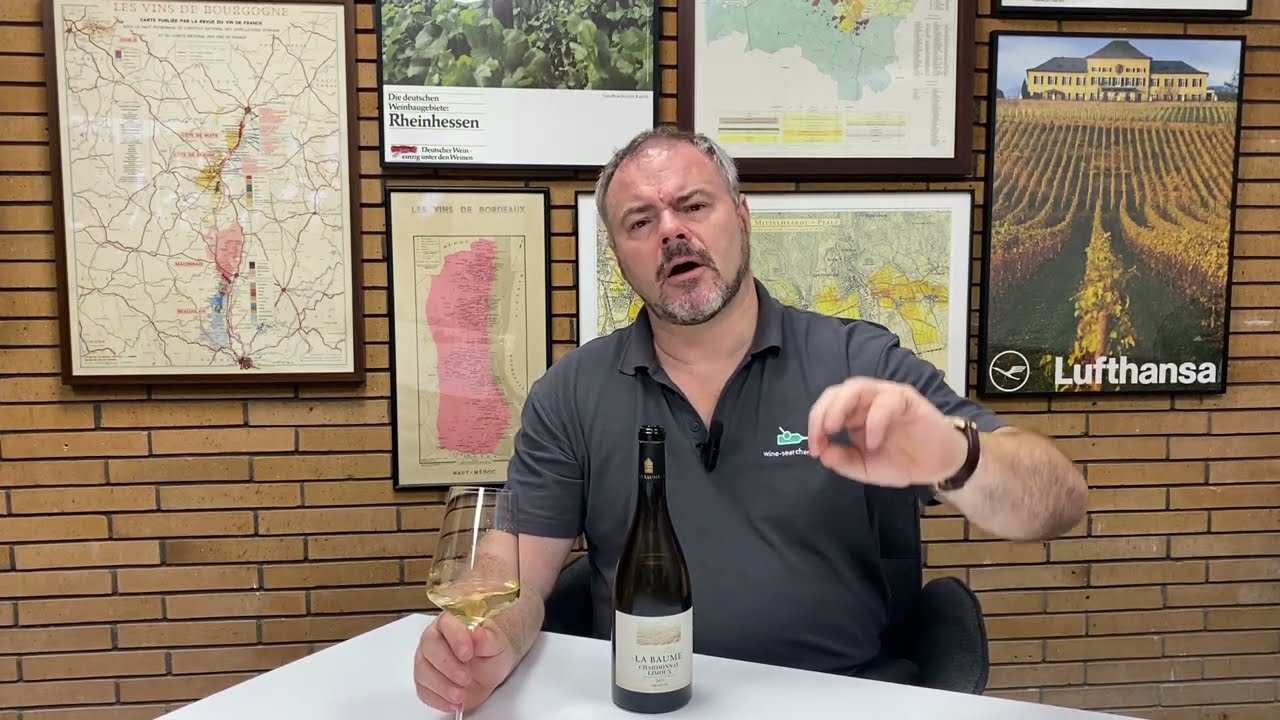
In world where White Burgundy seems to grow ever more expensive our Wine Director, David Allen MW suggests looking at Chardonnay from the Southern French region of Limoux. In our tasting today he samples an oak-aged Chardonnay from Vignobles La Baume. The wine he tastes is from the 2021 vintage.
Domaine de la Baume is situated in the village of Servian, between Béziers and the medieval town of Pézenas, at the center of the Languedoc-Roussillon region (the world’s largest wine-growing area). The estate has 176 hectares of vines and is planted with international varieties – Merlot, Cabernet Sauvignon, Syrah, Pinot Noir, Sauvignon Blanc, Viognier and Chardonnay.
The modern history of Domaine de la Baume began in 1880 when the Prat family bought the estate and under the guidance of Jean Prat, the head of the family they set about transforming it into a renowned property. At that time, the vineyard had been left fallow after the phylloxera crisis. Jean had an impressive house built there which they named “La Folie”, which remain there to day.
For around twenty years Jean Prat and his sons worked to develop the vineyards. They invested heavily in the vineyard and replanted around 100 hectares. Jean Prat retired and passed the estate to his sons. Another two generations of the family succeeded them.
In 1990 the story took a new turn with the sale of the estate to the Hardy family, of South Australian origin. The Hardys transmitted much more than their know-how, they also brought an attitude or state of mind. In their efforts to restructure the vineyards they planted international grape varieties. They were also the ones who initiated the night harvest and introduced modern winemaking and aging techniques which have made the style of the wines very true to their varieties.
The estate has been owned by the Helfrich family since 2003, they have continued to develop the property and promote its wines on the international scene.
Discover more about this wine, its pricing and find out where to buy it on Wine-Searcher.com by following this link: https://www.wine-searcher.com/find/vignoble+la+baume+chard+limoux+languedoc+roussillon+france/2021
#chardonnay #limoux #landgedocroussillon #languedoc #labaume #domainedelabeaume #masterofwine #winesearcher #winelovers #tastingwhitewine #winetasting #winesoffrance #frenchwine
hello there today I thought it would be great to look at a charder from Southern France so I have here a bottle of Venoy labom chard limo from the 2021 vintage now I thought it would be interesting to look at a limo charday on the grounds that it’s a relatively cool region producing some quite high quality chardonay wines from some of the older plantings of chardonay vines in southern France I think particularly at a time when we find the white wines of burgundy are so expensive finding a nice value alternative is is something that’s worth exploring so Lio is in the foothills of the P pinan mountains we’ve got Vines here planted I believe at between sort of 3 and 500 m above sea level and as well as altitude being a cooling influence in this relatively warm sunny region you also get in Limu a CO influence from the Atlantic Ocean coming from the Bay of bis as a result it gets a few degrees cooler here than it does in nearby regions such as obier the region itself sort of sits to the south of the historic town of carasol and to the west of corer so the other thing to note is that this is away from Dain de laom itself which is located in a place called San which is halfway between bnia and pesna in the long goodok a producer daina laam is best known for producing good quality good value for money varietal wines mostly labeled as Vamp do wine the history of the domain is that in 1880 it was purchased by somebody called Jean pra and Jean bought the domain which had been a wine wine estate but bought it at a stage where it was completely fallow all the vines had been ripped up as a result of feler the feler pest he set about replanting with grafted vines that could grow in the presence of fxa and he built the estate up it these days it’s about 200 hectares I think he built it up to about 100 hectares at that stage and his family owned the estate through until 1990 when they sold it to Hardies at that stage a family-owned Winery from South Australia soon to become brl Hardies when they they joined up with the berry red Mano cooperative and and these days part of Accolade group and what their new Australian owners did to the estate was that they completely rebuilt the sellers re-equipped it to to the latest modern standards replanted The Vineyards with International varieties and that I suppose that is where the basis for this reputation of producing good quality varietal wines has it its Origins now brl Hardy sold the estate off in in 2004 to the hellick family who’ve maintained quality and have assimilated labam into a group of properties that they have throughout the south of France now they have some states in Limu and for that reason I believe it’s possible that this is a wine that’s no longer made however I still thought it would be a good example of a wine to look at from limmo because there are quite a number of well-made varietal chardes from from the region now the label says sh Liu and it’s an aop wine and thus we know that this wine must be a blend of 85% of charday and 15% of MAAC because to be labeled as charday you have to have at least 85% of chardonay in the blend and to be labeled as limo you have to have at least 15% of the local variety MAAC in the blend so to be anything other than 8515 would would make one of those designations illegal on this label so if you’re if you’re in the region and you’re making 100% chard you have to label it as a vamp doc chard now MAAC maac’s a fairly lean fresh crisp quite neutral white grape variety so that’s I’m actually going to add a freshness to the to the chardonay and perhaps make it a little lighter anyway so now I I’ve not actually seen any notes relating to how this wine is produced I don’t know whether the fruit is handpicked or machine harvested I don’t know what its Origins are I’m assuming the fact that it says Li vinoble labone rather than domain Deone relates to the fact that this is from fruit that is not from the domain itself now whether this is a Vineyard that’s owned by labam whether they’ve managed a Vineyard or whether they’ve simply bought fruit that I’m not aware is that like their blon Lio this has almost certainly been fermented in stainless steel the label tells us that it’s aged in Oak barrels it doesn’t say fermented it simply says aged so I’m assuming that that that that’s the extent of the oak influence on it if it’s been agan Oak barrels I it’s almost certain that the wine will have received a certain amount of Le Ag and some battonage so let’s have a look at it shall we and see what we make of it see if it has is actually a great value example of a a limo shut name looking at it the color has a it’s a medium yellow it’s got a nice intensity it’s quite vibrant there’s a slight sort of slightly darker straw sort of note to it rather than a bright fresh lemony note swirling it the Wine’s got 13 1 12% alcohol and according to its label anyway and it it seems to be quite readily creating tears on the side of the glass there smelling that the initial Aromas are of a creaminess quite a rich creaminess so you have the creamy notes and they’re followed by notes of stone fruit ripe Peach but it is the creaminess for and the fruit that’s behind it and in with that peach note you’ve got a some higher top notes ofely sort of citric freshness perhaps even a hint of minerality let’s see what we make of the pet see that’s there as well the palette is completely dry there is quite a good cristas to begin with it’s not Sharp it’s not harsh there’s quite a sort of a clean mineral nature that asserts itself on the palette first of all and then you see the creamy notes and then coming from behind that you’re starting to see a slightly more delicate Peach than you you might expect from the richness and ripeness that it was displaying on the on the nose to the finish that acidity although it doesn’t seem particularly Sharp or assertive at the beginning is actually showing itself very well as a sort of a a lemony perhaps slightly graef fruti but certainly there’s a citric bite to the back pallette that’s actually it’s making my mouth water it’s starting to accentuate the sort of the roundness and the richness that you’re getting with the sort of the creaminess there’s some slightly buttery notes there and the alcohol seems to be quite well in Balance it’s it’s there’s enough to be I think perhaps adding a little to the roundness and richness of the wine this is medium perhaps just sort of nudging towards medium to full bodied but it’s not a heavy wine and towards the Finish it’s becoming much more open there’s a citric note there are touches of minerality there I mean I’m certainly not suggesting that this has the the the sort of the crispness and the ous mineral note of something like a shab but at the same time it has quite a nice focus on the Finish it’s giving a nice lemony length more so than you’d get say say from something really sort of Rich from California or Australia so it’s certainly not heavy or overblown there some delicacy some elegance and perhaps even sort of some tiny touches of floral notes elder flower right to the end there the wine appears to fully mature I don’t think it’s a wine that would benefit from aging particularly it would probably hold as it is for the next 3 or 4 years providing some lovely drinking I’m actually more impressed than I thought I would be with this wine it’s a wine that s rises above the level of a a a a soundly made varietal wine to have some layers of complexity and some richness and some real character the acidity doesn’t initially seem to be particularly high but actually is assertive enough to give the wine nice length and a nice clean fresh finish and considering that I paid I think less than 20 New Zealand dollars for this so about1 in the UK Maybe closer to $115 us I think it’s a nice value wine that gives an example of the sort of quality that you can find in Limu know that I I think quite happily competes with some of the less prestigious appalachion in white within white burgundy and it’s really providing some very enjoyable very affordable drinking so thank you very much for watching I hope you’ve enjoyed the video if you find it of interest do please press the like button if you’d like to watch more of these videos it would be great if you’d sign up and subscribe and follow our Channel perhaps even set yourself an alert so that we notify you every time we post a new video if you have any comments please leave those in the comments box below we would genuinely love to hear your feedback on the tastings we’re doing the wines we’re looking at or anything else related to that if you have friends you think might be interested in watching the video do please feel free to share share it with them that would also be fantastic I will leave a a link in the notes below to the page on the wine Searcher website for this vintage of this wine and that way you’ll be able you’ll see if there’s availability near you pricing a price history and any other information that we have regarding this wine so thank you very much for your time thank you for joining us do also please consider spending some of your time coming and joining us for another tasting in the very near future W you thanks again bye for now
2 Comments
Limoux has some of the best value Chardonnays! Thanks for sharing.
Thanks for this interesting video. I think what’s also interesting about limoux white wines is that they have to be hand-harvested, fermented and aged in oak barrels (I believe the only appellation in France to insist on this) and, crucially, can be single varietals OR blends of Chardonnay, Chenin blanc and mauzac … and the several resulting possibilities all show that characteristic typically Limoux freshness you mention.