
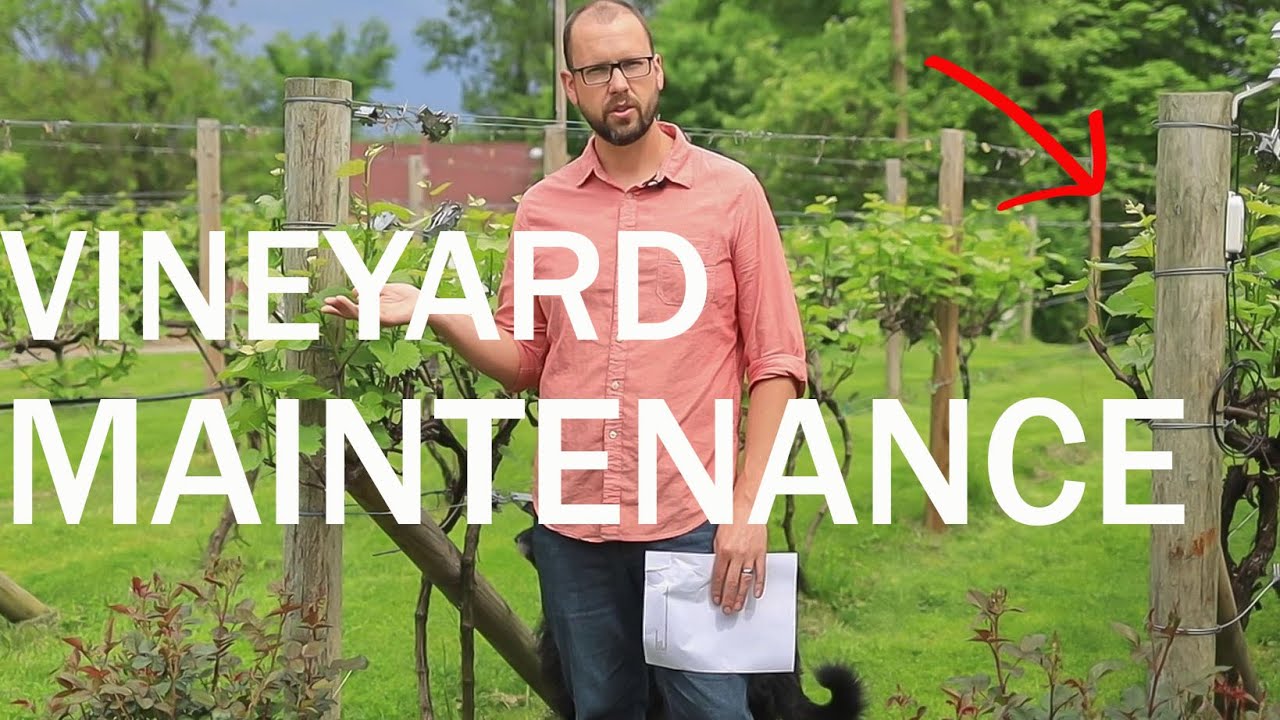
Today we will discuss the maintenance needed if you want to grow your own vineyard in the backyard. These are wine grapes, but the methods discussed will apply to nearly any grape vine. The grapes I am growing are a mix of french american hybrid grapes and vinifera (european grapes). This includes cabernet franc, cabernet sauvignon, merlot, alvarinho, traminette, petite pearl, clarion, noiret, and marquette. I will discuss things like leaf thinning, shoot thinning, sprays, diseases, pests, watering, hoeing, shoot positioning, and general challenges involved with growing a backyard vineyard.
today we’re out in the backyard Vineyard
and I’m just going to talk about all the
maintenance that you need to do if you
want to grow a little Vineyard like this
in your suburban
backyard this can be super rewarding it
can save a ton of money but if you don’t
do it right your Vines not only will
they decline they’ll probably actually
die there’s a lot more that goes into
grape growing that isn’t necessarily
evident when you’re just you know out
there purchasing grape vines in this
little Vineyard we kind of have a
mixture these are all wine grapes but
there’s going to be a mix of vanifer so
that’s going to be your European grapes
that are very little disease resistance
but very premium quality wine and we
also have some of your hybrid grapes so
these are the more modern hybrids that
have excellent disease resistance they
also have great uh cold
hardiness but you know up until pretty
recently the quality was going to be
somewhat poor now these modern hybrids
though especially when we’re talking
about white wines are quite good this is
traminette it makes excellent white wine
I’m replanting some grapes um replanting
some reasing over to Clarion I’m also
going to plant some instead of Blau
franish I pulled that we’re going to be
planting petite Pearl so these are about
as premium as you’re going to get for
hybrid grapes and it’s just going to
make my life so much easier as a grower
the main Venera that I’m left with here
is Cabernet Fran Mero alvarino and
Cabernet Salon they do okay Mero is
probably actually the worst of all those
in terms of just getting through the
year unscathed so on year one when you
plant these grapes you’re going to do a
few things you’re really going to want
to promote growth in that early stage
it’s something you’re not necessarily
going to want to do later so you’re
going to fertilize a little bit unless
your Soil Test shows that you’re just
you know off the charts on your
NPK you’re going to probably Wipe Out
the grass around the vines I hod to do
this you can spray hoing also has a
benefit that it will prune the The Roots
at the surface level so it encourages
that vine to dig deep the other thing
you’re GNA do is probably put the vines
in some sort of grow tube and what this
will do is prevent things like rabbits
woodchucks and deer from just chomping
those things right off because that’s
exactly what they’re going to do once
the vines start to kind of poke out of
the grow tubes start to get some leaves
on them you going to still have to do
some spraying just to to make sure that
the leaves don’t essentially fall off um
we get so much dowy mildew on the East
Coast that if you don’t do anything to
prevent it you’re pretty much going to
Def foliate the vine and that especially
goes for your European varieties your
vanifer varieties
and for the most part you’re going to
spray things like mosb captan phosphorus
acid um
imuno but check with your local
Agricultural Extension so Penn State
around here has a great egg extension
that tells you exactly what to do
Cornell is great Ohio State um all these
schools do a lot of research on how to
deal with those pests for a little
Vineyard like this though a backpack
sprayer will get you by especially in
those first couple years but we’ll talk
about what you might want as the you
know you get into this big wall of
leaves that first couple years too it’s
going to be really important to get
those Vines through the winter and
especially if you live somewhere like we
do in Pennsylvania where you can get
below 0 degrees Fahrenheit That’s Not
Unusual you might even get as low as
like5 go a little farther north you
easily get into like
-5 so first of all you’re going to want
to plant varieties that can handle the
extreme colds that you’re going to get
but you’re also going to want to do
things like healing up the base of the
vines so these hybrids I don’t really
have to worry about that the one that
needs it more than anything here is
going to be Mero because it’ll get
something called Crown Gall it’ll get
splitting at the base of the trunk and
just basically introduce disease at at
that trunk so you’re going to want to
basically cover up to the first maybe
four or five in of that trunk with dirt
you could also cover it with straw if
you get a lot of snow you could cover it
with
snow um I mean if you’re going to get
really extreme colds you could actually
lay that vine on the ground and cover it
with straw or snow as well and that not
only protects the trunk it can also
protect the whole Vine and one benefit
of the healing up is that if you get
such an extreme cold that it’ll kill the
whole Vine well everything under that
Hill is going to still be alive and all
these premium grapes are going to be
grafted onto a different root stock so
you need to make sure that some of
what’s above that graft is still alive
because you don’t want to grow a new
Vine of root stock you want to grow a
new Vine of the actual grape that you
have as you get into year two I mean by
then you’re going to want to make sure
you have your posts in and your wires up
because you’re going to start training
that vine and establishing those
cordones um in this case everything in
the vineyard here is vertical shoot
positioned where you kind of have this
t- shape at about 3 3 and 1/2 ft up from
the ground and everything goes up from
there if you’re growing something like
Concord or some of these hybrids that
have more of a trailing habit versus a
uh upright growth you might do a high
single high wire but regardless year two
you’re going to want to start somewhat
training that vine onto there in year
two you may start to see some fruit on
the vines if you do for the most part
you’re going to want to pull it you
might leave a couple clusters here and
there just to try it out but you don’t
really want the vine wasting all that
energy creating fruit when what you’re
really trying to do is establish just
the size of the vine so that the next
year it can really start
creating fruit again this is the year
you’re going to start getting a lot of
leaves um just generally bigger Vines so
you know spraying for the diseases is
going to be important but what’s going
to start to find your Vineyard are going
to be these insect pests I get I mean in
these small suburban Vineyards where you
have just lots of woods around lots of
gardens around lots of untreated wild
grapes in the woods
every pest that could be imaginable
you’re going to get it in May I get
something called grape fine cane girders
and what they’ll do is cut the top of
the cane off and it’ll break off it’ll
look like a deer a really super tall
deer came through and just mowed your
whole Vineyard this isn’t a big problem
for big Vineyards I think they just have
enough Vines they can handle a few you
know getting chopped it is a big problem
for me though they would take out
everything if I didn’t treat them you
can use your household stuff that you
get at like Lowe’s seven um the insect
spray works good on that those as we get
into the end of June we start to see
Japanese beetles again this isn’t going
to be a big problem for big Vineyards
but on a small plot like this they’ll
skeletonize like every leaf one year we
had a baby so I was in the hospital for
a few days and I came home and they just
just crushed it um I was able to survive
but I had a lot of damage that year cuz
I just like to really watch for them and
when they show up you pretty much got to
spray that first day again Seven’s going
to work for that as well some of you
guys might have something called the the
glassy winged Sharpshooter this is going
to be especially if you live further
south than than I do and that’s a super
bummer of a bug it spreads something
called Pier’s disease and Pierce’s
disease not only will kill your it’s not
that it will necessarily kill your
vegetal growth it’ll kill the vine it’s
basically a disease that infects the
grape vine until it
dies honestly if you live that far south
that you’re going to have Pierce’s
disease your best bet is to plant vines
that are resistant to the disease CU
you’re almost not going to be able to
keep these bugs from spreading
it there’s an unfortunate new pest I
have to deal with in Pennsylvania called
the spotted Lantern fly I saw maybe one
two years ago last year I probably saw
5,000 not exaggerating I don’t know
what’s going to happen this year but I
have a feeling we’re going to get a lot
of pressure from the spotted Lantern fly
especially being that this Vineyard is
like a magnet for every pest cuz it’s
the tastiest thing in town again seven
especially the new formulation which is
Zeta cyer methine is extremely effective
on Lantern flies and another problem
with the lantern fly though too is
they’re not here and gone in two weeks
like these other pests I’ve mentioned
they’re here like all year they’re just
the most damaging when they become
adults in the late fall which is also
close to harvest so whenever you spray
something you have to pay attention to
the preh Harvest interval so I believe
seven I don’t know if it has a 14-day
preh Harvest interval or what it is
but you know eventually you kind of get
too late in the year to even really
spray anything so you just have to deal
with the damage they’re going to cause
as you get into Harvest something you’re
going to run into is um yellow jackets
and bald-faced hornets love to eat the
grape sugars especially if you’re
getting bird
damage so this will be kind of like year
three and Beyond when you’re really
starting to get grapes it’s really
important to net especially the red
grapes because because they’re basically
bird magnets I use um side netting for
this venue you can do nets that go over
the top but my Vines just grow so high
side netting works best but if you don’t
net birds will poke a hole in the berry
and then the bald faed hornets and
yellow jackets will go crazy on the vine
so what I like to do in the springtime
is trap the Queens in the spring time I
put out um Yellow Jacket traps and I
catch
probably I don’t know a dozen Queens
maybe and it seems to really knock down
the the pressure because if you knock
down the Queens you knock down the nests
and there’s just generally less yellow
jackets in the neighborhood you can see
now I’ve grown grass in the rows of the
vineyard and the reason I do this is
because I’m at a stage where I don’t
want to promote growth anymore I
actually want to Tamp down the Vigor
these Vines grow very vigorously to the
point where it’s hard to manage and if
you have too much vegetable growth it’ll
shade the Clusters and you actually
won’t ripen like you want so you want
just the right amount of vegetal growth
grass kind of helps compete with the
vines especially for water and it just
kind of helps to slow things down a
little bit you see my dog here she loves
uh trying to catch the bees it’s really
really good for
her so as you get in year three year
four year
five when you get into that big wall
allall of grapes I’m going to start
shoot positioning I’ll run basically you
know position these shoots into the
through the wires
here it’s going to start getting so
thick like I said that it’s going to
start shading the Clusters so what I’ll
do is I’ll pull leaves and expose the
Clusters I’ll pull especially on the
east side of the vine in the fruit zone
I’ll pull almost all the leaves so that
allows it to dry out better lets the air
flow through it let’s it get that
morning sun to again help dry it and
just that extra sun exposure to the
berries is going to help to ripen them
I’ll actually also pull
about maybe half or so of the leaves on
the fruit Zone on the West Side the
reason I don’t pull everything on the
west side is that West Side sun is a
little bit hotter than the east side and
it can just sunburn The
Grapes normally you’re going to put your
orientation um north to south like this
and the and the reason being is you’re
going to get kind of the fullest sun
exposure you’re not going to have one
side of the grapes that’s completely
shaded and also if you had one side
facing the South you’re going to get
really intense sun and that sunburn
issue really becomes a problem so the
backpack sprayer I mentioned works
pretty well for these small Vineyards
but as I get so thick and filled out
here what I run into is I have a lot of
trouble um with spray penetration so
I’ll get the leaves well but there might
be a couple layers thick of leaves and
those clusters sometimes they really
tight and I just can’t get the sprays
into there so I run into a lot of mildew
issues and once the mildew is here now
the spores are here so you get a rain
and it just just goes crazy so what I
did this year is I made kind of a DIY
air blast sprayer so all these big
Vineyards are going to use Air Blast
sprayers well they have these massive
tractor PTO driven fans that put a like
a air velocity behind the spray nozzles
to help kind of fluff up the leaves and
also just push that spray into there I
used a little um electric leaf blower in
conjunction with a backpack sprayer you
can see how I did that on my patreon
page patreon.com slake wine so if that’s
something that interests you it’ll be
worth checking that out I think it’s
going to make a big difference in just
pretty much eliminating mildew black rot
petritis these things that really slam
us on these areas where we get more rain
than we
need you’ll notice I haven’t mentioned
watering I mean the first year you’re
going to want to water a little bit
until those roots established but beyond
that unless you live somewhere really
really dry you’re almost never going to
have to water the
vines they they don’t need a lot of
water you actually don’t want a lot of
water because you want to make these
kind of smaller more concentrated
berries in most cases especially with
the red wines a little bit less
important with the white wines if you do
live somewhere where it’s so dry that
you have to water it just use some sort
of dripper system don’t use um an
overhead spray system because you don’t
want to wet the leaves more than you
have to to encourage things like powdery
mildew which is what you’re going to get
in those super dry climates you can see
I do have an overhead spray system but
that’s going to be purely for preventing
Frost damage and that’s Last Resort I
basically never want to use that so
again these as you get established you
really want to make grapes in order to
make grapes you have to make sure that
your buds don’t get
frosted so there’s a couple things you
can do to try to prevent that the main
thing is to try to delay Bud burst Bud
burst is when the buds start to open up
and this leafy Chute pops out of them
that’s when the grape becomes really
vulnerable to frost so what I’ll do is
I’ll prune really late I’ll leave
hundreds and hundreds of buds on these
grape Vines and and they usually Bud out
from the top down but the buds I’m going
to keep are on the bottom so that really
helps me to hold back those buds at the
bottom until the risk of frost is
essentially over
ideally this year I double pruned so I
basically pruned to about here and then
I came through uh after Frost risk was
about over and things were starting to
Leaf out more than I wanted anyways and
I did my final pruning where I leave
about five or six canes per foot I may
still have to do some shoot thinning
here and there where I’ve got just a
little bit too much density we’ll see
how that goes a third thing I’ll do for
frost I’m not sure if I said one or two
but um I’ll spray some potassium so I’ll
use um potassium
sulfate and what that’ll do is lower the
freezing temperature inside that leaf by
like 1 or 2° and it might be just enough
to get you through that Frost that’s
usually what’s going on you’re just
right on the edge of survival usually
when these frosts come through to
encourage more premium grapes especially
with like your red wines what you’ll
often do is cluster thin a little bit so
right as these grapes start changing
from green to Red which happens usually
sometime in August for me what I’ll do
is I’ll snip off a few clusters so each
cane will usually make three clusters
sometimes two well any of them that are
making three I’m going to snip them down
to two if you’re really concerned about
fully ripening like you think you’re
going to run out a season before these
grapes really ripen you can actually
snip them down to one cane per cluster
you’re going to lose a lot of weight in
grapes so you’re going to have to way
pun intended if that’s really worth it
for you um are you going to take the
potential Improvement in quality and
trade that off for the um loss of
tonnage and beyond that it’s just simple
stuff I keep it modowe if you use a
string trimmer just be super careful you
don’t damage the trunks you may want to
actually spray like a foot circle around
each Vine rather than use a string
trimmer I’ll tension my um wire
strainers one once in a while it seems
like even though these posts are holding
good for whatever reason I still have to
tension these about once a year I hope
that covered all your uh Vineyard
questions if you have any more make sure
to mention them in the comments or if
there’s anything you’d really like to
know in general about growing a backyard
Vineyard I’d love to hear about it
thanks for watching
11 Comments
I wish I had the room to have my own vineyard. I guess it allows me time to do other things. For now I'll have to be content buying them
Great reporting thank you.
I’m looking at doing a small vineyard on my property, around 40-50 vines. I’ve had soil test done and Double A vineyard supply has made several recommendations for varieties. One is Regent which my wife’s extended family grows in Germany, it was very good wine, sort of Pinot Noir but a little ‘heavier’. Do you have any experience with that? Also, they like Chambourcine for my area and soil.
SoCal based so im not as worried about the cold, but is year 1 just essentially letting the vines grow as much as they can? No real training yet?
I'm in southern California. Most years, we get next to no rain after May. August usually includes a couple days over 110 F.
Got 2 dozen vines on drippers, and I have to net well by July or risk losing most of my harvest to pests (bees, surprisingly). I actually had to use shade cloth some years due to extreme heat.
I'd love more tips on pruning as the season progresses. What is the best place to cut on a stem, how do i fix some older vines that twisted incorrectly some years ago, how tall is okay before needing to cut, etc.
burning sulfur helps with big infestations.
Curious about your thoughts on organic. It seems like copper and sulfur fungicides are the main sprays you can use for disease. Just about no pesticides. My vines are in year 3 now, mostly Itasca, and I'm considering this route. Western Wisconsin, St. Croix Valley area. Our main pests are deer and Japanese beetles!
I would love a video on making high quality melomels, I know that others would agree. Keep it up!
I have some cuttings of Frontenac and st criox budding out in pots here in WI. This video is giving me second thoughts.
Northern Maine checking in. I've been at it for a few years, learning as I go and just found your channel and man, you have a lot of great information that will help me a lot.
I grow exclusively hybrids (Marquette, Brianna and Itasca) as it is too cold, sometimes as low as 30 below zero here, for anything else. I am thinking about trying the Petite Pearl you mentioned as I have been looking for a red to augment/ blend with my Marquette. I have seen them but didn't know what to think about them. Are they high acid?
Cherokee County GA- I use a side netting that has a very small weave. It keeps out the birds, wasps, hornets, and any insect except fruit fly. I had a problem with sour rot, but now I use pristine, and oxidate mixed with insecticide. Just have to make sure it gets through the netting to the grape cluster. Growing Syrah, Viognier, and Cabernet Sauvignon