
Support me on my PATREON: https://patreon.com/konstantinbaum
Wine blast podcast: https://open.spotify.com/episode/4rmN93lS3Uk4KDfj1QpY1L?si=1exuCzOXRx2zvXaGeAvRBQ
Study on flint glass: https://www.pnas.org/doi/full/10.1073/pnas.2121940119
Follow me on …:
https://www.instagram.com/konstantinbaum_mw/
https://www.threads.net/@konstantinbaum_mw
@konstantinbaum_mw
Check out my website:
https://www.konstantinbaum.com/
https://baumselection.com/
I use this wine key: Forge de Laguiole Ebony
I have used this glass in this Video: RIEDEL Veritas Champagne
I have tasted the following wines in this Video:
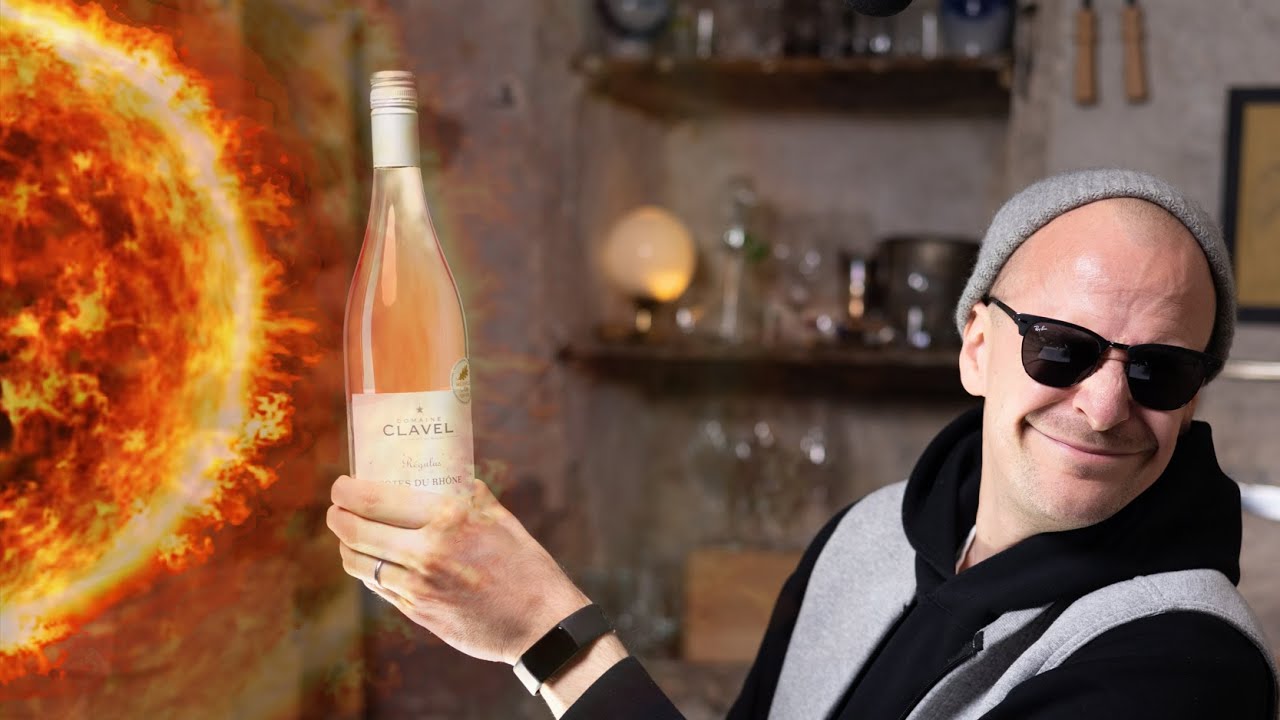
2022 Clavel Regulus Côtes de Rhône Rosé France
https://www.wine-searcher.com/find/dom+clavel+regulus+rose+cote+du+rhone+france?referring_site=KSB
The 100 Point Scoring System (from www.robertparker.com):
96-100: An extraordinary wine of profound and complex character displaying all the attributes expected of a classic wine of its variety. Wines of this caliber are worth a special effort to find, purchase and consume.
90 – 95: An outstanding wine of exceptional complexity and character. In short, these are terrific wines.
80 – 89: A barely above average to very good wine displaying various degrees of finesse and flavor as well as character with no noticeable flaws.
70 – 79: An average wine with little distinction except that it is soundly made. In essence, a straightforward, innocuous wine.
60 – 69: A below-average wine containing noticeable deficiencies, such as excessive acidity and/or tannin, an absence of flavor or possibly dirty aromas or flavors.
50 – 59: A wine deemed to be unacceptable.
The biggest enemy of wine might not be what you think it is. It turns out that something that is essential for making wine is also causing one of the most common flaws in wine and no one seems to notice. Sommeliers are trained to look for cork taint in wine or maybe oxidation in older bottles. The rise of low-intervention wines meant that we also started looking for volatile acidity, mousiness, and brett.
However, the most important flaw might mainly go unnoticed and could be easily avoided if more of you knew about it – let’s talk about it and taste how big the problem is in a blind-tasting experiment. What does the vine need to grow and produce fruit? Water, nutrients, CO2, and sunlight! Sunlight is essential for photosynthesis and without sunlight, there would not be wine. But as soon as the grapes are harvested light becomes an enemy and bottled wine needs to be protected from sunshine.
That’s one of the reasons why wine was traditionally bottled in colored bottles and stored in dark cellars. Colored bottles reduce the impact of harmful light and therefore protect the wine. Green bottles tend to reduce the impact significantly but dark amber-colored bottles are even better at protecting the wine. However, over the course of the last decades, clear bottles have become popular, particularly for white and rose wines – even though these tend to be the wine style most susceptible to light damage.
Consumers want to see what is inside the bottle in particular when they buy Rosé wine and therefore most Rosé producers now bottle their wines in clear bottles.
The producers know something you might not know: this decision has a tradeoff – a big one, as the wine bottled in the clear glass is naked and unprotected against light, causing lightstrike.
According to the Oxford Companion to Wine Lightstrike is also known as goût de lumière in French, is the damaging effect that light at short wavelengths in the ultraviolet and blue end of the spectrum can have on wine.
The light triggers chemical reactions within the bottle stripping the wine of aroma and resulting in funky smells reminiscent of cardboard, garlic, and cooked cabbage. Red wines tend to be more protected because of their phenolics and it is therefore extremely strange, why red wines are generally bottled in dark bottles and whites and rosés often aren’t.
Lightstrike was first documented in 1977 in a study focusing on the impact of light on Champagne and today the most well-known example of a winery trying to mitigate the risk of light strike is Louis Roederer with their Cristal, which comes in the iconic clear glass bottle but is wrapped in this orange foil to protect the wine inside.
Interestingly sparkling wines made using the traditional method are even more in danger from lightstrike because of the long time the sparkling wine spends on the lees … Now you might think … okok Konstantin … but why have I never heard about this problem? It must be a minor issue as no one really talks about it.
That is what I thought too to be honest but over the last few months, I started to dig a bit deeper into the topic and realized that the impact of Light Strike might be MUCH bigger than the impact of cork – especially for Rosé wines. But its impact might not be as apparent as cork taint for example
The biggest enemy of wine might not be what you think it is it turns out that something that is essential for making wine also causes one of the most common flaws in wine and no one seems to notice some are trained to look for caint or oxidation in older bottles and since the
Rise of low intervention wines we are also looking for volatile acidity mousin and bread however the most important wine flow might mainly go unnoticed and could be easily avoided if more of us knew about it let let me explain and let’s taste how big the problem is in a blind tasting Experiment what does the vine need in order to grow come on water nutrients CO2 and sunlight sunlight is essential for photosynthesis and without sunlight there would be no wine but after the grapes are harvested light becomes an enemy and wine needs to be protected from light that’s one of the reasons why
Wine was traditionally bottled in colored bottles and stored in dark cellers colored bottles reduce the impact of harmful light and therefore protect the wine green bottles make a big difference but dark amber colored bottles are even better at protecting your wine however over the course of the last decades clear bottles have become
More popular particularly for white and Rosé wines even those wine styles are the most succeptible to light damage consumers apparently want to see what’s inside the bottle especially when they buy by Rosé wines and nowadays most roses are bottled in clear glass bottles the producers of those wines know
Something you might not know this decision has a trade-off a big one as the clear glass bottles leave the wine naked and unprotected against light causing Light Strike according to the Oxford Companion 2 wine Light Strike is also known as G lumier in French it’s a damaging effect the light at Short
Wavelengths in the ultraviolet and blue end of the spectrum can have on wine the light triggers chemical reactions inside the bottle stripping the wine of flavor and causing funky flavors of garlic cardboard and cooked cabbage red wines tend to be more protected because of their phenolics and it’s therefore
Extremely strange while red wines are usually bottled in dark colored bottles while white wines and Rosé wines often aren’t night strike was first documented in 1977 in a study focusing on the impact of light on champagne and today the most well-known example of a winery trying to protect their wine from light
Is Lou rudder’s Crystal that comes in this iconic clear glass bottle and that needs to be wrapped in Orange clink film in order to protect it from light interestingly wines made using the traditional method are in high risk of developing Light Strike because of the long time they spent in contact with
Dead yeast cells the lease they build up precursors that will later bring out this weird funky flavor but now you might think okay okay Constantine but why have I never heard about this problem this must be a minor issue as no one is talking about it to be honest
That’s what I thought too but over the last few months I duck deeper and deeper into the topic and realized that Light Strike might be a much bigger problem than cockaine for example the only thing is Light Strike is not as obvious as cockaine in a study under the catchy
Title of Flint glass B cause white wine Aroma identity degradation researchers compared wine stored on a supermarket shelf to the same wine stored in the dark they were using gas chromatography and mass spectrometry in order to analyze the quality of white wines over time and it was striking how big the
Impact of Light Strike was on white wines bottled in clear glass bottles as a result they wrote that after only 7 Days of shelf life in Flint glass bottles a dramatic loss in terpenes 10 to 30% and nor isoprenoids 30 to 70% was recorded whereas colored glass bottles
Did not evidence such Behavior even after 50 days and darkness preserved the Wine’s fruity and Flowery aromatic Integrity which is pretty striking as tpen and no isoprenoids are two of the primary sources of Aroma in wine indicating that the aroma of a wine can completely change within one week of
Being stoed St on a shelf in a clear glass bottle just think about this most wine is sold by the bottle in supermarkets worldwide most supermarkets and wine shops turn their lights on I guess and some even have Windows and still producers bottle their Wines in clear glass bottles or Flint glass
Bottles as they call them in the study exposing their products to damage just for marketing sake the wine might sit on the shelf for much longer than one week and most of the damage occurs within the first few days anyways after being purchased the wine probably
Doesn’t go into a dark Sellar but sits on a kitchen counter for the rest of its life instead getting more and more damaged by light the wine blast podcast dealt with this issue recently and they interviewed Rosé expert Elizabeth gabay master of wine who estimates that 30% of
All Rosé she tastes is actually damaged by Light Strike and she also argued that the famous gik flavor of provance Ros might actually come from Light Strike I’m putting a link to the podcast episode and the study into the description so you can check that out if
You want to so I want to find out whether the problem is real and I want to push the boundaries to see how bad the issue really is I bought four bottles at my local supermarket of the exact same Rosé filled in clear glass bottles under screw cap I chose screw
Cap in order to avoid cockaine and reduce the risk of oxidation one of the bottles was sitting on the shelf as I arrived I don’t know for how long but it had been sitting in the light the other three bottles came straight from a closed case and I’d guess that the wine
Was probably put into that case directly after being bottled not having been exposed to any light at all one of the bottles set out in the sunshine for 2 days not even 2 days close to 2 days it’s still winter here or early spring
But it was kind of Sunny one day the the rest of the time was pretty cloudy so it didn’t actually get all that much sun this bottle here was sitting in a display fridge for 2 days for the same period being exposed to artificial light and not direct sunlight and this bottle
Was just in the dark bottle B the whole time so it didn’t see any light at all so let’s see whether even after 48 hours I’m able to tell a difference between those four wines let’s go so as per usual I’ve put little labels on the glasses this one
Says Al for artificial light this one says shop for the wine that was sitting on the shelf in the shop this one says NL for no light and this one says DL for daylight makees sense I hope so so now I’m going to take these babies for a
Spin using my pattern pending randomizer that reminds me I should check on the pattern process there but anyways let’s turn around and then taste the ones what this is fascinating this is not the same wine I mean it is the same wine but it tastes differently I mean there’s such a pronounced difference
Between this wine on my left and the other three it’s just striking you really don’t have to be a master of wine order to smell that there is something else going on so it it is it is obvious so if I compare those two ones this one actually has a fine elegant flavor
Profile it smells a little bit of raspberries and strawberries that’s kind of what you would expect from a rosé from coton well this one is funky it does smell of garlic and a little bit sulfury I also could see how I would think this might be a little kii a little bit well
Savory but yeah it’s just crazy that those are the same wies so just to be very precise these wines are not just the same vintage same producers same origin they are also the same Lot number so they’ve all been bottled together from the same Barrel tank whatever and
They came on the same shipment in the same box so all of it was exactly the same but they taste completely different the other three there’s not such a big difference between the other three I’d say this one is maybe the most pristine and the other ones are a little bit more
Funky especially this one but I I think I wouldn’t kind of if if I wouldn’t know that there’s something going on I wouldn’t actually say that there’s a difference but this is just bad and that after 2 days well I mean what is it I hope it’s not the one that was thought
In the dark otherwise I really have to get more light into my cellar down here I’m guessing that this was the wine that was stored in the sunlight but remember that it’s it’s cold outside so so it wasn’t warm it wasn’t the heat it was just slightly Sunny uh with a little bit
Of cloudiness as well so so it was exposed to Sunshine for less than 48 hours and it just tastes completely different well that is if I’m correct shall we look so like I said I’m guessing this is the daylight wine and it is it is the daylight wine this is just mindblowing
To me it it might be quite nerdy but I’m just kind of going wow so like I said the other three are all fine I wouldn’t be 100% sure which one is which but if I’d have to guess I would say this one is probably the one stored in the dark
And it is it’s the no light one well those two are a little less precise so those must be the ones stored in the shop with no natural light but artificial light and this one the one that was stored in this little fridge with artificial light
For 48 hours and yeah it it also shows a little bit a tiny little bit but remember those were only like two days I I don’t know how long this actually was stored in the shop for on the Shelf this might have been less than 2 days on the
Shelf um I can really tell but there is a slight difference there and I’m pretty sure that in a week or two I would notice a big difference but this is just insane I mean if you store your rosé wine anywhere close to a window really think twice because you’re losing out on
A lot of quality because yeah I mean this after two days well I think I’m repeating myself but mind blown all right this was absolutely fascinating for me and least I think I will never look at clear glass bottles the same way this just showed that there is a
Pronounced difference and that you’re really damaging your wine if you put them into clear glass bottles so if you’re a producer please don’t do that if you’re a consumer please don’t buy that if you have to buy it because I mean you can’t really buy rosé wine that
Isn’t in a clear glass bottle keep it in the seller and make sure that it doesn’t get sunlight before you want to open it and make sure that you don’t buy a bottle that was sitting on a shelf for a long time or at all buy a bottle
Straight from the case ask them to open a case for you or give you one from the warehouse in order to make sure that you’re getting the real deal so thank you for watching I hope you enjoyed this little experiment if you did then please like it down here subscribe to my
Channel if you haven’t done so already my question of the day is is is your mind blown as well because mine clearly is whatever you do stay thirsty and stay out of the Sunlight
44 Comments
What a “fun” experiment! Thanks for sharing! I work in a wine shop where I switch out bottles daily from the shelf to the dark of our cellar (and everyone I work with thinks I’m crazy) but I know what’s up!
Immediately went and turned off the light in my wine fridge!
Imagine how many flawed wine reviews might be out there 😅
Ahh yes the uk press went mad for this few weeks ago after the Wine Blast episode
Ahh yes the uk press went mad for this few weeks ago after the Wine Blast episode
Fascinating indeed. I will be a lot more careful with my wines and (day)light in the future. Very valuable video.
Really interesting!
💡
Heat or UV?
Wish we'd had a points score for the best and worst. I mean the damaged sounds sub-70 but it might help to know.
White box wine for the win!
So cool you made a video about this topic! We made a similar test with beer bottled in green glas two years ago. The difference was extreme. A friend of mine, who arranged the test and who had studied brewing technology, explained to us, that a special substance in the hop increases the effect of light and that it’s complete nonsense to bottle beer in green glas or clear bottles…
Kinda interested in getting a set of glasses to pour out a bottle like you have here. lol
You need to team up with more people to bring more dynamics to your channel. I think it would be more fun for you, and grow the channel more.
I have seen many top producers in NZ and Aus putting their roses into clear glass bottles. They obsess over things like VA, brett, cork taint but don't seem to address the elephant in the room
I work in a booze shop and I found this video very interesting. My advice is to not buy from the fridge and only take the wine from the rack where the bottles are exposed to the least amount of light. I would apply this to all wine in clear glass, not just Rose. This will change how I purchase (and store) wine in the future. Makes a case for buying wine from the cellar door.
Interesting that I hear about this phenomenon all the time in regards to beer, but not wine or other beverages.
Had no idea this issue existed. So Amfora/Clay bottles, aluminum containters or tetra pack would be the best material to store wine in then since its not transparent? 😀
EnLIGHTening!
Very educational. Thank you
good to know. thank you! also thank you for straight forward nice videos, learned alot. had a beer period of 3 years, cocktail period of 2 years and you got me into my wine period!
Wine is not only ruined by sunlight but the heat from same will cook it in your car. I shop from the darkest part of the shelf, and cover the wine while on the way home.. I often bring a cooler to pack it in if I am not returning home right away.
Many shops in the US, large and small (as well as supermarkets) have bright white lighting, and in many cases, large windows that let light in. And low inventory turnover for many wines. I suspect light strike is a huge problem in the US.
Is this partially why wines in vineyard tasting rooms always seem to taste better than when you get them home?
For me as a sweet wine collector a test with sweet wines would also be very interesting. They have transparent bottles as well. Best regards from the Burgenland.
🤯
Amazing, you really blew my mind with this experiment, thanks for sharing this knowledge!
So sunlight is good for growing grapes but not for storage!
I wonder what the effect of light is on Sauternes
GREAT tasting experiment!!
Excellent point. Thank you
Fabulous video. Thank you so much for using your tasting skills on this topic. All of our wine is stored away from light, but the exposure in shops is something we cannot control, or even know about. It would be great if you could do a similar video on the effects of temperature exposure, especially heat. With climate change making our summers hotter, shipping wine during warm months will increasingly put our investments at risk, not to mention the abuse bottles suffer in shops and restaurants.
I’ll now look for bottles wrapped completely in dark material.
Great and timely video. Gracias Senor Konstantin . I experimented by buying 2 Chenin Blancs – 1 from the front of the shelf and 2 from the back of the shelf. The front one was indeed funky, the back one pleasing to my taste buds. And the store uses led lights. Whoa!
Has anyone had experience assessing wines stored behind UV-filter treated glass (but with surrounding sunlight/artificial light)?
Should you only be concerned about light strike for clear glass bottles? I know you said that green or amber glass is better, but does that solve the problem? Additionally, does it need to be direct light or will a wine fridge glass protect bottles?
Should you only be concerned about light strike for clear glass bottles? I know you said that green or amber glass is better, but does that solve the problem? Additionally, does it need to be direct light or will a wine fridge glass protect bottles?
Great info and well put my friend.
Wow. This is amazing, never thought about it! Thank you so much as always… now i will be paranoid about any rose and white wine bottles…
My wife and I watched this, so had to try it. It was immediately noticeable. I want't sure if it was just us, so I had my wine group do a blind tasting. I kept the bottles in the same place – one had a black bag and one was in the open against a window with indirect (North facing, nothern hemisphere) light. Every one in my group spotted that there was a difference. It wasn't very pronounced, but I imagine with longer it might have been. Thanks for the eduction, Herr Baum.
What corkscrew do you use?
Awesome insight! Thank you.
I wonder how much damage is caused by the glass electromagnetic capacitance.
And, how the effect may be retrospectively reversed if at all possible to any degree.
Perhaps there is a value in using lower grade recycled glass which has lower light flux. Cheaper to manufacture with better storage results.
Funny thing, I am in Porto now in a restaurant with a nice display rack of different wines from Europe. 22 degrees in the room, windows on both sides – besides quite expensive champagnes here e.g 1999 Dom Pérignon P2 – I am wondering how long it has been sitting on the shelf at these conditions 🤪
isnt the biggest wine cellar in Moldova?
Great experiment setup! This is super surprising given how many clear bottlings there are especially for natural wine. Thanks for sharing!