
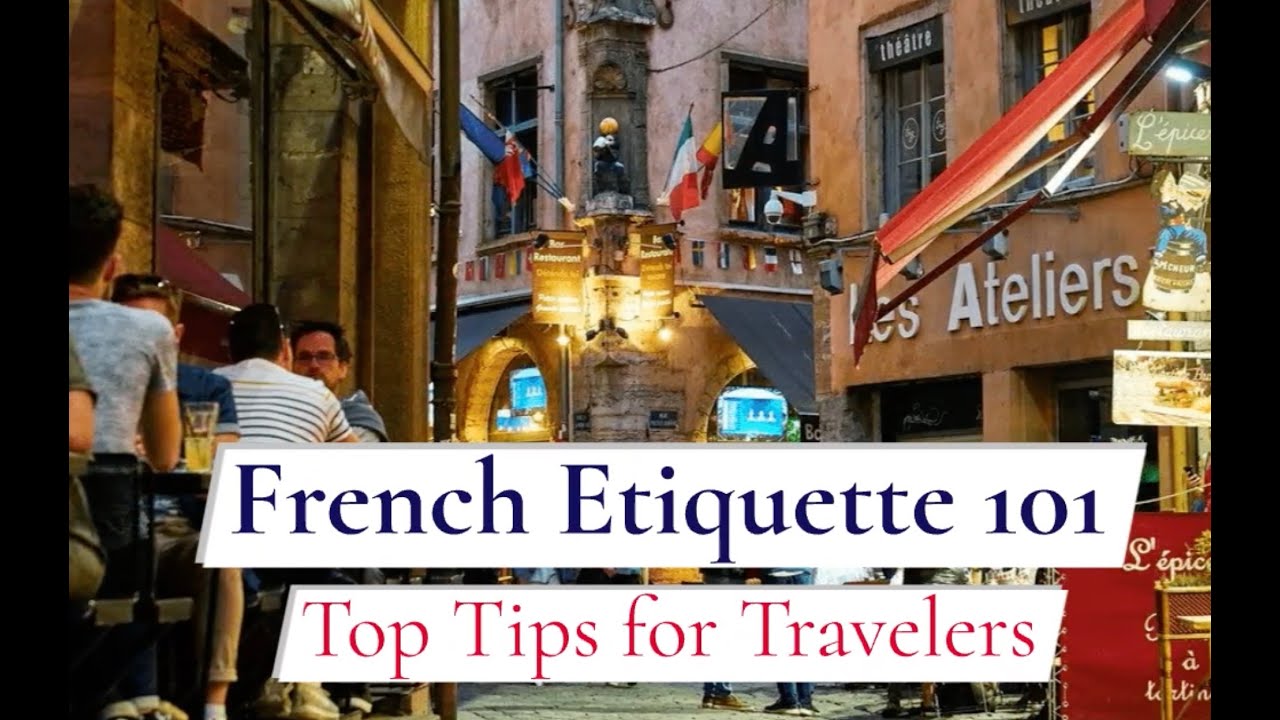
Heading to France but aren’t sure what the etiquette rules are in certain situations? Our French Etiquette 101 tutorial is full of in-depth tips for travelers who want to get savvy about the local culture and customs, whether in Paris or elsewhere in France. Learn the rules for polite greetings and questions in French, how to eat out at a restaurant in France and observe proper dining etiquette, when to give cheek kisses (bises) or not, how and when to tip servers, & much more. #france #frenchculture #frenchrestaurants #frenchetiquette #etiquettelesson #etiquettecoach #politephrases #frenchphrases
Follow our channel and visit Paris Unlocked for more inspiring travel tips, news, culture and history related to France 🇫🇷 and its mesmerizing capital city!
Also make sure to subscribe to our free monthly newsletter for all the latest on Parisian travel, culture, food and more!
___________________________________
Photo and video credits:
“Lyon Restaurants” by Pedro Szeleky is licensed under CC BY-SA 2.0
“Le Boulanger de Monge” by yisris is licensed under CC BY 2.0.
Diners at Le Train Bleu restaurant in France. Image: Courtney Traub/All rights reserved
“Boulevard St-Michel, Paris” by Zdenko Zivkovic is licensed under the Creative Commons Attribution 1.0 Generic license.
Rights-free image of man smoking by Sammy-Sander from Pixabay
What, where, when, why who – Illustration free for use under the Pixabay Content License
Paris skyline with gargoyle: Image by Pexels from Pixabay
Woman with beret and bread: Image by olga volkovitskaia from Pixabay
Picnic on the Seine: Image by Nicolas Vigier/Public domain (CCO 1.0 Universal license)
Montmartre terrace. Image by Courtney Traub/All rights reserved
Screenshot: @realphdfoodie post from TikTok
Lyon, banks of the Saone river: Image by Jean-Louis SERVAIS from Pixabay
Les Bouquinistes de Paris: Image by Courtney Traub/All rights reserved
“Bonjour” sign on door: Image by Foundry Co from Pixabay
“Bonjour” and waving image: Getty Images (licensed use of stock image through Animoto subscription)
“Mademoiselle a disparu” vintage French film poster: Image by Patricia M is licensed under the CC by SA 2.0 license.
“Bonjour” cafe illustration: Image by Andrian Noor from Pixabay
Young woman in Paris: Photo by Bucography on Unsplash
Liberté patisserie in Paris. Image by Courtney Traub/All rights reserved
Hommage d’Édouard I à Philippe le Bel, enluminure des XIV-XV siècles ; source : http://gallica.bnf.fr/scripts/mediator.exe?F=C&L=08100014&I=000020. Cote : Français 73, folio 313 v° Origine : BNF, Richelieu, Manuscrits français, Grandes Chroniques de France, Paris, XIV-XV siècles. Pour les droits, voir le haut de la page (rights-free image)
“Diner en Blanc 2013” by Carsten Sprotte is licensed under CC 2.0 Deed.
Two men at cafe terrace/Getty Images (licensed use of stock footage through Animoto subscription)
Woman and man shake hands in Paris (licensed use of stock footage through Animoto subscription)
Paris terrace/table: Photo by Luis Cortés on Unsplash
Two people sit at a restaurant/ Getty Images (licensed use of stock footage through Animoto subscription)
Plate of food at restaurant/Jay Wennington on Unsplash
Pizza and mozzarella salad/Rights free image from Pixabay
Wine etiquette: Photo by Alena Torgonskaya on Unsplash
Toasting with wine: Image by Getty Images (licensed use of stock footage through Animoto subscription)
Child at restaurant: Photo by Vitalii Khodzinskyi on Unsplash
Child at restaurant with tea and biscuits: Image by Getty Images (licensed use of stock footage through Animoto subscription)
Bread basket with cheese and wine: Image by Getty Images (licensed use of stock footage through Animoto subscription)
Bread and butter: Photo by Toa Heftiba on Unsplash
Fish main course at Clover Green in Paris/Photo by Colette Davidson (licensed to Paris Unlocked)
Desserts at Bouillon Chartier/Photo by Rachel Naismith (licensed to Paris Unlocked)
Woman and server at table: Image by Getty Images (licensed use of stock footage through Animoto subscription)
Man using knife and fork at restaurant: Image by Getty Images (licensed use of stock footage through Animoto subscription)
Knife and fork on plate: Image by Marco Verch/licensed under the CC by 2.0 Deed license
Cheese and wine: Photo by Farhad Ibrahimzade on Unsplash
Café gourmand by Patrick Janicek is licensed under the CC by 2.0 Deed license.
Restaurant bill/check: Photo by Jessie McCall on Unsplash
Euro notes in hands: Photo by Christian Dubovan on Unsplash
Restaurant server: Photo by Louis Hansel on Unsplash
Euro coin: Photo by engin akyurt on Unsplash
Card payment: Photo by Blake Wisz on Unsplash #etiquette
Hi everyone this is Courtney from Paris unlocked one of the best free sources out there for travel tips and cultural facts on France and its marvelous capital city so today I’ll be going over some of the basic rules and customs of French etiquette including things like polite greetings in French how to
Navigate certain social interactions how to behave at a French table and much more think of it as a French etiquette 101 course that answers some of your most burning questions about how to get by like a native make sure to listen through to the end so you can benefit
From all our expert tips and please like and share this video if you find it helpful also make sure to subscribe to my channel to get all the latest videos on Paris and France we’ll be covering everything from travel tips and trip planning Basics to French history food
And culture welcome and let’s get ETI okay so I’ll start by saying that if you do a basic web search on the rules of French etiquette this can send you down a rabbit hole of forum posts on places like trip advisor or Reddit and these are posts with topic headings that
Might say things like why are the French so Fring mean or why are parisians such a-holes I actually did find ones that were similar to those recently if you can believe it it’s also true that many people get really anxious about setting foot on Paris or elsewhere in France and
This is pretty understandable when you think about the constant stream of TV shows movies and self-help books on supposed French Womanhood that all depict the culture as one that’s well snobby and rude according to the stereotypes so you might be asking yourself how do I avoid the famous
Parisian sigh or the side eye or their tendency to correct visitors for their cultural or linguistic mistakes and is there any way to master the basics of French etiquette without spending months living in the country first can I avoid feeling utterly humiliated and clueless after most interactions with French
People can I escape the cringeworthy fate of characters such as the now famous Emily in Paris who embarrasses herself at every turn with bad French and cultural faux paw keep watching to the end of this video as I count down a few of the top myths and realities about French etiquette rules stay
Tuned I’d like to start by saying that I really don’t recommend relying on TV and movies to give you an accurate picture about what French culture is like these tend to exaggerate everything into predictable stereotypes and they can be fun sure but they don’t do much to help
Us really understand a culture in all its complexity and nuances and you should also know that many of the old cliches about France and French culture don’t apply much anymore if they once held a grain of Truth the fact is younger generations of French people generally speak some English confidently
And tend to be more relaxed about the old etiquette rules but this doesn’t mean you should just ignore these rules hence the need for this video service culture has become more friendly in many places in France in recent years in my experience and the experiences of many
Others in places like Paris the local government and tourism board literally undertook an ambitious plan to make the city friendlier and less intimidating to visitors starting in 2013 and from what I and some of my friends and colleagues have seen since then the campaign seems
To be working at least part I find the atmosphere in Paris and also elsewhere in France to be somewhat friendlier to tourists these days especially compared to when I first moved to France all the way back in 2001 of course some people would disagree with me as videos such as
The one that went viral on Tik Tok from the food blogger real PhD Foody ATT test sadly some will continue to have unpleasant experiences in France and I’m always really sorry to hear about these as everyone deserves kindness and respect but this doesn’t mean all French
People are rude and unkind or that you should skip France as a ination entirely just because somebody has a report of a bad experience that would be I think a too narrow way to look at it all and deprive you of the fun of exploring a really interesting and wonderful culture
So now that we’ve gotten all that out of the way it’s a good idea to sort through the realities and myths of the sort of etiquette roles you might be expected to follow as a visitor in France My Hope Is that this will allow you to relax during
Your stay and feel more confident interacting with people in a variety of different situations okay so my number one French etiquette tip for new Travelers in particular is to always greet people in a way that they consider to be polite that’s a real shocker right the fact is
That France remains a relatively formal culture even when you compare it to neighboring European countries so for example in Spain it’s now become the norm for servers and restaurants to greet you and ask for your food or drink order by saying Dame which literally means tell me and can feels a bit brusk
At times to be honest but in France it would be very unusual for French servers even in casual bars or restaurants to not open an exchange with a diner with bour in more formal places it’s more likely to be bonjour madame or bonjour M of course it’s becoming more common
Among young French people especially Jers out there to ditch the Madame or mure or mm moiselle altogether because they often find such rigidly gendered greetings Pretty P and unnecessary and I’m starting to tend to agree with them nevertheless it’s still really important to start every sing single interaction
You have with bonjour this is true whether you’re asking for directions ordering a coffee or meal asking to see an item in a store or checking into a hotel this is just your basic polite way to greet people now you should know that in the evenings so after around 5:00
P.m. most French people will instead say bons which means good evening but don’t worry if you forget and say bonjour instead after 5:00 p.m. it’s really not a big deal the person might respond with bons instead but this is usually in a friendly way and not a sarcastic way
Although there are exceptions here’s an extra tip for you if the person or group you’re communicating with look to be over 50 or so that is aged 50 or over I strongly recommend greeting a woman withour Madame and a man with bour M you’re likely to get a much warmer
Response if you do because older Generations still tend to want to use these more formal greetings I don’t really recommend using mm moiselle these days though it’s not as popular with with young women as it once was and it’s risky because you don’t know whether someone will be potentially offended if
You use it Mademoiselle typically being used to refer to a young unmarried woman so that makes a lot of presumptions about a person’s age marital status Etc and it’s better to just not use mm moiselle anymore in my humble opinion also please remember to say Meri and sille when ordering or requesting any
Sort of service or assistance silu and Meri or meru go a long way in France not saying please or thank you makes you look rude to a French person just remember that okay next up we’re going to address the French custom of Laz kissing on the cheeks or giving air kisses as many
People are want to do rather than actual kisses on the cheeks now this is another common source of anxiety among tourists and visitors to France but I think it’s really one you can mostly relax about this is because you only really need to worry about this one if you meet up with
Friends family members or introduced to them by others they know well and outside of intimate settings like dinner parties receptions and sometimes business meetings strangers don’t generally exchange laes so how do you know when it’s appropriate to offer laes if in doubt I’d wait for the other
Person to lead the way some people may extend their hand to invite you to Shake It While others may come right in for laies without asking you in Paris this is generally one small kiss on both cheeks or in the air touching cheeks and pretending to kiss in some regions of
France it’s three even four that’s typical in the south of France and certain other regions and as mentioned earlier some touch cheeks but kiss the air so it’s not always going to be planting a kiss on someone’s cheek again you have to kind of follow the lead and
See what the other person goes in to do so what about two men who meet in a social setting well men sometimes shake hands with other men or exchange debes it depends on the social context level of closeness and personal preferences really like I said most Travelers won’t
Have to worry about navigating these subtleties though if you do end up at a private dinner party or other event where La may be in play wait for others to initiate like I said someone you’ve just been introduced to might even approach you with a smile and ask la
Which means shall we exchange cheek kisses I think it’s important to note here that this custom is not considered even remotely flirtatious or sexual although you may still feel uncomfortable with it remember that you always have the right to politely refuse even if it may lead to a bit of
Awkwardness if you feel uncomfortable exchanging laies with somebody who offers it simply extend your hand instead and smile warmly as you shake hands but I do have a small warning here I’d always avoid big flashy Smiles with your teeth both in this context and any social context in France French people
Often interpret these sorts of big teethy smiles as grotesque and borderline aggressive outside of the context of genuine laughter or Amusement it’s definitely something I’d steer away from so now let’s move on to one of the topics that I presume is on a lot of your minds how to not seem like a
Clueless person while eating at a restaurant or perhaps a formal dinner party in France so as long as you keep these basic rules in mind when eating out in France or dining in any private setting you’ll be fine these basic rules apply to sit-down meals rather than casual settings such as fast food
Restaurants or enjoying street food on a park bench those settings are more casual and you don’t really need to worry about the etiquette rules in those more casual contexts remember that obvious things like don’t eat with your mouth open and don’t start eating before your fellow diners arrive or start
Eating should always be respected as they should be pretty much anywhere else okay so let’s start with the beginning of the meal here’s how to start your adventure at any french table first put your napkin in your lap only when you’re ready to begin eating do not put the
Napkin in your lap before it’s time to eat if you’re dining in a private setting or if you’ve been invited to eat at a restaurant by someone wait for the host to begin eating or even to invite you to begin they’ll often say Bona which means enjoy your meal as a signal
That everyone can start eating if you feel comfortable doing so you can wish them the same but this certainly isn’t an obligation next up keep those hands on the table another basic tip I can share about table etiquette in France is one that some of you may find surprising
Or even a bit odd it’s considered impolite in France to place your hands under the table during a meal throughout the meal try to keep your hands visible on the table without placing your elbows and whole arms onto it the idea is to place your wrists and forearms at the
Edge of the table between bites and courses and throughout the meal no one can say for certain where this custom comes from but make sure to follow it when dining out in France otherwise you might look a bit clueless or at least make yourself obvious as someone who’s
Unfamiliar with the rules of polite dining okay now moving on to toasts and wine etiquette when it comes to Wine a whole etiquette lesson could no doubt be built around it but here are just the basics first if you’re at a private dinner make sure to only take sips from
Your wine glass following a proper toast which is often initiated by your host in France it’s considered impolite to begin drinking before a toast is made obviously this doesn’t apply to restaurants where you can start drinking your wine whenever you’d like although it is considered a bit go in France to
Begin drinking wine before food has arrived during a toast look the person in the eye when raising your glass to them and toasting and say Sante which means to your health and if you’re the object of the toast remember to never drink to yourself This is considered a
Bit impolite to say the least next up re in your kids for those of you traveling with your kids especially toddlers to about 10-year-olds be aware that it’s really not looked kindly on in France when parents quote unquote let their kids run around a restaurant especially if they disturb other diners believe me
I understand the Dilemma as someone with a toddler myself toddler is going to toddle right I have had to find some tricks to avoid breaking out into a cold sweat when eating out with my daughter in France I especially try to find places that have ample Booth seating
Since it’s easier to keep a toddler from running around when they can play or even stand up without shoes of course on a comfortable Booth I also look for restaurants that advertise themselves specifically as familyfriendly though even in these places you should know that kids are typically expected to stay
At or around their own table no running and screaming around other people’s tables you get the drift I know this is a challenge and it’s not something you can easily control but I did want to warn parents that this is a cultural expectation in France and it’s something
You may need to navigate if you do bring your little ones to Paris or elsewhere in France okay let’s move on to the pressing question of how to properly eat bread on any trip to France after all eating bread is practically a national sport in France right if bread is served
Before the meal itself please don’t gobble down everything in the Bread Basket however hungry you may be save some for the meal to come especially since most restaurants won’t refill it without charging extra it’s also important to note that free refills are generally not a thing in France whether
It comes to bread coffee or soft drinks don’t go expecting free refills you’re almost never going to get them okay one of the biggest tips about eating bread properly in France Do Not Butter a whole roll or slice of bread it’s generally considered rude to butter a whole piece
Of bread instead what you’ll need to do is put some butter on your own little plate tear off pieces of a slice or roll of bread and butter one chunk at a time also in some places in France it’s also considered a bit go to place bread
Straight on your dinner plate so the solution is to either use a separate bread plate if the restaurant or host provides one or to Simply put it on the tablecloth or table next to your plate this may seem weird or counterintuitive to do so I know but this is better than
Putting it on your plate bit strange but it’s one of the things that is typical to see in France okay let’s move on to the main course at a typical French meal when whether you have one course or six during your meal it’s important to take
Your time and allow plenty of space for conversation eat slowly and enjoy the ride please don’t pester the servers or ask how long it’ll take for the next course to get to the table what you have to know is that in French restaurants things generally take a bit more time
Than you might be used to and the idea is to allow for digestion and conversation between courses okay next tip never and I mean never yell out garon to gain a server’s attention unless your goal is to irritate or even offend them the correct way to flag a
Server down is excuse Mo which means Excuse me while eating it’s traditional to hold the knife in the right hand and the fork in the left and keep them there at all times but I really wouldn’t worry too much if you’re not used to this while some etiquette experts tell
Visitors to follow the European way of using silverware or Cutlery the reality is that France isn’t such a snobby place that waiters and fellow diners will stare you down or shame you in some way if you do things a bit differently at home and don’t want to change how you
Eat with your color that said there’s one trick That’s essential for letting your server or hosts know that you’re done with a particular course place the knife and fork with the tines facing up and parallel to each other on the right side of the plate this will signal that
You have finished your meal and let the server or host know that the plate can be taken away the server may also come by and ask which means have you finished the polite way to respond if you’re indeed done eating is we mer okay next up the order of courses in
France dessert is generally only ordered following the main meal although sometimes with set menus the server will ask you for your choice during the initial ordering process remember that cheese comes before dessert or is sometimes listed as a dessert itself it’s not usually eaten prior to the main
Course just so you know the French would find it odd to eat cheese before having the main course or even before the appetizer coffee is also generally enjoyed following the meal during or after dessert it’s considered odd in France to order coffee or sweet soda drinks during or before a meal at least
In sit-down restaurants fast food joints of course are exceptions in more traditional restaurants stick with sparkling or still water and or wine okay so how do you ask for the bill or check remember that most servers in France will wait for you to ask for the bill even long after you finished
Dessert this is considered polite in France the server will almost never come up and give you the bill without your asking for it so don’t sit around waiting for them to come give it to you in their minds it would be impolite as if they’re suggesting that you leave the
Restaurant and this is simply not done in France in the vast majority of places if you need to get the check or the bill right away you can say excuse which means excuse me can I please have the bill or you can also just say excuse MOA and make a gesture
To the server from across the room that you’d like the check sort of the scribbling pen on paper gesture but I’d avoid doing this in more formal restaurants if you can help it it’s best to say excuse okay so next there’s the whole question of tipping in France which
Again we I could probably make a whole video on separately uh the etiquette of tipping but I’m just going to say briefly that tipping culture in France is a little less cut and dry than it is in the US and certain other countries so if the service is good to excellent you
May choose to tip servers around 5 to 10% of the total bill now there’s an automatic service charge of 15% that’s going to be added to your bill but you have to understand that this rarely ends up as tips for servers they instead receive a monthly salary that’s typically more generous than the
Earnings of counterparts in North America so where your average server in North America might be making $2 or $3 an hour in wages and then most of what they earn is in tips that’s not really true in France servers will make not a super generous but a more generous
Monthly salary that’s more stable and tips are not considered nearly as much part of their earnings but while tips are not an obligation in France many or most diners would leave an additional 5 to 10% for service that is good or exceptional it’s still more common to
Use cash because many card machines in France don’t have an add tip option this might be surprising I know coming from North America where tipping has become such a culture in its own right some argue that the 15% service charge in restaurants in France is enough and it’s
True that leaving a poor which is the word for tip in French is again not an obligation as it is in the US and elsewhere still I believe that leaving at least 5 to 10% for good to exceptional service is the right thing to do especially since contrary to
Popular belief servers rarely receive the 15% service charge on top of their salary one exception to the Tipping rule is when you have just a cup of coffee or glass of wine in a cafe or bar in these cases tips are not generally necessary feel free to leave some pocket change or
Round up to the next Euro in these cases tips are also not generally given in fast food or takeaway restaurants well that’s about it for now if you’re interested in learning even more about the fine points of etiquette in France make sure to visit our full article at Paris unlock just search for
Etiquette in the search box at the website thanks so much for watching please like and share this video if you found it helpful And subscribe to our channel for more Paris and France related travel tips and inspiration Bage
1 Comment
Hey everyone, this is Courtney, Editor of Paris Unlocked and happy to answer any additional questions you might have about French/Parisian etiquette! Thanks for watching, and be sure to visit my site for tons of tips on planning a trip to Paris, French culture, food, history & more: https://www.parisunlocked.com