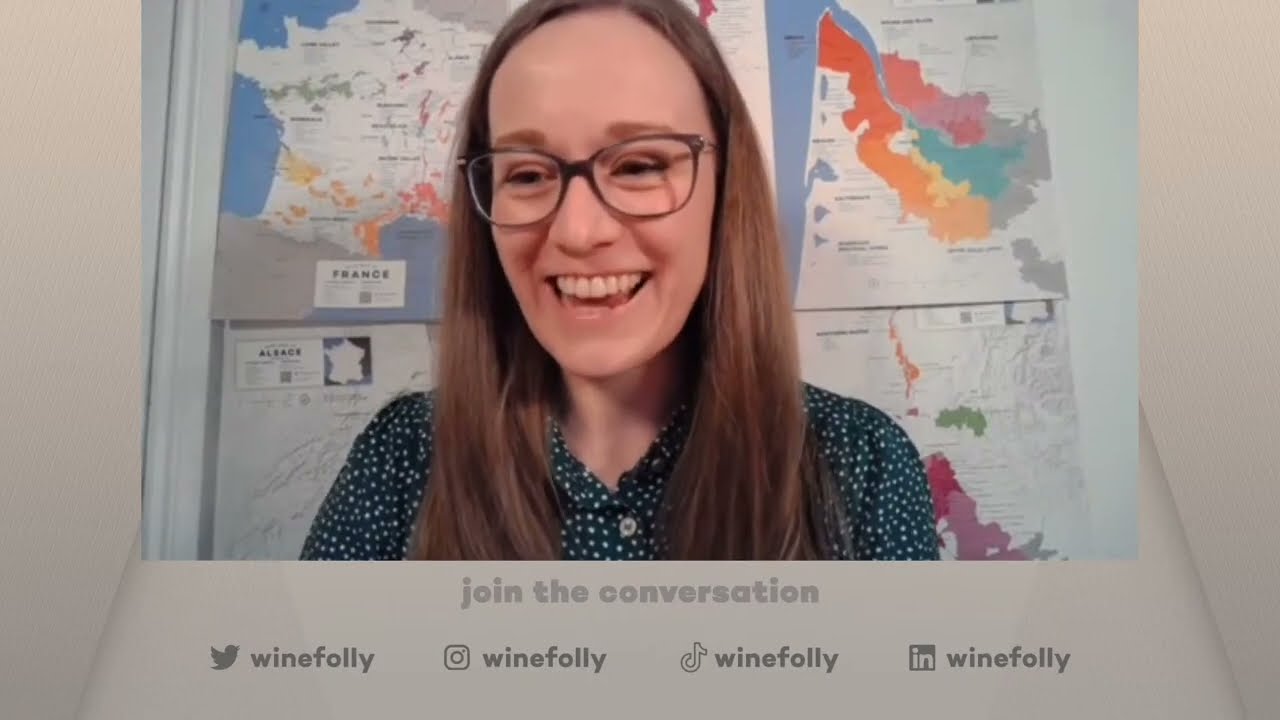
Wine Folly has launched the new French Wine Course – all of our friendly wine folk who purchased the pre-launch package are invited to our launch party.
Master of Wine, Christine Marsiglio, and awesome wine communicator and author, Madeline Puckette, will talk all things French wine!
Hello hello hello and welcome to wine follies french wine course we are so so excited to have you here joining us live on the youtubes and so i have with me here christine marcilio who is amazing and she is going to talk to us a little
Bit about the chorus and i’m going to talk with you a little bit about her and uh hold on let me adjust some sound things i’m having too many too many sounds going on at once in my headphones we should have tested that too guys but no worries
So let’s talk a little bit about what is in store for you and a little bit of background about this course because it’s very different than what we’ve done before and what you might have seen before in the out there worlds and we’re very inspired by online education and so
Thank you so much for joining us here for that okay a little background about wine folly and what brought us here i co-founded wine folly back in 2011 it was like a dream of mine to do something on the internet with wine but i didn’t know how exactly to do that
And so that led to creating a blog and we started creating all these visual ways to learn about wines uh posters and maps and that led to our first book wine folly the essential guide which got on the new york times bestseller list it was like a few rows below like super
Green smoothies you know in the food and wine foods section of the new york times specialist but we were so happy and excited to have a wine book on the bestseller list it means people are interested about learning more about wine and second book comes out that was in 2018 and that one
Won a james beard award it was a total refactor of the first book i actually took what i learned from the first book and just rethought about every single page every single type of thing and thought if i could get you to be a certified sommelier essentially by
Looking at this book what would you need what guide would you carry with you while you’re studying and practicing and trying to get that level of knowledge because having that level of knowledge feels awesome does it not feel awesome christine all right so that’s enough about me i want to introduce you to
Christine and stop talking about myself and wine folly christine joined us uh this last year and she’s joining us from london which is why we’re posting a little early and for you early folks on the other side of the world um who are ahead of us back over here on the west
Coast uh christine is a master of wine she is basically the valedictorian okay this is silly for me to say this but aren’t you kind of the valedictorian of master of wines she got the boneless award which i think only 32 people have that award so yeah so pretty cool that one yeah
So so when i geek out about wine and soil types she is right there with me and maybe right up there a little bit more you also have a um do you have a degree in uh what is your degree specifically in because i don’t remember how it’s
Called because you you went to france to get that degree didn’t you yeah i studied in france for two years i did a master’s in analogy in viticulture which is just a fancy way of saying uh grape growing in winemaking so i did that for two years in france which
Uh you know was pretty fun actually if you’re going to study something for two years uh wine’s a pretty fun thing to do yeah and then moved over to london after that and just kept learning because i just love learning about wine and even now every day i’m still learning
Something new about wine and one of my favorite things to do is pass along that knowledge to other people hence why wine folly so that’s what one of the cool things is when we were talking with you you were actually making programming for wine and spirits education trust and
We were talking about education and how to do things differently and you had a lot of really you well you have an amazing education background but you also had some you were you were like right there along with yes let’s do this let’s do something new let’s do something
Different let’s try this out you know so can you like so we just put together this course and this was a huge effort on your part uh i kind of want to ask this question that i told you not to bring up because it was not about the course specifically it
Was kind of about you but can you tell me what it was like what some of the things were doing what was different about making a course this way yeah so making a course this way uh was challenging for me because i’m i’m quite used to teaching in person and you get
That kind of immediate feedback from people and you can answer questions immediately um but then trying to create something that’s going out there uh to people who have all sorts of experience levels you know people who may not know anything about wine to people who know lots about a specific wine region and
Trying to anticipate what kind of questions could come up and also continue to make it as engaging and actually even more engaging than an in-person uh session was something that i really found challenging but i loved doing it and creating that with with you madeline was was really quite fun and i
Think what we’ve come up with is is something really special and quite unique um and that will be really really engaging uh for for all of you who’ve chose to join us on this awesome journey of french wine learning that’s awesome that’s really great so i actually really want to show you guys
Because that’s kind of what it’s all about uh what is going on here so maybe a little bit of inception but chrom stay tuned i’m gonna try clicking the share screen button and let’s see if this works okay here goes okay it’s gonna it’s gonna we’re getting
A little bit of inception for a minute but maybe this works hey christine can you you know can you uh or does that can you see would i can you see that my screen yeah okay great okay okay so sorry about that so here’s the course here’s what it’s going
To exp here’s what it’s going to feel like to you we have different modules as you can see right here on the far left side of the screen here we’ve got the pre-class and welcome setup that’s me yammering on about what you need to get started and in this section
Very important to pay attention here we’ve got the knees and nice to haves this is the thing that you need right here it’s the french wine course worksheet which a monique on our team went through the entire course and built a worksheet custom for you um and it’s
Amazing and you and this is the only requirement that you must have to do this course is to take this and print it out and if you see here you have the opportunity to fill in the maps and learning and one of the things that we’ve learned about learning and online
Learning is that having that physical action of writing things down is super super important so i love this worksheet many eyes have looked at this worksheet to make sure it looks great for you and then there’s some nice to haves down here too if you need some extra supplies
I’ve made some quick links in here for that but again it’s a nice to have it’s not a need to have our sections of the course um and i’ll talk a little bit about my stuff but maybe uh christine you can talk a little bit about what you have we start off
With just an overview that tells you what you’re about to get into because it’s nice to know um but uh then these little intro videos are my contribution and they’re essentially the theme of each module so for example in northern france we’re exploring pairing wine and food and i go on a little
Adventure to pair wine and food and to try to pair wines with wines from the northern french france region with food and and maybe you can talk a little bit how more about how that incorporates into your section where we actually get into the deep dive these videos that we have on
These various regions of france and i will stop casting and you can talk no that’s that it’s it’s i really like the way that uh that we we’ve ended up setting this out because uh madeline does a great introduction to kind of prep you for for the things that
You should be thinking about to to maybe help uh with you actually you know doing something not just not just passively learning along with us but in the end you’re gonna on your if you choose to um do one of your own projects so madeline preps you
For that at the beginning and then i kind of give you all the uh in-depth knowledge of that particular region while always kind of referring uh back to this kind of task that you might be doing at the end so in the case of northern france uh thinking about food and wine pairing
So i’ll give you a little hints and a little bit of breadcrumbs along the way and say oh you know this kind of wine works really well with this kind of fish or that kind of thing at the same time you’re learning the different grapes the
Climate the types of wines that are made there and also uh one of the i think coolest things that that i i we both tried to really incorporate into the course uh is is giving you little hints and tips about where to find some really great value uh within france because
There are some amazing places even in places that you might not expect such as bordeaux and burgundy where you can actually find some really really great value wines that won’t cost an arm and a leg so that’s one of the coolest things i think about the course that we have as well
On this topic so each at the end of each of these modules you’ll get i give you a little primer to challenge you to go out and try this challenge that i just did and that you’ve learned done all this learning on and what it should do in theory is
Solidify that knowledge you just took in a lot of information and now that you need to use that information to go do something doing is what gets us to really hold this information that’s just floating around in space into our mind when we actually have to apply it so that these
Technically these challenges are optional uh go buy a wines go buy a bottle of wine at a restaurant go pair wine and food try to start a wine collection buy wine as a gift all of these will set you through real world challenges where you
Actually be like oh my god i have to buy a wine where how what with what with whom and all of these questions you’ll be asking will force you down the line of consideration to think like a sommelier so your final project is required um and that is to
Create your own curate your own wine list and i’ve given two options we’ve created two options for you to follow and i’ll just show you what they look like these totally recommend printing them out and filling them out is one of them is a coarse pairing with wine and this is
Awesome if you are really into food you are a home chef or you are a chef yourself or you work in a restaurant and you really want to solidify that knowledge with food and wine pairing we’re going we’ve selected a bunch of menu items and given
You lots of hints in those menu items but you have the entire world of france to work with and your job is to pro to prepare these wines uh prepare these foods with different wines and then the other one and anyone who’s interested in wine education or in wine marketing or
In any realm of that kind of a world and you’re just excited about or if you’re super excited about french air francophile i would highly recommend the course pairing options you can do both if you want to and that that that’s amazing um but you don’t have to so the
Course pairing option is basically we just taught this course now what wines would you pair with them here are the different sections that we talked about um here’s some inspiration you know you have the whole course for inspiration and because christine you actually talk about specific areas don’t you uh when you are
Talking about all these different regions it’s really interesting for me so i essentially did this task in creating the course uh because i you’ll you’ll probably see uh if you go through the videos if you if you haven’t yet um there are optional tasting videos where i’m actually tasting the wines and i
Have picked some wines to show you and and go through so i actually did that task in uh on my own and that was really fun because actually made me think about okay how can i you know what kind of aromas would i expect from a cool
Climate or you know what happens to these wines as it starts to get warmer so it made me kind of reflect on what i was going to teach all of you out there by helping me by reflecting on what wines i was looking for so that was really interesting and
And the coolest thing too is then you get to taste the wines that you’re choosing to and you can share it with other people and then you can actually teach them about the wines too which will really really cement your knowledge so when we’re learning you know we take
Things in we do things and the final step is teaching other people and if you can teach somebody else about what you’ve learned then you have got that it’s going to stay in here forever and every that’s true actually that’s true one of the reasons i started wine folly was to
Help force me to learn about all these regions because here i had to tell people simplify them enough so that they were understandable so this is your opportunity to do that and there is one thing a special special that we set up because we thought we must do it for all
The pre-launch people was to set up a community where you can ask questions provide feedback or just post how it’s going as you do it and the way this is set up is we kind of think it’s going to take a week per module and
That’s at a casual like hey let’s do it on a weeknight let’s watch a couple of these videos and then kind of figure out what our plan is let’s food and wine painting let’s make some dinner maybe one of the week nights or weekend and
Have fun with this and so you know four modules four weeks it’s probably going to take that as a casual fun rate and take your notes down and reflect on them and really help you know crystallize that information in your brain to allow it set to set in and and
So i think that’s what we’re expecting it should take of course some of you might go take a little bit longer some of you might take shorter and that’s totally okay but we do have a space and it will be open for about a month and we will be active in that space
During that time and i think we might have sent you a link uh on and maybe you can post up the link to uh phil on uh live youtube live grab that link to the community and post it up in the comments i don’t know if
That if anyone has access we gave all our pre-launchers access to the community so you can log in and post in there and the idea is it’s a small group of people and you can communicate with each other and we can provide support in there but it’s really an opportunity for
You to show and tell what’s going on and and to share your experience as you go through this course uh yeah so that’s that’s a lot of what’s going on here and i think that we were hoping to hear some of you folks questions and find out a little bit more about
That kind of a thing but we have some things going on with french wine we wanted to sort of talk about and sort of prime you for so qa will come in a bit um but keep this in mind if you’ve got specific questions for us they are coming up
So we’d love to answer your questions so think about what you’d like to ask and i have some questions of course for christine because we went through this course together and had a lot of fun with it and so we had some sort of tips and primers and ideas and
Answers for you to get you started on your adventure into french wine so uh one of uh my biggest questions was why is french wine and maybe you can start us off christine with your answer but why is it so important to know about french wine today
Yeah i think that’s a really valid question sometimes we just assume like yeah you have to start in france and that’s generally the way people go but when you asked me that i thought you know why is it that we always start here and i think one of the one of the main
Reasons is that a lot of what france has done with winemaking has been proliferated in so many other parts of the world and not just the wine making aspect but the grapes that they use so a lot of the grapes that are really you know kind of their
Homeland is france such as chardonnay and cabernet sauvignon these are super super popular grapes all around the world so that’s generally why i think starting with france will give you a really good understanding of of course the wines of france but will also also give you this kind of um
Road into other parts of the of the wine world so you know cabernet sauvignon was planted all over california and you know in many other countries south africa australia chardonnay is found pretty much everywhere so learning kind of like the basics in france really sets you up and
Gives you that that base level knowledge to then go explore the rest of the wine world too and the perfect they are such a huge influencer on the grapes these what we call international varieties if you look up all the international varieties i did this i was like everybody’s always
Talking about what are the noble grapes and i’m like well i’ll look them up well most of the noble grapes are based on french aesthetic essentially even though there are some other ones in other countries that are just absolutely amazing they just haven’t made that list because they’re not internationally
Renowned yet um another reason why french wine is important today is and this was this was this the other side which i think is they have been have been an influencer in the past 200 years and it’s greatly affected what we drink today but what’s crazy is that
France is still innovating today their agricultural community is extremely progressive they now have a natural wine category for example and they farming methods things that are changing in france are continuing continually influencing winemakers around the world and so to have a bead on what’s going on
Over there is a really great way to stay on top of some sort of top popular and progressive movements that are happening in the wine world today awesome all right so uh another thing uh oh yeah this is this is a fun question uh christine maybe kick us off again so
What what was one thing that you learned while putting this course together and this is we have to admit that as educators we have to learn too a little bit i’m i’m constantly learning i mean we we do the just to give you an example of constant learning we we put together
Region guides at wine folly and every time we do one of those i’m learning so much so um you know you don’t just reach a certain level and then stop you really do learn continue to learn every day and when i was reflecting on the course
There was a lot of things i learned but i i think when i came to beaujolais i always had this idea that beaujolais was fresh and fruity and easy drinking and not generally meant to age which for the vast majority of wines is fairly true but i really started looking into it a
Little bit deeper and found out actually there are some crews there there are 10 crews and there are a few that produce these really interesting powerful wines that kind of age a little bit like red burgundy i was like whoa you can find amazing wines here for you know a
Fraction of the cost of red burgundy that can have similar characteristics so that got me really really excited uh as well so that there’s some definitely learning in there for me and that got transmitted to the to the chorus as well which was quite fun really great actually you’re totally
Right about those virtually cruise really mind changing wines uh so the thing that that i learned was i’m super well i have been not maybe not now actually i think this course actually helped me it pushed me over the edge to force myself to learn about burgundy and i’ve always been very
Nervous about and when i say learn i mean taste the wise because you can you can be extremely book read but when you actually put the the rubber to the pavement and that’s tasting the wines in this case is is when you really get to know you get to
Have a representation of all that knowledge in your mouth and for some reason that just makes everything make sense and so you said in the course you were talking about schamberton sharm chamberton you were talking about a very fancy appellation for pinot noir in the cote d’or and
The way you described it made me realize that’s my jam so when i went out and started tasting some wines i was set no longer burgundy’s super producer focused because it’s a very producer focused region and suddenly i like let go of my knowledge like it it kind of crystallized for me like
Producers are all over the place and you don’t know what’s right because it’s like it’s like wading through a million different brands whereas but when you focus on those appellations being like i like this appellation i know this producer is pretty good i want to try this appalachian from this producer
Let’s see what they can do and that’s what i did when i went out to purcha to buy the wine in the restaurant chase the wine there was very expensive and it was totally worth the effort so that’s that’s what i learned about the course so thank you
For making me confident in burgundy you’re welcome i think that’s burgundy and bordeaux can be really um kind of scary when you’re first looking at them because the prices can be high and there’s a lot of different appellations and i think that’s one of the coolest things that this course really tackles
Instead of instead of kind of putting those areas on a pedestal and say okay you must revere these areas we kind of break them down and make them much more digestible and i think that makes it more accessible which therefore makes it a lot less scary i think that’s the best
Thing about wine education to just take those barriers down for everybody yeah that’s awesome that’s awesome that’s really great so i think that kind of is the big the biggest thing that we would like you to learn is to have those barriers to create that confidence in yourselves and
You know we talked about burgundy and bordeaux but i want to mention how awesome some of these alternative regions are that that we also mentioned the course so one of the things like when you learn about wine you’re often told well this is what’s really important that everybody cares about
And we definitely included that because it’s kind of one of those things where if you find yourself in a group of people who know a lot about wine they’ve been taught that so they know what’s big and important and they’re going to talk about that and you can
Talk about those too we’re giving you the tools to be confident in that awkward i don’t know wine swirling situation whenever that happens because it it happens and but the thing that we also added because we’re like no but it’s not enough is yes you should know about shinong
From the loire valley but if you’re looking for a super duper value that is cabernet franc you should try a summer champagne and i tasted one in in one of the the little primer videos and i was actually blown away at how amazing these wines are for crazy
Value it was i think it was like 14 for the 14 usd for the bottle and i was like what this is better than shino this is amazing so um so we have a lot of what christine did was not only give you the this is what you have what you should
Know the boss wine situation but it’s these undercover secret under the radar appellations that make great stuff that you could try and maybe save some bucks on if you’re planning to build your maybe if you’re planning to build your list and actually go and buy all these wines for the
Course you might check out some of these alternative appellations that she mentions uh so yeah that is uh some of the things we’re super excited about so i wanted to give us a chance to maybe ask some questions or maybe i don’t know christine if you
Had some ideas if you had any questions for me or for us or for our audience yeah i guess um for the audience it would be kind of cool to know if people wanted to to mention you know what they’re most excited about the course or maybe what their um maybe what they’re
Most scared of when it comes to french wine because i think a lot of people find french wine really intimidating so maybe just understanding where people are coming from and why they wanted to take the course and um what they’re fearful about with french wine and what they’re really excited about that’s
Three questions i guess so maybe pick one and if you want to answer in the chat that’d be cool too yeah yeah that’s yeah so um i guess if i kind of have a question for you christine because one of the things that you might be taking this course on is to
Become more confident with french wine to pass a certification and to have some kind of uh like if you’re doing your wsct if you’re working towards master of wine for you in that process can you tell us a little bit more about that those steps that brought you to
Master of wine because i’m i’m really just curious to know you know and and everyone should hear that because it might be something someone is considering who’s out in the audience or hasn’t considered and might want to consider maybe you can tell us a little bit about that
Yeah for sure so i i got really interested in wine uh i was you know drinking some pretty uh uh interesting is maybe the right word uh wine in university and then i uh i ended up tasting this really amazing wine from bordeaux and it
Kind of blew my mind because i was like whoa wine can taste like this and that started me on a journey of wanting to learn more and i did that with uh with wset so i did level two three and then i did the diploma and then i was kind of
Thinking oh i still want to learn more at the same time in the middle of all this i was doing a masters in analogy and vidi culture because i’m a real nerd i did an undergraduate degree in chemistry and wanted to combine my love of chemistry and
Microbiology with wine so then did that in france and then yeah those those qualifications gave me a good foundation um to then go and do the master wine program and that was a challenge it took four years you can only do it in the minimum of
Three and part of that was really trying to understand obviously the theory behind a lot of stuff and so we we talked to you guys about the theory in the course but it’s not just memorization it’s really the actual understanding of why wines taste the way they do and i i
Really tried to transmit that as much as possible uh to through to the course so instead of just saying oh yeah sol ser is is made from sauvignon blanc trying to get under the skin a little bit of why is sauvignon blanc planted there instead of something
Else for example and i think if you make those connections then they stay for a lot longer and it will really make you uh more successful in in in kind of any wine exam that you’re going to partake in because you’ll have the understanding rather than the kind of
Rope memorization which uh can kind of go in and then go out very quickly um so yeah and then i became a master of wine in 2019 yeah just before 2020 and yeah it’s been a fun ride ever since it’s continually learning every day so that actually brings me to a really
Interesting question that i think might be illuminating let’s say you are approaching a wine region for the first time for whatever reason you haven’t heard of it hasn’t been on your radar what would you do what route do you take to learn about that region as an expert
From an expert’s perspective what do you do so actually this was my first uh interaction with wine folly was maps because my first thing was i need to know what this place looks like because you know really wine making and growing grapes is all about cartography and knowing what
The weather is like so i was like i need to find some good wine maps and of course wine poly has some of the best wine maps out there and so yeah really learning the geography about the place the geology too so the kind of soils
That they have there is it sunny is it warm is it rainy so understanding the climate and the topography and then looking at the kind of grapes that they grow there gives me generally a really strong understanding of what they what kind of wines they might make there and then of
Course tasting wine to understand it a bit better helps too so you really take a backed out approach first when you get into wine you actually look at the area and then you think about how the climate affects that area and how it probably affects all agriculture in that area yeah
Yeah definitely because that’s i mean wine in the end is an agricultural product so understanding where it’s grown and how it’s grown are really fundamental and understanding why it tastes the way it does that’s awesome that’s awesome all right uh that’s that’s one question uh So do we have any questions coming through phil on live all right it looks like somebody’s asking where they can print the manual where do they get the manual to print it yes there are a couple of things that you can download on thinkific when you
Log in so when you log into the course you will log in to the course and there are there’s a worksheet in the primer section of the course and then at the end in the final project you can actually download those uh work the your your
Your final project and fill it in that way um i had a couple of crazy ideas like if you fill out your final project you might want to post it up on the community and share it with others and share the wines that you found if if
You’ve taken the time to do that because it is going to be a fair amount of work and you’ll probably be really proud and excited about what you’ve created um so that was one idea is like take a few shots post them up we’d probably we’d love to see
Your work um another way to do that would be if you make a carousel in instagram if you’re on instagram you can make a carousel of your course and just tag the hashtag frenchwinecourse we’re actually monitoring that hashtag so if you pop something in there we’ll definitely take a look if you’re on
Social media and that would be another way you can share what you’re up to or if you’re just sharing the process along the way you’re welcome to tag that we’re so excited to see what people are doing again so if you feel the need to pull
Your phone out and point it at things throw a hashtag in there we love to look we’re very excited about what you all come up with there’s some some good questions or comments coming in now about um you know uh hopes and fears for the course which
Is good and and it seems br you know brent’s saying uh looking forward to proper pronunciation and knowing what’s you know in the bottle because the label doesn’t tell you that with french wine you’re absolutely right i think i i kept mention when you go through the course you’re gonna
You’re gonna see that i mentioned quite a few times oh and by the way you’re not gonna you’re not gonna see this grape on the label because uh that’s i think one of the things that makes french wine and some other regions within europe really intimidating because
It just says you know a place and it doesn’t tell you what grape it is because you’re expected to know that place grows a certain grape so there’s all these kind of barriers to understanding and this course is definitely really going to help get shaped over those barriers
Christine actually gives you a trick where you don’t necessarily even need to know what grapes are in that wine to understand how it will taste and once you learn this trick this tactic it’s going to empower how you look at every wine region in the world regardless of whether you know the
Grapes that are used there or the uh the names of the regions that are there um so there’s some so there’s some tactical learning that we’re going to do and if you actually taste some wines from this the great thing about france is in the north it’s cold
If you’ve been to paris in june you’re like it’s somewhat sunny and rainy and kind of cool but then if you’re in june if it’s june and you’re down in the southern and along the the riviera there the french riviera it’s hot so we have a wide range of climates to explore
In france and if you taste wines from the north and from the south and you compare them side by side you’re going to see a major difference stylistic difference in those wines and that is going to help tie all these pieces together for you all right some more questions coming in
Tend to be i’m trying to figure out oh reach them a destination without a map or compass a bit like trying to reach yes hoping this of course gives me some pieces yes so this is going to be fun because when you go to a wine store this is
Actually and this is going to date me possibly but i used to walk into a movie store when they had heavy stores to walk into and become overwhelmed with choice and you you don’t know do i did i want a drama tonight was i what was i
Interested like you have all these ideas in your head before you even walk in there and then you walk in there and you become blanked out by this overwhelming amount of choice and so one of the things we’re going to do in this process of learning is actually direct you
With a goal and a purpose so you’re going to walk in the store being like i need to watch tarantino films this is what i was meant to do i am going to do a survey on this genre of of wines and so that is going to get you to
A part of the store and then your choice which was once hundreds or perhaps thousands depending on where you go to shop uh your choice suddenly becomes down to this area and it with that focused choice you still have a lot of selection to make but you’ve been primed with an
Expectation on what you’re going to get and you know you have the tools the mental tools to look at that label and to identify what you should be looking for so yeah great question that’s a good question and that and even me still when i go into a wine shop you
Know you hit this wall of wine and you’re like oh what do i do here because there’s just so many different labels i mean the wine industry is so uh fractured like there’s so many different producers so to know to have an idea of the style of wine that you want and then
Say oh i like light bodied high in acid you know red fruited wines to say oh well those come from cool climates i’ll maybe look at a region that has a cool climate and so it also gives you the confidence to try something new which a lot of people are scared to do
With wine because you know you’re normally putting down more than just a couple of dollars and then you don’t know what it tastes like there’s normally not a try before you buy a situation going on so that knowledge is so powerful to to feel more confident in what you’re buying
Really happy to hear from you michelle that you are finally taking those first steps into getting a formalized wine education i love that uh and we’re very excited about this course and the potential to do more like it um so hopefully you’ll be seeing more from
Us coming soon on in that regard uh so this this idea of non-formal versus formal i want to as part of me was to put it to bed like i’m christine has a formal education and isn’t as an experts expert she has an on a viticulture immunology degree she is a
Master of wine i have an informal education i may have gotten us gotten to certified sommelier but after that most of my education is self-taught and it’s the what makes the and and so it doesn’t matter which path you choose to do you can go formal education route and
You can go non-formal education route what is the purpose the formal helps because it gives you this structure where it forces you to do the work and and force yourself to learn about something but if non-formal works for you too it could give you you all you might need
Is the inspiration and motivation to go out and dive in deeper this course might for example expose you to a wine region that you’ve never heard of and that you’re very interested in or a type of wine that you’re not interested in and you might go do a deep dive
On that and that’s what i’d love to see in the community by the way if you post stuff if you find yourself deep diving into an area that you’ve always wanted to know more about and never had the confidence to dive into or just didn’t even know it existed um
These this is what drives us is for us who are uh who have a self-taught background is this desire to learn more and to know why so if you ask if you find yourself asking the question well why is that and somebody gives you sort of a not a real answer
Well it is that way because it is that way if you hear anything like that that’s your opportunity to dive deeper actually to be like well i want to know why and i’m going to go find out and so i would encourage you if you have those
Types of questions post them up in the community board if you if you are trying to dive deeper in something and you need help getting there what just a soup song of something to get you past the the blocker that i would encourage you because you might find that you’re motivated
It’s in there it’s like inside of you yeah totally and and yeah i agree like um always asking that why question is really how you get into it you know a deep dive of understanding and wine but in generally everything yeah i’ve got i’ve got a
Few kids and they they ask why a lot but they’re learning um we’ve got uh joe asks you know appellations have always been a bit overwhelming to me how much do you anticipate we will dive into that yeah we definitely dive into a lot regarding the appalachians but not just you know
Rope memorization of these are the appellations of bordeaux it’s more understanding um you know what to expect from certain appellations because of you know maybe their climate or their soils or the grapes that are grown there so it will give you that understanding to feel a little bit more confident
And you know if we don’t cover one appellation in depth in that particular region you can then kind of take the knowledge that you’ve learned and say okay i know it has these kind of soils this kind of grape uh this kind of climate it probably tastes like this so you can
Start um kind of you know assuming certain things based on on what you you’re learning so i think that’s also helpful yeah the it’s real memory is not going to work because in france alone there’s over what 363 appalachian or 300 like there’s a there’s a non-memorizable number
Of appellations like maybe we can hold 20 items a list in our mind or maybe you know if you’re really really dope at it so and and you can become familiar with a great number 50 or hundreds of more appellations or recognize where it is oh i think that appellation might be in
This area and that’s certainly something you’ll want to do if you’re trying to pass an advanced sommelier type of course but is it going to help you understand what the wine is all about there like is it going to really help you become empowered to find and buy wines
That you like and so instead of like focusing on that rote memory we want to focus more on why what and why and maybe a little bit of how because that explains it too so with that knowledge you can apply it on any region so outside of france we can go to any
Region for spain or italy or slovenia and and discover that region with this with this sort of backed out aesthetic that um christine you mentioned looking at a map it really comes down to that starting with this backed out perspective awesome yes you’re welcome matt thank you so
Much for everyone who is asking great questions and uh and taking the risk and jumping into learning more formally about wine it’s very very exciting it’s super exciting to be able to share knowledge about wine too and and just getting people excited about wine i think it’s you know something that
Uh sometimes wine can almost be thought of as a commodity like yeah just throw a bottle in when you’re you know grocery shopping but really like understanding the history the the soils the climate the the people who work in these areas and and wanting to learn more about it
It’s really like there is no other product on earth that has you know a history a story a place uh about it i mean you know maybe cheese maybe but i would say wine is really unique that way and that that makes it really special to to teach about
And to learn about you know what’s funny because you you actually you know learning about wine actually changed the way i learned about food in general like for example i cannot i will not i do not just put things in my mouth anymore like i used to it sounds ridiculous but smelling things
Uh smelling spices uh i trying to identify flavors before i take a bite uh i even smell my water glasses now and i’m like oh that actually smells dirty like you catch things it needs to go back into the wash like you catch things that you don’t normally
Because because you’re slowing down so much to take that taste of wine to to smell before you taste it you know to stop this like movement that we’re not really thinking about we’re forcing ourselves to think a little bit more before we make that next step of of of gestation or whatever so
The the the other thing that it taught me was that things are different depending on where you are you know how you’re oh the water is different that’s why their pizza is so good in new york their water is different there well their their fruits and vegetables are different there too
So if you taste an avocado coming from from africa and north africa or if you taste an avocado coming from mexico these are two very very different avocados or if you taste a hot house grown tomatoes in new york state or cabbage on a good cabin in cabbage season if you
Live in new york get a piece of cab you just just take the cabbage put it in the you know put it steam it a little bit put some butter on it and just the cabbage it is amazing what you start tasting in the fruits and vegetables that are just
Very raw and pure because you’ve trained your palate with wine um so that’s something yeah um that’s something i’m really looking forward for people to try i think also the it very similar to what you’re saying wine also has like forced me to think about um food tasting different based on where
It’s coming from exactly that you know you and so i started thinking where was this grown or you know what what kind of black pepper is this where did this come from um so you definitely if you like food wine and food you know they go together not because we just because we
Have them together but we start thinking about the provenance of all these things and i think it’s really it’s really cool all right so we have a great question coming in about uh how do i find wines for this course and what exactly am i am
I gonna be able to find comparable wines to what um you have featured in the course well here’s the fun thing about and maybe and maybe you can talk a little bit more about the wines that you selected in the course and what that process was to help people
Figure out what they can do yeah so i tried to find appellations generally speaking that most people would be able to source uh in most uh places so um son for just to give you an idea um so that so that you if you wanted to you
Could taste it along you don’t have to you don’t have to go out and buy wines for this course if you don’t want to um of course tasting is always part of learning so of course we encourage it but it’s definitely not expected uh when it comes to buying the wine um
We we will have you know you will have the the names of the wine you’ll get the bottle shots of them to see them so that can help you there will be some wines that i’ve tasted that i’m not i’m not sure would be available in the united
States for example but if you can’t find that exact wine that’s okay and actually i wouldn’t even strive to find the exact wine i would look for that appalachian or maybe a similar grape variety from a neighboring appellation because really they shouldn’t differ too too much in
Most of the cases so it’s it’s really there to show you more about the structure of the wine and the aromas that you might expect be because because of the grape but also because of the climate one thing i would say is that if you have kind of a local or independent wine
Shop then you can also go in and ask for recommendations because everybody who i’ve ever met who works at a wine shop are just super super passionate and you know you can tell them about the course and they’ll be like oh my gosh let me help you find something that works like
That and so i think that will be really good place to go as well saying that i’m sure there would be some grocery stores especially maybe wine focused grocery stores that will definitely have a large selection of the appellations that that we taste through the through the course will probably help you
Fulfill your final project which is actually to select wines and so the challenge is to select wines on your own and and we’ve created this course to actually force you to do the picking to become the sommelier and and that’s what the real challenge is is actually you don’t
Have to taste along with us it’s not required we’re going to help you identify based on descriptions she talks a little bit about taste and flavor so you have an idea in your head on what to expect and then your job is to go source one so that is that’s the big difference
Between us and other courses is that instead of being instead of being handed the answer you have to go find the answer yourself and that will make you so much stronger than other course takers in other environments because you will have selected those wines for the course and again this is for the
Final project you don’t have to taste during while you’re in this course at all you don’t and you don’t even have to do the challenges but for the final project you will be selecting individual wines you don’t have to buy them you just have to select them
You might find yourself wanting to try some after you’ve picked them out you’ll be like i am so excited about that one i must have whatever it is that you picked out so uh that’s what we’re encouraging is this desire to find and discover and to
To actually go out and fulfill that that need so one really that’s coming from michelle about um how uh she has a really good taste of slash smell sense for food but when it comes to wine tasting she’s still quite novice with that and what i would say to that
Is that just like uh just like when it when it comes to learning anything it’s really all about practice so just to give you an idea i personally do not consider myself like a naturally gifted taster okay definitely not i don’t think i you know woke up one day and could
Just pick out all these random smells not at all i definitely trained my nose trained my palate to to identify specific aromas and i didn’t you know buy a fancy kit to do that it was just like hey i don’t actually know what blackberries taste like so i’m gonna go
Buy some blackberries and then you know buy that eat a punnet of blackberries okay now i’ve got blackberries to really understand you know certain aromas and flavors and and that just takes a bit of time and and a little bit of effort but hey tasting good food and good wine uh you know
You’ll pick it up over time for sure and it’s something that just really honestly comes with practice and i honestly feel that anybody in the world can can go on to be an excellent excellent taster if you have you know the right wines to practice with and you just actually put
In the time as well so it will come you know if you’re already a great food taster you’re going to be an excellent wine taster too michelle actually i have a buddy who’s a master sommelier and he his sense of smell is actually greatly reduced so he just uses his
Palette and he was able to pass the master sommelier blind tasting which is very very difficult um with his palette um so i’ve i i’m not gonna tell his name well stay with me but uh but the if he can do it and and if you’re not confident just know that
It just takes a little bit of effort and a couple of things if you’ve taken the wine styles tasting course if you’re not confident tasting i would highly recommend taking the wine styles tasting course that’s exactly what that course is about it’s about practice and how to
Practice and what to pay attention to and then that is essentially something that you do every single time if you force yourself to do it every single time you open a new bottle you will gain knowledge because if you like wine as much as we do you’re probably opening
A bottle once a week maybe twice a week maybe more and yeah that’s a really good point christine we have uh and i’m gonna grab mine i was just gonna say like it’s good it’s important to taste but it’s also important to record as well otherwise
You kind of forget what you tasted and what it tasted like so yeah really important even if you are have a really great memory i have i have so many sommelier buddies who are like oh yeah i just know it you know i’m like but dude but dude
But do you do you remember what you tasted two weeks ago when we were at that tasting was like oh i like this one wine but no i don’t really remember the rest but is that important i’m like yes it’s important you shouldn’t take your notes down of course you should take it
You never know when you might need to reference them so if you take some good notes and you know if you michelle you might have the tasting journal keep using it uh keep taking notes and trying and trying out every single time you taste a wine
Just try it out you know and and that’s like it’s almost like going to the gym like oh no and then you go to the gym and you’re like that was awesome i feel amazing oh my god i i did so well i did good stuff
For my body you’re doing good stuff for your palette when you write things down so i take these that’s why we made these small so i can take them in my bag with me to dinner because i i go to a lot of tastings and things like that and people
Look at me and they’re like what are you doing i thought you’re like an expert you don’t need to do that i’m like this is why no that’s why you’re an expert because you write this down there’s nothing there’s no shame in that so um
If i do it you can do it too there’s uh there’s one more question that i think we can look at here from brent who says looking forward to learning tips and suggestions uh there’s a long history of wine in france yeah and the french still are the french still setting trends in
Wine or and what are the cool kids in france drinking out that’s actually a really awesome question i i personally think france is still setting trends uh definitely definitely when it comes to you know agriculture and different styles of wine so of course there is you know this tradition that’s
There and and you know won’t change and we don’t necessarily want it to change either but then there are also kind of new and trendy things coming along as well the loire valley is a great place to look at that there’s like tons of biodynamic and orange and natural wine makers there who
You know have also pushed people around the world to to do that a little bit more too so definitely some trends madeleine i don’t know if you have anything off the top of your head that you would want to say about that i’m going to add right to you i’m going to
Throw it right on the top of what you said watch when you watch the madeleine picks collectible wines intro pay attention to what my vision is it’s based on what the future in french wine is happening right now so you’re going to make your own vision when you start collecting wines so i’m
Not going to try to force my vision upon you but if you want to know what the cool kids are drinking in france it’s that vision that’s what that is what is the new collectible luxury wine marketplace is leaning towards and so i’m that’s in the last module
Don’t fast forward go through the other modules first but when you watch that when you get to that section because you need to have we need to build this knowledge before you you can skip around if you want i know you i if my husband’s like that he likes to skip
All over the place um but if you get to that section what she’s talking about what’s happening in the war what’s happening even in bordeaux which is a very classic traditional area we are seeing a big change happening it’s actually leading the way um northern italy and france and
Parts of california are really actually stepping it up uh so that’s where we think things are going that’s where my collecting vision is based on so yeah good question and you have you have something happening this evening too right madeline in uh at 5 00 pm pst is that right that’s
Right we’re going to do a micro orientation and then we’re going to jump into some tasting of french wines so if you want to come back then or if uh you know if somebody else is if you want to join us later you’re welcome to join
Us later where it’s going to be a little bit more casual although there will be a micro intro just to walk through the course again and introduce people to the community who missed the session this morning and uh that’s essentially that’s essentially what we’ve got for you and we’re so excited
That you’re all here and joined us on this adventure into french wine uh and uh yeah have a wonderful friday yeah have a great time i’m really sorry i won’t make it to the evening one but it will be like three in the morning for me so i’ll obviously asleep but i really
Am so excited that we got to create this course and that i my real hope is that everybody comes away feeling much more confident about french wine having those kind of scary pronunciation and you know appalachian barriers you know lifted for them and you’ll feel confident walking
Into a french wine shop or any wine shop and really picking something that that you want to drink and maybe share with friends all right y’all thank you so much You
4 Comments
Congrats on the course launch and good luck!
Great positive attitudes. Love listening people who learn and really retain knowledge. Reminds me of the kid I knew who went to MIT and told his mother, “Mom, I’m not that smart, it’s just when the teachers show me charts and formulas, I just remember it.” The difference between average people (like me) and highly intelligent people (like you). Believe me, so many people love wine. Wine is magic and a comfort.
Too much.
How do we get the printouts?