
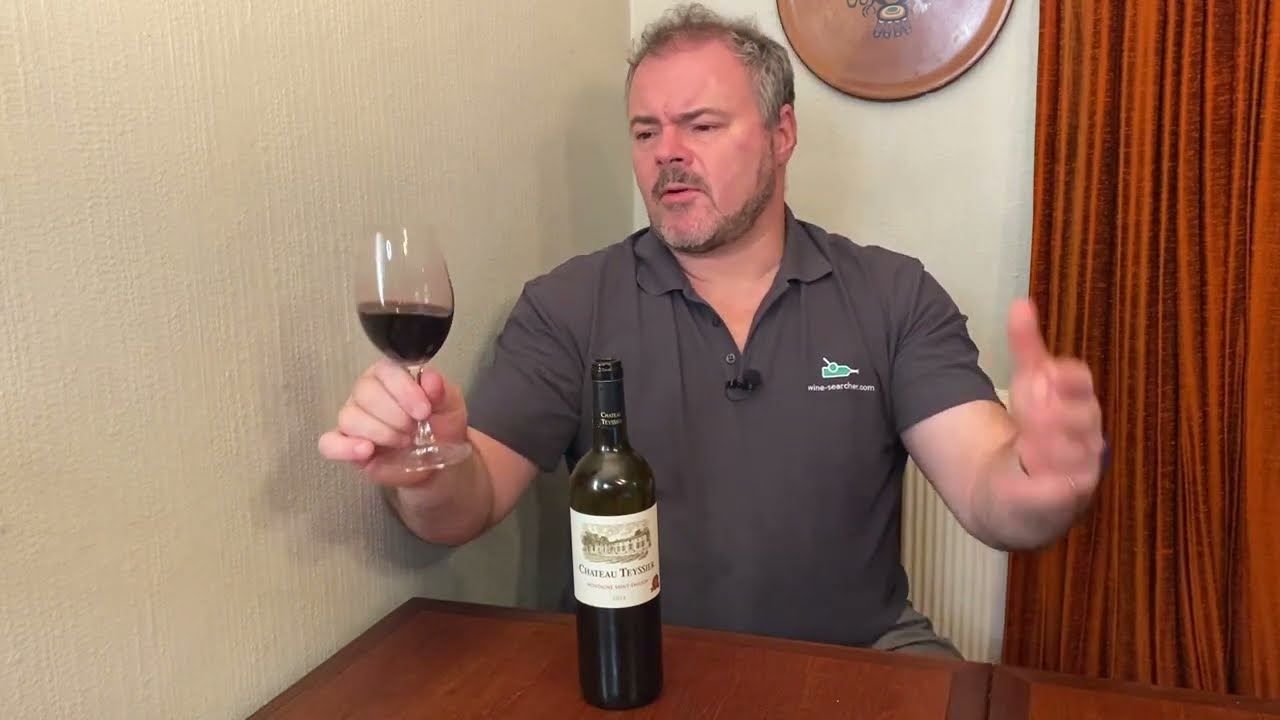
In today’s tasting Wine-Searcher’s Wine-Director, David Allen MW explores one of Saint Emilion’s satellite appellations as he tastes one of the various iterations of wines from Bordeaux labelled as Chateau Teyssier. This one is from Montagne Saint Emilion.
Chateau Teyssier is an estate in Puissegin-Saint-Emilion, a few kilometres North East of Saint Emilion. The estate’s vines are found both in Puissegin and neighbouring Montagne-St-Emilion. Vines have been cultivated in their vineyards since the 15th century. Today there are 50 hectares of vines in all, comprising 3 parcels, some of which surround the estate’s picturesque 18th-Century chartreuse.
There are about 30 hectares of vines in Puissegin-Saint-Emilion with the balance lying in Montagne-Saint-Emilion – these vineyards lie predominantly on clayey-limestone soils that are not unlike sone of the best soils in Saint Emilion. The red, iron-rich clay brings richness to the wines while the asteria limestone gives balance, length and minerality.
N.B. there are a number of wines labelled as Chateau Teyssier produced in Bordeaux – most prominently Chateau Teyssier in Saint Emilion, a Grand Cru owned by Jonathan Malthus of Le Dome. That wine is completely separate from the two wines, labelled as Puissegin-Saint-Emilion and Montagne-Saint-Emilion both made at this estate which is owned by the Darquey family.
Antoine Darquey is the fourth generation of his family to manage the property, arriving in 1993 when the estate was in perilous condition. Since 2008 he has been joined by his cousin Thomas Durand Teyssier who took on the role of technical director. They have worked hard to turn around the estate’s fortunes. Initially they employed Michel Rolland as a consultant as they invested in trying to improve the elegance of the wine. Since 2014 Stephane Dereroncourt has taken over from Rolland as they move towards organic viticulture with HVE-3 certification (environmental farming).
The vineyards are currently planted with 90% Merlot and 10% Cabernet Franc. They aim to increase the proportion of Cabernet Franc planted to 15% in time for the 2025 vintage as they believe it will contribute additional elegance and complexity to the blend.
Vinification is now undertaken parcel by parcel, taking account of soil type and age of vines. The vat room has been adapted to enable plot vinification by giving vats that are suited to each vineyard plot. This approach ensures greater flexibility when blending. The cellar has been laid out to take advantage of gravity to allow little or no need to pump must or wines.
New oak is used judiciously. 70% of the production is aged in 225 or 400 ltr French oak barrels, for 10 to 14 months depending on the vintage. 30% matured in vats to retain a fruitier element in the final assemblage.
To find out more about this wine, its pricing and its availability follow this link to the Wine-Searcher website: https://www.wine-searcher.com/find/teysier+mnt+st+emilion+bordeaux+france/2018
#winesearcher #winetasting #montagnesaintemilion #teyssier #bordeaux #clarets #merlot #redbordeaux #winelover #masterofwine #chateauteyssier
Hello there today I’m taking a look at one of bordeaux’s less distinguished appal asons this is a wine from Montan sanal is chatow tissier and it’s the 2018 vintage of that Vines evidently have been cultivated in the Montan sanan Vineyards of shat tissier since the 15th century
Today the estate has somewhere in the region of 50 hectares of vines and the picturesque 18th century Shadow now the Vine are are located in three Parcels the largest parcel comprising about 35 hectares lies between Montan s Sano and the neighboring appalachion of pigin Sano they’re on the they’re on the
Highest point of the plateau there at somewhere in the region about 100 100 115 m above sea level there are another 10 hectares of vines located on a south facing Hillside is sort of an Amphitheater of hills and here quality is often some of their highest not only
Because of the slope and the fact that the the slope captures the sunlight but also the fact that the Limestone subsoils here provide excellent water regulation so they hold on to water and only allow it back to the plant relatively slowly during the summer mons the final plot about six hectares is
Located in a place called parac which is in the heart of Montana cinium so in total the shadow has about 20 hectares of its vines in Mont sanino and the balance lies in pan sandal soils here are predominantly clays with Limestone subsoils and these are soils
That are very similar to some of the highly regarded soils in Santa milia so you get a combination of these iron rich red Clays which provide richer riper flavors in the wine and the more Limestone based soils which provide more Elegance freshness length balance and all of these lie a few kilometers
Northeast of Santa milon itself perhaps at this stage I should do some disambiguation because I this is terribly confusing there are a number of wines labeled as chatow tissier in Bordeaux most prominently is a santon gr crew estate owned by somebody called Jonathan malus who’s very well known for
Having created the garage East Estate lome but then there are the wines produced by the duway family who have Shader which actually itself is is in pigin Sant Minal so they make both a pin Cal and a Montan Cal under the shat tissier name there’s no relation to the
Cinon gr crew whatsoever so just to talk briefly about Montan sanon to the north of santon itself there are four satellite appalachion that add the name santon to their appalachion name so you have Montan santon pan santon and then also sanor sanon and luac sanon now these wines tend to offer stylistic
Similarities to to the wines of Santo but in general their quality is not as high their prices might be as high so there isn’t quite the same level of investment that goes into these Estates So currently this particular shutter toer is managed by Anton darkway and he’s the fourth generation of his family
To to run the estate and he’s been joined by his cousin Tom Durand tissier who was taken on the role of technical director here as you would find with most Sant Med on States the majority of The Vineyards here are planted to Mero so I believe the
Planting is about 90% Merlo to 10% cabinet Fran and they do have plans to increase over the next couple of years the amount of cabinet Fran in the vineyard to about 15% just to give a little bit more elegance and freshness to the wines the estate has worked with
Some very high-profile wine Consultants originally they they had um Michel Roland famous s amelo on the log working for them currently and since 2014 another prominent consultant Stefan durenan cor has been working with the estate and part of their current plans as they’re moving increasingly towards sustainable and organic farming in the
Winery Tomar has the vat room set up so that all the individual plots can be vinified and kept separate giving them much greater blending options than had previously been the case at the stage of the wines assemblage the wines are OED but in general new is is used sparingly
70% of the wine will be aged in French Oak and that’s a combination of both 225 L and 400 lit barrels with aging lasting somewhere between 10 and 14 months however 30% of the wine is is kept in tank and that provides a much fresher fruit element to the final Blend the
Celer is laid out in such a way that musts and wines are moved by gravity wherever possible to avoid pumping as much as they can final blend of this wine according to the back label is uh 95% of Mero with 5% of they say Cabernet so I’m assuming that’s cabet Fran as
There’s no note of any cabet s in their vard so let’s have a look at the wine shall we see what we make color wise seems quite deep and dark it’s not quite opaque but it doesn’t seem to be losing very much color to the rim it still has that sort
Of ruby red note with a relatively youthful heading towards sort of purple note on the on the rim the wine is 14 and a half% alcohol that’s not particularly surprising given that 2018 is is quite a warm vintage and that the the wine is predominantly Merlo as I’m
Swirling this there are quite obvious tears forming on the side of the glass there so that’s suggesting a certain amount of weightiness there so let’s see what make it the aroma shall we smelling that there’s a rich ripe fruit there’s a dark Plum richness there but then there’s also there’s a sort of
A chocolaty vanillary core of to the fruit there of a slightly smoothing note there might also be a touch of tobacco leaf as well you just providing a s a slightly Savory element there slightly lifted notes so it’s for Taste shall we the palet has good acidity there’s plentiful tons they’re relatively fine
There is a sort of a slightly earthy texture to the wine and some of that is texture but some of that is actually sort of flavor notes a slightly Savory note the wine is medium to full bodyi the alcohol is certainly giving some richness there’s there’s plenty of
Ripeness it’s that dark black Plum fruit coming through again the wines are fairly simple the the fruit is to the four it’s it’s it’s not allowing the oak to really show through the the oak is just sort of pulling back the fruit a little from stopping it being too juicy
And primary from that point of view are just hints of Cedar but that’s sitting behind this sort of dark Plum almost sort of Rich licoricey note there are hints of chocolatin touches of more sort of bitter coffee sort of notes and that sort of thing it’s not a particularly
Complex palette it’s warm it’s ripe and it’s Rich there’s reasonable freshness the Finish is of of medium length and it’s warm and ripe and rounded the Finish again that fairly ripe black fruit but the fruit nature hasn’t changed enormously I mean the acidity and the concentration of the wine would
Suggest that this would not be a problem to age for five or six years one would hope it would gain gain a little more complexity I mean currently this is very straightforward form more Square wine with relatively firm tannning I think it’s an enjoyable drink the quality
Perhaps lacks the finesse that you get with just average level sentim medials it’s presenting Pleasant drinking in a classic Bordeaux Style thank you very much for watching I do hope you’ve enjoyed the video I hope you found it interesting if you have enjoyed it do please press the like button that would
Be fantastic if you know people you think might be interested do please feel free to share it with them do consider signing up and following us on YouTube that would be fantastic to have your support you have any comments or feedback that you’d like to make about
The wines our tastings or anything else related to that do please leave them in the comments box below we’d love to hear what you think most importantly however do hope you’ll take the time to come and join us for another tasting in the very near future thanks again bye for now