
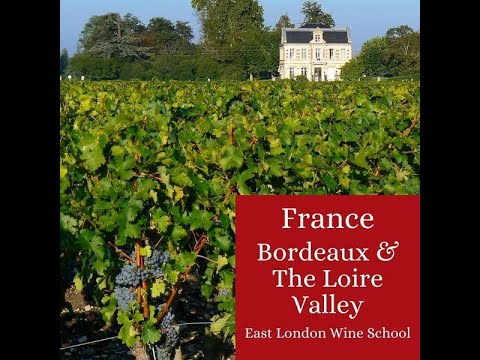
French wines are the benchmarks of quality, which makes France the perfect place to begin your tour of some of the world’s greatest wine regions. You explore the powerful reds and delicate whites of two wine-producing regions, learn how to read a wine label, and gain insights into how chateaux in Bordeaux are classified.
The wines of France are benchmarks of quality around the World they’ve become the standard to which other wines are compared and this isn’t by accident or coincidence we mentioned the noble great varieties in lecture 5 and six all of them can be found in France today’s lecture is about the
Wines of Western France in the regions of the lir valley and Bordeaux Bordeaux is the most important region for wine meaning it’s the most spoken about retains the highest price at auction and people invest and get a higher return from it than most of the stock market your understanding of these wines
Helps you understand one end of the spectrum for French Reds and whites powerful Reds that last for decades and delicate whites you should have the wines available for you to taste today a San Blanc based L white like s pu or cani a shenon Blanc based L white
Such as V or S A Cabernet Fran based wine from the lir valley such as sh or bgy a white Bordeaux preferably from gra or pesak leono a red Left Bank Bordeaux wine anything from poak to Margo to grav and a right Bank Bordeaux anything from s Pomo to blly or
Korg although some some people will argue that the very idea of terar is a myth most people believe that it’s one of the secrets to France success with wine as mentioned in previous lectures T is made up of many natural elements everything from climate to microclimate to
Soil we’ve talked a lot about this already but the concept of tea comes from France and that makes sense because France was made for wine about 245 million years ago France was under shallow tropical Seas for millions of years the tectonic plates shifted and the area underwent turbulent geologic activity now sea
Creatures in the area died off and their calcium rich shells fed what became the Limestone heavy soil of the Paris Basin the Galler Romans knew the value and quality of this limestone as they would excavate it for their monuments and buildings it kept them cool in the
Summer and warm in the winter it does something similar for Great Vines Now there’s no scientific proof that the mineral flavor you get from the wine comes from the mineral soil but these wines from the Limestone soil do have a finesse to them Chateau is the French word for
Castle and sometimes they are but most of the time this term refers to a wine- making estate that includes the vineyard the winery and the sellers we should discuss French labels which are a wealth of information for everyone from the novice to The Connoisseur due to the strict laws
Governing what a label can say even if you remember nothing else from this course learning how to read the details of a French label can consistently steer you to a great bottle it’s a terrific cheat sheet one trick to reading the label for quality is to pay attention to the
Details about the geographical location the more information there is about the specific region and Vineyard the higher the quality entrylevel wines use grapes from locations throughout France the label will say Vana meaning table wine for a slightly better wine look for van on the label these wines use grapes from
Large but specified regions from all over France the name of a particular region such as Bordeaux Lair or burgundy on the label signals the next level of quality The Grapes must come from the specified region called an appal and the label will also have the words app contr
Or appalation controlled to show that only certain areas are designated as suitable for this label this is the AC abbreviation that I mentioned back in lecture to but labels and quality can get even more detailed they might also name the specific commune or District where the G
The Grapes come from for example s in L these are also called an AC or an AOC for app cont but they are specific appalachi within a larger appalachi it’s a safe bet that the wine with the a specific appalation such as poak on Bordeaux will be very good
Let’s talk about two of the most important regions Bordeaux and laah we’ll start with bordell there are 57 different appalachi within the region of bordell I always remember that because it’s the same number on the heints ketchup bottle I mean don’t ask me how ketchup relates to
Bordeau but that’s at least how I remembered it two rivers the gon to the North and the gon to the South split bordeau into the areas we call the Left Bank and the right Bank SoMo Blanc and seal the two bordo white grapes grow on
The Left Bank as well as in a region called anre which is between these two rivers or between the two Seas we mentioned seon in our last lecture when speaking about Saturn and indeed Saturn is on the Left Bank of bordeau the style of dry Bordeaux whites
Can be determined by whether seel or svon BL predominates those predominate in semal are those Fuller in body while those predominating in svon Blanc are a bit lighter more aromatic and higher in acidity the whites of Bordeaux are often fermented and or aged in French Oak with
Some new French Oak that lends weight richness and Oak flavors of toast vanilla and spice these methods are particularly used in the higher quality communes of GRA and pesak leono now let’s taste our pesak leono now you have a l white in here as well and that’s svon Blanc based and I’m
Going to ask you to pick that up and compare it to the pesak leono you’ll notice that the pesak leono or white Bordeaux is a little bit richer in color than the lir white this is not only because of seal but this is also because of that Oak fermentation and
Maturation now let’s smell it you get beautiful Citrus notes also mineral tones but there’s that beeswax kind of element you get from the seum as well as the oak characteristics remember vanilla toast and spice and they’re quite prevalent in this and if you’re having problems identify it smell your s
Or your s Blanc white from the lir and go back to your white bordeau now let’s taste it I love these wines you’ll notice that especially if you taste it in comparison to the S this is much more medium bodied but it can get quite voluptuous depending on the ripeness of the Vintage
As well as the intensity of the oak but notice the wine has a beautiful balance and because you’ve got some of the svon Blanc in there you’ve got the acidity and seon is known to gain complexity as it ages now these wines are not made every year and sometimes in some years
There’s no bottling made at all but they can age for a long time in great vintages such as 2007 2005 2002 and 2000 and as they age they get a more voluptuous body more broad on the pallette with complexities of nuts and cream and a light toffee folded in yet
They always keep their elegance and finesse now on to Claret which is the historical English word and still used today for the dry red wines of bordeau Samuel Johnson one of the most quoted British authors from the 1700s once said he who aspires to be a serious
Wine Drinker must drink Claret and if you want to be a serious wine connoisseur you better know red bordeau although 14 grape varieties are permitted in Bordeaux there are five grape varieties red grape varieties that are considered the Bordeaux varieties a term that you may come across in your
Reading the five are Cabernet svol Mero Cabernet Fran Petit Vero and malbach the grally soils of the Left Bank of the river favor the Cabernet svol great while the clay soils on the right Bank favor them or low grate this is why the wines of the Left Bank are
Higher in the ratio of Cabernet svol while those on the right Bank as you might imagine are based on Mero this is not a mystery just which soil suits the great best now an easy way to remember this is to put your left hand out in front of you and it forms an
L however it also forms a c this is always helped in when I’m teaching in the industry L is for Left Bank and C is for Cabernet soeno so L and C so now you’ll never forget it the ter is so varied and specific in Bordeaux that has multiple regions and
Communes within it the Left Bank alone has the regions of midok and hot medok as well as the highquality communes of sant poak sanen Marco gra each of these has very different wines even though they are so close to one another for example poak is known for being very powerful the most firm
Gripping tannins and it’s the most masculine in structure with the RAS of pencil shavings believe it or not on the on the other hand the region of Margo not too far away the wines are a bit softer and rounder in character because of having a little bit more Mero and are
Also known for an aroma of violets San another commune is known to be a little bit lighter than the others with fresh acidity and a bit more angularity which what I mean by that is being a little bit more acidic and less round in character now remember in lecture six we
Discussed the firm gripping tants of Cabernet svol and the rounder and more plush mid pallet of Mero these wines benefit from Oak aging because the slow oxidation in the barrel rounds the har edges of those tannins and harmonizes them with the other elements in Bordeaux you see wines with
100% new Oak sometimes 200% new Oak which in their youth can be so overpowering in their Oaky character that sometimes you can’t even smell the fruit it’s covered up too much by that chocolate vanilla and toast and spice of the yolk it takes several years before you see that beautiful CIS and black
Currant fruit peek out now let’s take a left bank clar here I have a poak from Pichon long or chatau p and notice the Deep color remember we talked about Cabernet Sanol having a really deep rich color because of the thickness of the Skins now you even try
To put your fingers behind it and you can’t even see it so this is pretty deep colored now let’s smell the wine swirl it around to get some Aromas and off the bat you can definitely tell this is a an oldw World wine because you get some of that
Mineral character and the black current fruit that is you get from cabern Sanol is is a little bit more pulled back but what you also get especially from poak is this Cedar cigar and kind of a tobacco like notes as well as um lead pencil shavings which I always
Get but sometimes people notice a hint of violets now let’s taste notice those firm gripping tannant and notice in your mouth it has a really long finish and you’ll notice how the flavors change in your mouth if you wait 10 seconds and then 30 seconds and then to a minute you’ll notice how
The fruit will stand out and then the other tobacco and Cedar notes will come out and then the fruit comes out again it’s this beautiful little dance on the right Bank home of Mero you see the regions of blly or Co to blly co to B Frac and the high quality regions
Of santon and pomal and just because these do not predominate in cab don’t be fooled into thinking these are wimpier wines the wines of pomal can be absolute power houses and can be some of the most expensive wines in the world and in a blind taste test sometimes it’s really
Difficult to tell the difference between the Left Bank and the right bank here I have a senton from chat to V now let’s take a look at the color here now let’s see if we can compare the color To the Left Bank and the right
Bank so I’ve got the Left Bank in my left hand and the right Bank in my right hand the Cabernet svol is a little bit deeper it is so it’s a little bit more opaque and the the right bank is a little bit clearer so you can tell this
Has a little bit more Merlo in in fact it’s mostly Mero let’s smell it now off the bat you get a lot of French Oak so a lot of vanilla and a lot of toast in there and that’s one of the things you get from s they’re very known
For that but you do get some of that dark fruit and Plum character that you know Mero for now let’s taste it now after the gripping tannins of the poak this is a bit softer it’s like coming home a little bit plusher but also you notice it does have some nice
Acidity to it not as high as the cab that you got there from the Left Bank but it has Limestone soils in sental which causes some of that nice Elegance that you have there but you notice the the pallet is a bit rounder but smoother
And I wonder if you feel now that plush mid pallette but it still has some Tannon in there it’s just not as gripping as the Cabernet svol but if you notice even as I’m talking it’s been maybe you know 20 seconds and then 30 seconds the flavor just keeps lasting on and
On these are the wines on the right bank that have seen a style movement in the last decade um they’re called garage wines or gist in French we’ll talk about the American version of this in lecture 17 these wines are made in super small quantities typical on Tiny plots of land
With very low yielding Vines they’re aged in new French Oak BS sometimes 200% new French Oak where the wines lay in new barrels for for 9 months and then in an entirely new set of new French Oak barrels for another 9 or 12 months because the wines are Mero
Based this process gives the wine intense amounts of concentration richness and and velvety texture tannins as these wines are made in such tiny quantities some cost as much as the first growths on the Left Bank now let’s take a few minutes to understand classifications such as first growth at the Paris Universal exhibition
In 1855 Napoleon III asked the Bordeaux Chamber of Commerce to present a list of the best wines from the best producers the list was based on unofficial classifications within the area and on historical broker prices the higher the price the higher the classification the 1855 classification
Had five tiers or five growths the top tier is called the first growth or prier crew class and this classification is recorded on the label there are only five first growths and they’re the highest price of the bank wies they are chat Le Rothchild shat chat mut Rothchild shat Margo and chat
Lur the second tier is called second growth or D crew and it includes 14 Chateau such as CH which we’ve tasted and I’ve stayed there myself and when I stayed there um practically the entire right wing was mine it’s gorgeous it’s a beautiful castle uh third growth which has 14 classified
Chateau fourth growth which has 10 Chateau and fifth growth has 18 Chateau in 1932 there was a further classification for the producers not included within this very small list and there have been other revisions since then for example in 2003 the following were classified as basic to highest
Quality with within this area you have crew Bourgeois gr crew Bourgeois and gr crew Bourgeois exceptional grav also on the Left Bank has its own classification its 12 Chateau are classified as gron crew class on the right bank pomal doesn’t have a specific classification system but s does the designations are divided
Into s grass and S Premier crew class which is then divided into GR crew class a gr crew Class B all of these will be noted on the label to complicate matters further individual senal producers can annually submit for inclusion I know it sounds confusing but you’ll get used to
It the pricing and selling of bordeau has been open to speculation mainly because of a system of intermediaries at Brokers between the producer and the consumer along with outside factors that cause fluctuations in price because of this relative instability the the Borday have developed a Futures sale
Called which is like buying Futures in the stock market this is generally reserved for the class growths in the spring following the Vintage while the wines are still in Barrel intermediaries can purchase wines after a tasting sometimes you can get wine much cheaper than when it turns out to be
Worth when it’s released a couple of years later in which case you can sell it for a quite a profit however it can go the other way around the wine might have been very hyped up at on primore and then worth a lot less when it’s finally released if
You’re interested in buying Bordeaux Futures please make sure you work with a trained professional as it can be quite risky here’s how I think of it there are some exceptional vintages in bordo such as 2005 2000 96 1990 85 and the classic 1982 and then there are the others that
We drink until the vintages are ready to drink we all win now went to the lir valley which features the longest and most famous river in France many great civilizations travel Lair and royalty built their summer Retreats along its banks it’s not always as well known uh for wines such as
Bordeaux or burgundy but this is probably because over half of the wines coming from the lir are white only one quarter are red and many many of the whites are not aged in new French Oak the lir region or Appalachian begins on the west coast of France on the Atlantic
Ocean and stretches Inland for about 600 miles or 1,000 kilom the Musa day wine region is centered around the city of n near where the lir meets the Atlantic the climate there is moist and temperate with mild Summers mild Winters and good soil for muscade another name for this
Grape is melon Deon and it’s probably traveled there from burgundy muscade is a light bodied quite crisp and clean white wine with lemony notes and a hint of brininess that’s from the Terre of the Atlantic Ocean perhaps the most famous wine from the region is muscade SE and
Manly which comes from a region a little Inland and Southeast from notth Sur means on leav now remember in lecture 7 when we were speaking about aysis and Le aging the same thing applies here wines Surly are those that spend the winter on its leaves which are that dead yeast cells
And sediment and this gives the wine more richness and weight but also gives it that biscuit yeasty type of tone the food in this region is very much Seafood based as you might imagine it’s likely why this region has not changed styles for centuries it’s absolutely one of the
Best wines to pair with oysters shellfish and other light Seafood Fair it’s high acidity and delicate flavor especially if you have those yeasty tones uh from the S really allow the flavors of the seafood to pop in your mouth but more on that in lecture 24 the
Central Vineyards of the lair are the farthest inland and that’s where the most famous of the white wines from this region come from s and pu remember s was the wine that gave me my wine Epiphany and and and it just might for you too the climate here though is a bit
More Continental which means it gets a bit more extreme in its temperatures hot summers and severe Winters unlike with musca frost is often an issue here the soil is chalky and Stony uh rich in those Marine fossils that we talked about and these wines do indeed have incredible finesse they do make red
Salair but most saler is white and comes from svon Blanc as we discussed in lecture five svon Blanc is known for its high acidity and intense Aromas so let’s taste our s notice the pale color we noticed the pale straw color as we saw last time and
It has some like greenish Hue to it now let’s smell the S now again you get those lemon notes that Citrus quality and and gooseberries and Quint now again if you don’t have the Lun du set you can go to a specialty food market to pick up these just to
Really get that Flavor now let’s taste it again you get those um strong mineral tones but also that fresh cut grass that is so known for SEL Blanc now there is one Aroma that identifies s and it’s G to sound weird but it’s cats pee on a gooseberry Bush
And if you see a lot of um British writing you’ll see this as their descriptor for S now it sounds terrible but actually it’s it’s what it’s come to be known for now the taste of the somon Blanc the S is quite delicate and light bed especially versus the white Bordeaux
That we had you get that crisp acid and that it’s always bright and and cleansing towards the Finish now pu f is also made from San Blanc and although they have similar soils the ter is slightly different I always remember the distinction because fum means smoke in French and the wine
Can have a a smoke SMY mineral taste reminiscent of Gunflint many of the wines here see old oak so some of the herbaceousness is is curbed a bit between the coastal regions of muscade and the Inland region of the central Vineyards are the regions of anju samur and toan which produce both
Whites and reds the coolest thing about these regions is the soil which is called tuu a more porous version of the Limestone calcarius chalk I referred to earlier as a result it has a better drainage and that’s good for particular grapes if and when you travel to this
Region you may think that the people who live there are total cave dwellers um as their Sellers and even sometimes their hotels and restaurants are carved into the very tuo the very soil itself the whites in this region are made from a grape called Shen and
Blanc from this sing grape comes a wide variety of wine styles from light slightly sweet and sometimes effervescent V to the dry rich full bodied and Oak wines of seven the latter have the characteristic flavor of bruised apples or decadently sweet sometimes as in uh as is the case
With botra tized Shen and Blanc from Cordon Shen and Blanc can do it all now let’s taste the shenon Blanc we have here a v way now let’s pick up the S and look at the color difference here Channon Blanc is a little bit deeper than the paler San
Blanc and it’s not as aromatic as svon Blanc you really have to stick your nose in the glass there a little bit and the fruit is not as lemony it’s more towards the Apple kind of family and you see fresh Quint here and again you probably need to go find one of
Those to know what I’m talking about but there’s one Benchmark Aroma that you get from shanon Blanc and that’s wet wool do you ever remember wearing your favorite Woolf sweater in the winter and perhaps you walked outside and had snow on it and came back inside and you remember
Smelling that wet wool but that’s one of the Benchmark Aromas for shenon Blanc again not a bad thing it’s just identifies it now let’s taste it the particular vet that I have here is off dry so it is slightly sweet but Shannon Blanc tends to be weightier than svon
Blanc and the acid is not as high but it’s still quite balanced and good now the red wines from this area and particularly from Shino and beroy are well known for their Cabernet FR which loves the soil remember from lecture six that Cabernet Fran is the father to
Cabernet S I mean it doesn’t have the intensity of Cabernet s tannin and it has somewhat lived in the shadow of its Sun almost always you see Cabernet Fran blended with other great varieties but here here you see it by itself now if you have a Sho or bgy or
Even an Anu or t Rouge go through the 5 s’s if you notice and even if you pick up your uh Left Bank Bordeaux wine and you compare it now notice the color difference the Shon or Cabernet Fran is much much paler than the Cabernet s and
You can totally see your fingers through it one of the other reasons that is is because it’s uned sometimes Oak fixes color and can make it more opaque but this is actually clear let’s smell it you get some strong raspberry tones but a little hint of black currant CU
You get a little leafy greenness in there but it’s nowhere near as strong as um Cabernet steno on the palette for a red it’s relatively light bodied and it’s definitely uned but you do get those lovely fruit flavor flors and the tants are only slightly gripping
But this is a very easygoing wine now when I traveled to Shino I went to grab a bite at you know this local place and I saw these local workers or you know who had just been pruning just sitting around now they were drinking chinol in
Water glasses and it was wonderful to be able to see this because um they were just having it with their shk and it was wonderful just to sit there and have a casual glass of red wine it really helped me realize that it doesn’t always have to be really high and sophisticated because
They were drinking it just with their lunch and it just made me think that wine can be so much fun now in our next lecture we’ll travel to Eastern France to burgundy and alzas you’ll need the following wines for this lecture a shab AC which we’ve seen
Before a Meo or any white burgundy from the coat Deone a je or any red burgundy from the coat door a Bo either b nvo b vage or a crew of B and finally an alas ver Trina or an alas penree these wines are power refined and
Made elegant one of them is from my favorite region Baran and until then Bon abent