
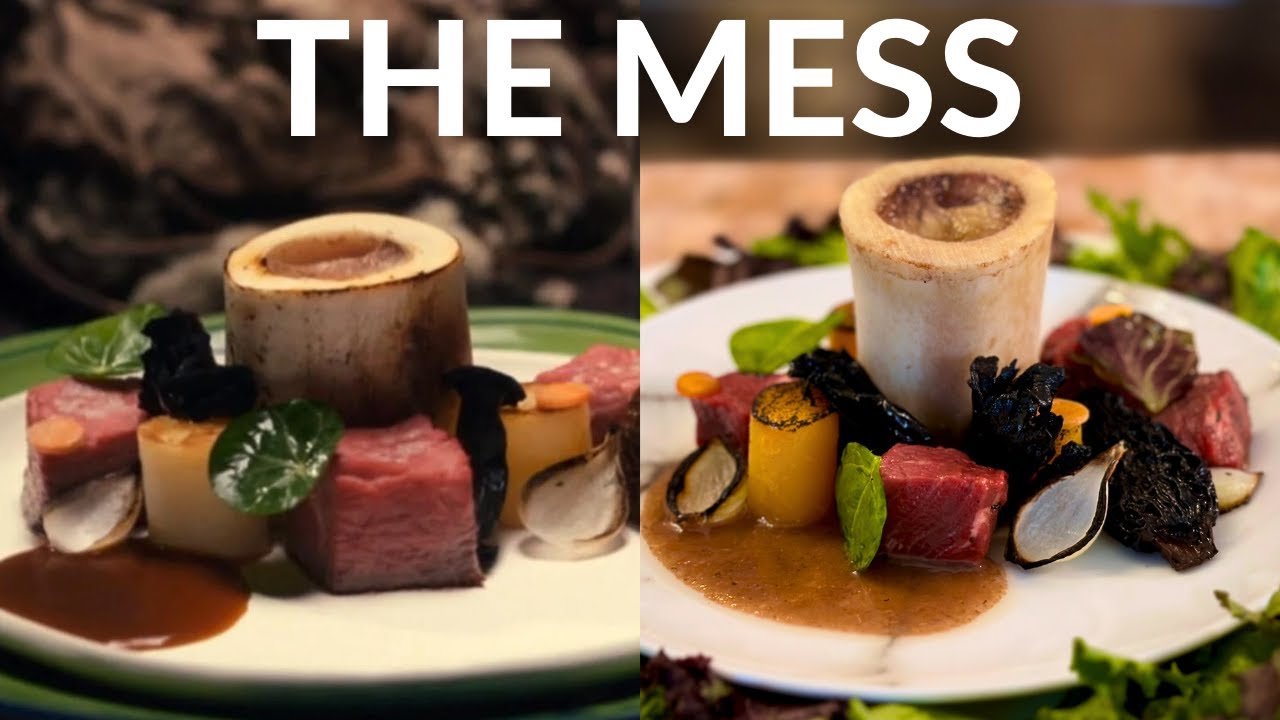
The Mess from the Menu is a dish that features bone marrow which is the best thing in the world. It represents the futility we feel that corrodes us from the core.
I’m going to start by running the marrow under cold water to clean it. You might wonder why I have 13 bone marrows for a dish that requires one; well it’s because I decided that if I’m going to cook a bone marrow I might as well have a feast.
According to the film we’re supposed to pressure cook the vegetables to evoke the pressure we feel when crushed by the weight of impossible expectations. We turn hard vegetables tender, but not so soft as to become mushy.
To make the sauce I use beef bones which I’m going to sentence to a 40-minute baking at an infernal 500 degrees Fahrenheit. The bones are now perfect for making soup, but for this recipe I only need the fond at the bottom of the pan.
I’m not a fan of how fine dining often requires you to cook everything separately just for the sake of plating. Even though the flavors and textures are cohesive, the cooking part isn’t very fun. I guess that’s the point since Chef Slowik became disillusioned for years of doing this for an oblivious clientele.
Once the meat gets to room temperature, we can add a simple salt and pepper seasoning. Give it a good rub all around before dropping it into a smoking-hot pan. It’s probably cooked sous-vide in the movie, but I think sous-vide sucks the soul out of cooking so I’m going to show you how to achieve the same result in any pan. You need to keep flipping the meat every 20 seconds for it to sear properly before overcooking. Flipping it repeatedly prevents that layer of moisture from building and steaming the meat instead of getting that crispy Maillard reaction. After about 4 minutes of constant flipping, we get an adequately seared filet with a perfectly rare interior.
Next, we’re going to deglaze the pan with butter and cook the garlic and herbs a little more before pouring all the contents over the beef to let the flavors continue to infuse.
Everything is coming together now so it’s time to bake the bone marrows at 500 Fahrenheit for around 20 minutes. During that time we prepare the garnishes, starting with rutabaga.
I don’t know what type of green leaf it is they’re using in the film so I just took a few salad leaves and cut them into circles.
Once the bone marrow is cooked we’re going to let it rest and scoop out some of the marrow that has been liquefied in the tray, add it to a pan with some flour to create a modified beurre mannie, and use that to thicken the jus.
Next, we’re going to cut filet mignon with that revolutionary cutting technique shown in the film.
Finally to plate I created a circle of greens because I don’t have a green plate. Starting with a majestic segment of beef leg bone, followed by less than perfect cubes of perfectly cooked filet mignon, the mushrooms that were too expensive, pearl onions with eye-liner, some leaves, and a generous spoonful of our glossy bone marrow sauce.
Now, how does it taste?
For a dish symbolizing suffering and futility, it tastes surprisingly lively and robust. The ingredients are perfectly cohesive, and each element is filled with heartiness and depth. The bone marrow captures the essence of life. The filet mignon adds depth and substance, while the rutabaga grounds it with fragrant, starchy earthiness. The black mushrooms complement the dish with a woodsy, meaty flavor and texture, neither undermining nor outshining the quality of the filet mignon. The dark and heavy flavors taste refined and the dish is well complemented by an equally decadent, full-bodied, and acidic red wine.