
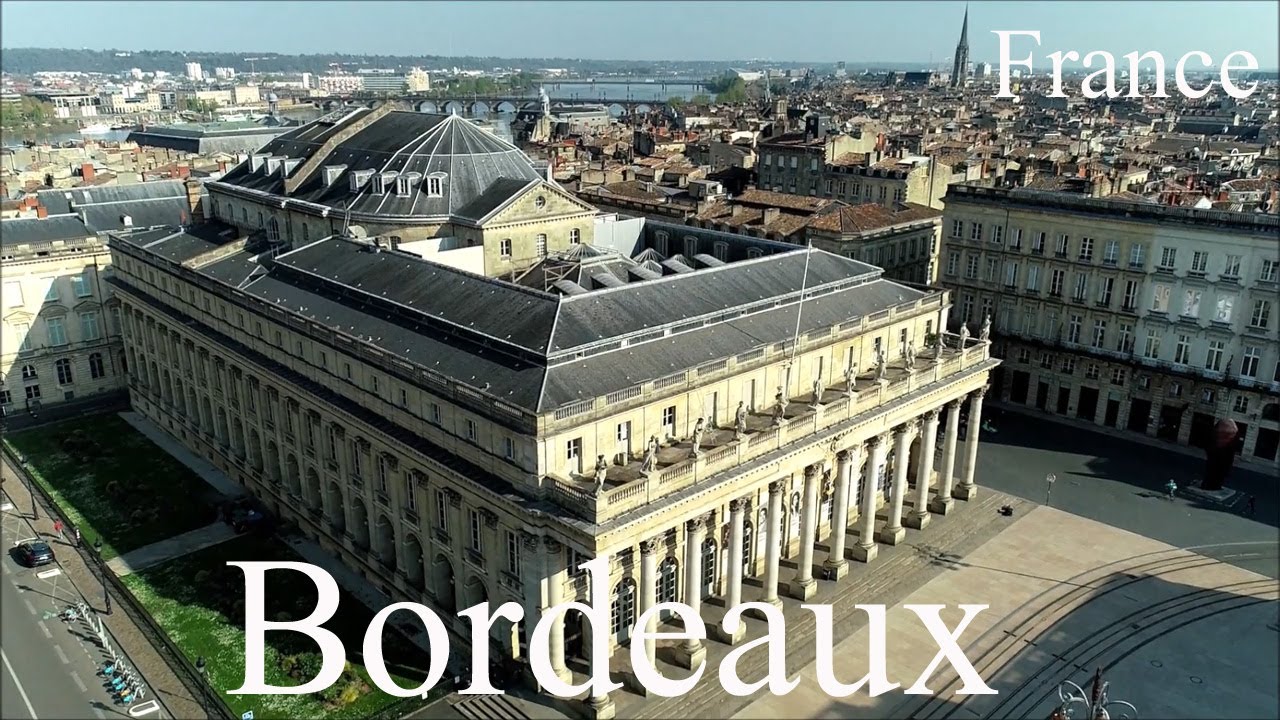
Bordeaux is a French city with the second largest number of buildings protected by law after Paris. It was called Burdigala in the ancient Roman era and developed as a commercial center. Nicknamed the ‘port de la lune’ (‘port de la lune’) because of its crescent-shaped shape, the port of Bodreaux traded with northern France, Greece, Spain and the Mediterranean countries. Burdigala was a bustling city, and traces of its theaters, temples, etc. remain to this day.
After the withdrawal of the Roman Empire, Bordeaux was under the rule of England in the 12th century with the remarriage of King Henry II and Queen Aliénor d’Aquitaine of Aquitaine and developed greatly. Although grapes were already cultivated in the Roman era, wine was made in earnest from the Middle Ages and exported to England and the Netherlands.
In the 18th century, the entire city was reorganized with classicism and neoclassical architecture that was popular in Europe at the time. The Palais Rohan and the Palais de la Bourse are examples of 18th-century architecture.
There is a 500m long stone bridge, Pont de pierre, over the 647km long, la Garonne River, which flows from the Spanish Pyrenees to France and continues to the Atlantic Ocean. Since ancient times, the Pont de Pierre has played an important role in allowing people to cross the river that runs through the center of Bordeaux.
The amount of wine produced in Bordeaux, which has the largest area of vineyards in France, is enormous. Thanks to its warm climate and gravelly soil, it produces many famous red wines. Bordeaux wines were self-categorized and graded in 1855 at the request of Napoleon III. Today, the wines that receive the first-class Premier cru designation are made in five châteaux in the Bordeaux region: Château Lafite Rothschild, Château Margaux, Château Latour and Château Latour. There are Château Mouton Rothschild and Château Haut-Brion.