
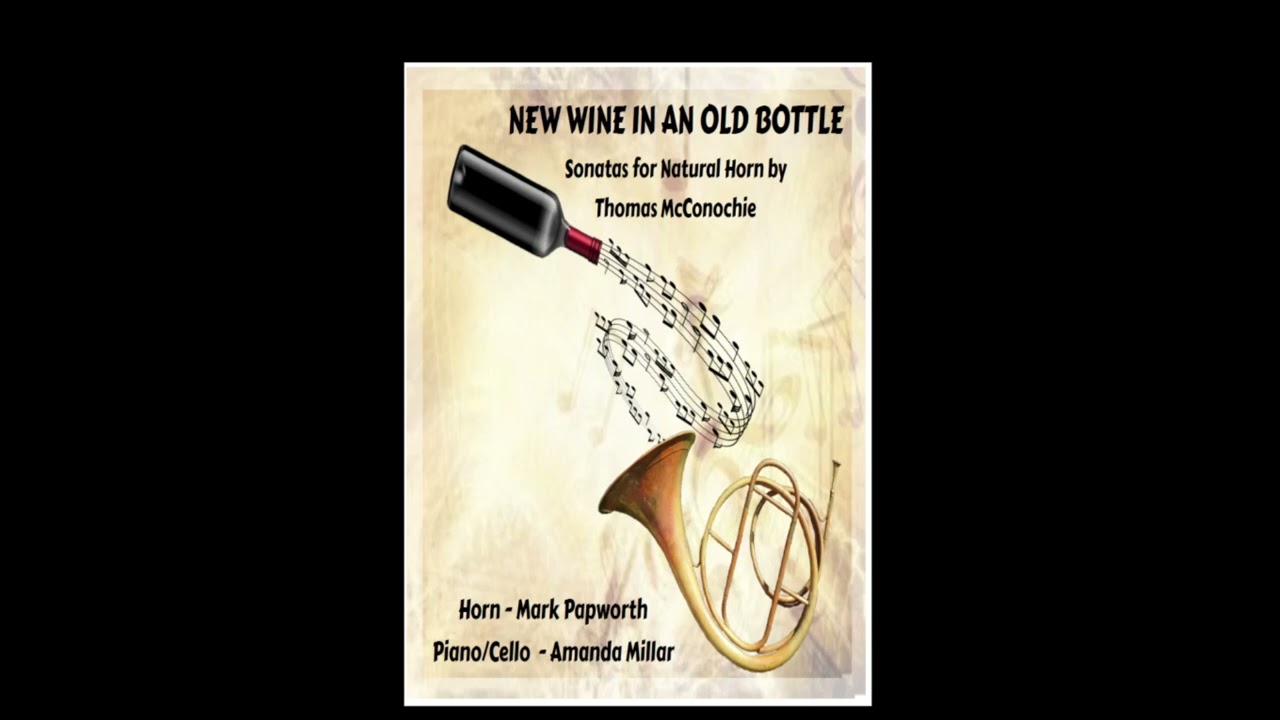
#naturalhorn #neoclassical #hornsonata #handhorn #hornandcello #cellosonata
Sonata No.1 (in F Major) Op.14 (TWV 66)
00:00 I. Allegro
06:11 II. Romanza with Oom-Pah Section
11:08 III. Sonata-Rondo (Allegro)
Sonatina No.5 (in C Minor) Op.16 No.3 (TWV 71)
15:05 I. Presto
18:14 II. Andante
20:45 III. Presto
Sonata for Natural Horn and Cello (in D Major) Op.22 (TWV74)
25:03 I. Allegro
30:11 II. Recitative and Aria (Recitative)
30:55 II. Recitative and Aria (Aria)
35:38 III. Rondo
Sonata No.2 (in E-Flat Minor) Op.15 (TWV 67)
38:25 I. Allegro
43:47 II. Andante con moto (Romanza)
47:12 III. Maestoso (Theme and Variations) Theme
48:12 Variation I
49:12 Variation II
50:10 Variation III
A big shoutout to @markpapworth943 and Amanda Millar for recording my music and performing it live.
A big shoutout to Move Records for working with Mark and Amanda to record this album.
About the Music (from the Horn Player)
The natural horn, also referred to as the classical horn or hand horn, descended from the hunting horn and was the direct predecessor to the modern day French horn. During the baroque period, the hunting horn found its way into the orchestra. First for a more realistic effect, and then as a recognised member of the orchestra. During the latter part of the baroque period, horn players started experimenting with inserting their hand in the bell to obtain notes outside of the natural harmonic series. This developed into a codified system which enabled composers during the classical period such as Haydn, Mozart and Beethoven to use the horn as a lyrical solo instrument.
With the emergence of the valved horn during the 1820’s and ’30’s, the natural horn died out through most of Europe except for France. The French players had come to appreciate the different sounds of the hand covering the bell to get the different notes, and had become so adept at playing it that they were reluctant to adopt the valved horn. The natural horn was taught at the Paris Conservatoire until 1903.
The natural horn died out for several decades before players developed a renewed interest in it which has led to many modern day players adopting the instrument and dedicating many, many hours to mastering the old techniques. As the interest in playing the natural horn has grown, modern day composers have also begun to appreciate the possibilities associated with writing for the natural horn.
It has been a great pleasure for me to work with Thomas on some new repertoire for the natural horn and to present this CD of new Sonatas featuring the old techniques of natural horn playing. (Mark Papworth)