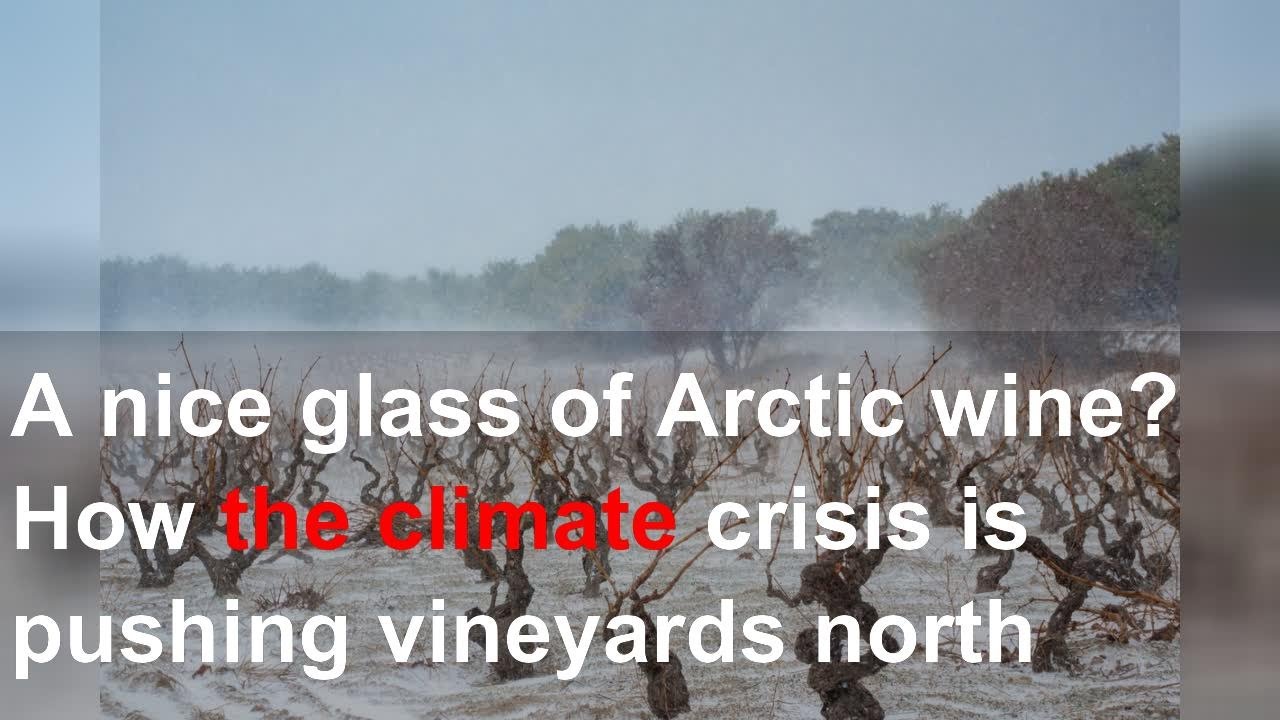
A nice glass of Arctic wine? How the climate crisis is pushing vineyards north – In just 20 years, Swedish winemaking has boomed as global temperatures rise…
Music in Video:
The Independent
2022-09-01T17:16:02Z
The warming climate has been “a driving factor” in the expansion of vineyards in one of the world’s coldest places.
But what is perhaps less well-recognised is the scale of the march north, and how not only the weather, but new varieties of grape are helping bring viticulture to areas more notorious for their snow and ice-filled winters, than the stable conditions usually preferred for vineyards.
In northern Europe, Sweden is the leading Scandinavian nation pushing the boundaries of what is possible in viticulture.
Henrik Edval, co-founder of Nordic Vineyards, a marketplace for wines produced in Scandinavia, and in particular those grown in Sweden, told
He said: “Sweden is, despite its very cool climate in this context, an official wine country since 1999. Twenty years later things have started to move significantly, several different grape varieties are grown and Sweden has, with Solaris, got its ‘own’ grape.
“Sweden’s vineyards cover a total of 100 to 150 hectares and [the sector] is growing at 10-20 per cent yearly.
He added: “There are many grapes that are fit for the climate in the Nordics that ripen early and there are constantly new grapes being introduced.”
The warming climate has been “a driving factor” in the opening of more vineyards, Mr Edval said, with warmer temperatures helping the grapes ripen and produce better wines.
But also the increased availability of grapes which ripen earlier in the year has been a crucial element of how it is increasingly possible to grow vines in Scandinavia.
Speaking about the size of the market, Mr Edval said: “In the autumn of 2020, there were about 30 established wine producers in Sweden, of which just under ten are slightly larger.
“Most of the commercial vineyards are growing quickly and for 2022 a forecast of an additional 40-50 hectares are being planted.
“Most of the wine is still consumed within the countries of origin,” he said, but the market had seen a “large increase” in requests coming from mainland Europe, Asia and specifically Japan.
“Since the production and vinification is growing, we expect a growing demand from outside Sweden over the coming years.”
As well as red wines and dry white wines, the climate lends itself to the production of “ice wines” – a type of expensive desert wine which is largely made in Canada and Germany, and in which the grapes are allowed to be frozen while still on the vine.
In this production method, the grapes’ must is pressed while the fruit is still frozen, resulting in a smaller amount of more concentrated, very sweet juice. With ice wines, the freezing happens before the fermentation, not afterwards, as in other sweet wines such as Sauternes or Tokaj.
“Sweden has an EU permit to grow 100 hectares but my guess is that the area is now double, at 200 hectares.
She said that while many “growers try to imitate German/French wine”, many have “not also realised the potential to grow ice wine”.
“It is not very often nowadays that you have ice-wine conditions in German for instance. This market is small but the ice wine is very expensive so it does not matter so much if you have a small production.”
Asked how long it will be until our climate-crisis ravaged world will mean we are sipping wine made within the Arctic circle, Mr Edval said: “There is a fair chance that as the climate is changing and new grapes are being introduced, as well as [more] hectares being grown, we will see a larger production.
“There is also a difficult situation in southern Europe with drought which has led to crops failing. There will not be a lack of European wine in the coming years, but there will definitely be new wine regions growing.”