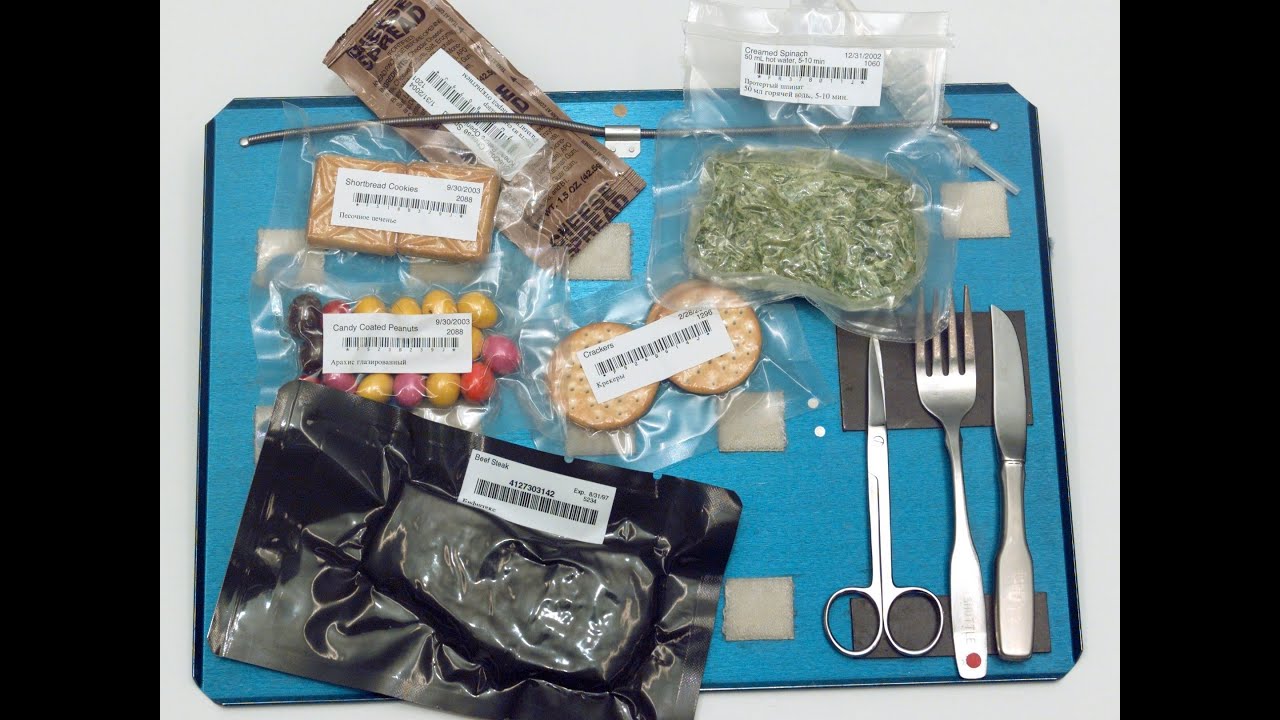
Space food is a variety of food products, specially created and processed for consumption by astronauts in outer space. The food has specific requirements of providing balanced nutrition for individuals working in space, while being easy and safe to store, prepare and consume in the machinery-filled low gravity environments of manned spacecraft. In recent years, space food has been used by various nations engaging on space programs as a way to share and show off their cultural identity and facilitate intercultural communication. Although astronauts consume a wide variety of food and drink in space, the initial idea from The Man in Space Committee of the Space Science Board was to supply astronauts with a formula diet that would supply all the needed vitamins and nutrients. For lunch Yuri Gagarin ate three 160 g toothpaste-type tubes, which contained two servings of puréed meat and one of chocolate sauce. In August 1961, Soviet Cosmonaut Gherman Titov became the first human to eat in space, according to Lane and Feeback, this event “heralded the need for space flight nutrition”. One of John Glenn’s many tasks, as the first American to orbit Earth in 1962, was to experiment with eating in weightless conditions. Some experts had been concerned that weightlessness would impair swallowing. Glenn experienced no difficulties and it was determined that microgravity did not affect the natural swallowing process, which is enabled by the peristalsis of the esophagus. Astronauts in later Mercury missions disliked the food that was provided. They ate bite-sized cubes, freeze-dried powders, and tubes of semiliquids. The astronauts found it unappetizing, experienced difficulties in rehydrating the freeze-dried foods, and did not like having to squeeze tubes or collect crumbs. Prior to the mission, the astronauts were also fed low residual launch-day breakfasts, to reduce the chances that they would defecate in flight. Several of the food issues from the Mercury missions were addressed for the later Gemini missions. Tubes (often heavier than the foods they contained) were abandoned. Gelatin coatings helped to prevent bite-sized cubes from crumbling. Simpler rehydration methods were developed. The menus also expanded to include items such as shrimp cocktail, chicken and vegetables, toast squares, butterscotch pudding, and apple juice. The crew of Gemini III snuck a corned beef sandwich on their spaceflight. Mission Commander Gus Grissom loved corned beef sandwiches, so Pilot John Young brought one along, having been encouraged by fellow astronaut Walter Schirra. However, Young was supposed to eat only approved food, and Grissom was not supposed to eat anything. Floating pieces of bread posed a potential problem, causing Grissom to put the sandwich away (although he did enjoy it) and the astronauts were mildly rebuked by NASA for the act. A congressional hearing was called, forcing the NASA deputy administrator George Mueller to promise no repeats. NASA took special care about what astronauts brought along on future missions. Prior to the Apollo program, early space food development was conducted at the US Air Force School of Aerospace Medicine and the Natick Army Labs. The variety of food options continued to expand for the Apollo missions. The new availability of hot water made rehydrating freeze-dried foods simpler, and produced a more appetizing result. The “spoon-bowl” allowed more normal eating practices. Food could be kept in special plastic zip-closure containers, and its moisture allowed it to stick to a spoon. Larger living areas on the Skylab space station allowed for an on-board refrigerator and freezer, which allowed perishable and frozen items to be stored and made microgravity the primary obstacle.:142–144 When Skylab’s solar panels were damaged during its launch and the station had to rely on minimal power from the Apollo Telescope Mount until Skylab 2 crewmembers performed repairs, the refrigerator and freezer were among the systems that Mission Control kept operational. Menus included 72 items; for the first time about 15% was frozen. Shrimp cocktail and butter cookies were consistent favorites; lobster Newburg, fresh bread, processed meat products, and ice cream were among other choices.