
So, what’s Unoaked Chardonnay?
So, first things first: To be labeled as Chardonnay, a wine must be made primarily from Chardonnay grapes. As a grape variety, Chardonnay is something of a blank canvas. Pull a grape off right off the vine, and it may taste vaguely like apples or lemons and depending on the vineyard, it may also have crisp acidity or be concentrated in flavor
The reason that Chardonnay can taste so different from bottle to bottle is largely because of
• where it was grown
• what techniques the winemaker used to ferment and age it.
There are several methods that winemakers use to make Chardonnay taste oaky and toasty, buttery, creamy or rich or clean, bright and minerally.
Oaky or Toasty Wines
“Oaky” is a very common way to describe a Chardonnay. Some really do smell like fresh-cut oak wood, and that’s because it was fermented and/or aged in an oak barrel. New oak barrels are almost always toasted over a fire… It’s a lot like toasting bread, and it smells like it, too An oaky wine also may have been made in a steel or plastic container to which oak chips, blocks or boards were added.
Buttery Wines
That buttery aroma in Chardonnay is a stylistic decision that any winemaker can easily enhance or diminish. The butter flavor comes from a process called Malolactic fermentation (MLF).
It is started with a naturally occurring bacteria present in the vineyards, the barrels, and the winery. OR it can be added by a winemaker.
During MLF, malic acid converts into lactic acid.
• Malic acid has the tart flavor of green apples
• Lactic Acid is the flavor of milk and dairy products
The byproduct of this process is called Diacetyl It’s what gives makes buttery Chardonnay taste like butter! You may have Diacetyl or tasted it – It’s the stuff in processed foods to mimic butter.
Creamy or Rich Wines
They use the wine’s natural lees. These are leftover dead yeast cells and grape skins in a wine that form fine silt or solids in the bottle. They can add a creamy texture that mimics the effect of an oak barrel. Some winemakers even stir the lees frequently back into the wine to encourage an even more creamy texture.
ALL these processes affect the body, taste, texture, and aromas of wine. It’s the winemaker’s choice of style that will determine what the wine will go through for the finished product.
So what IS an Unoaked Chardonnay?
It simply means that instead of aging the wine in oak barrels, the wine is fermented or aged in stainless steel (or concrete). This still allows the wine maker to use MLF or lees contact/stirring to create buttery, creamy or rich tasting wines.
If you want a Chardonnay that is Bright, Crisp and Minerally you’ll want to become a label detective – look for wines that are described as citrusy, fresh and light. The classic example of Chardonnay with those flavors is Chablis from Northern Burgundy. Its very clean tasting – almost tingly in your mouth.
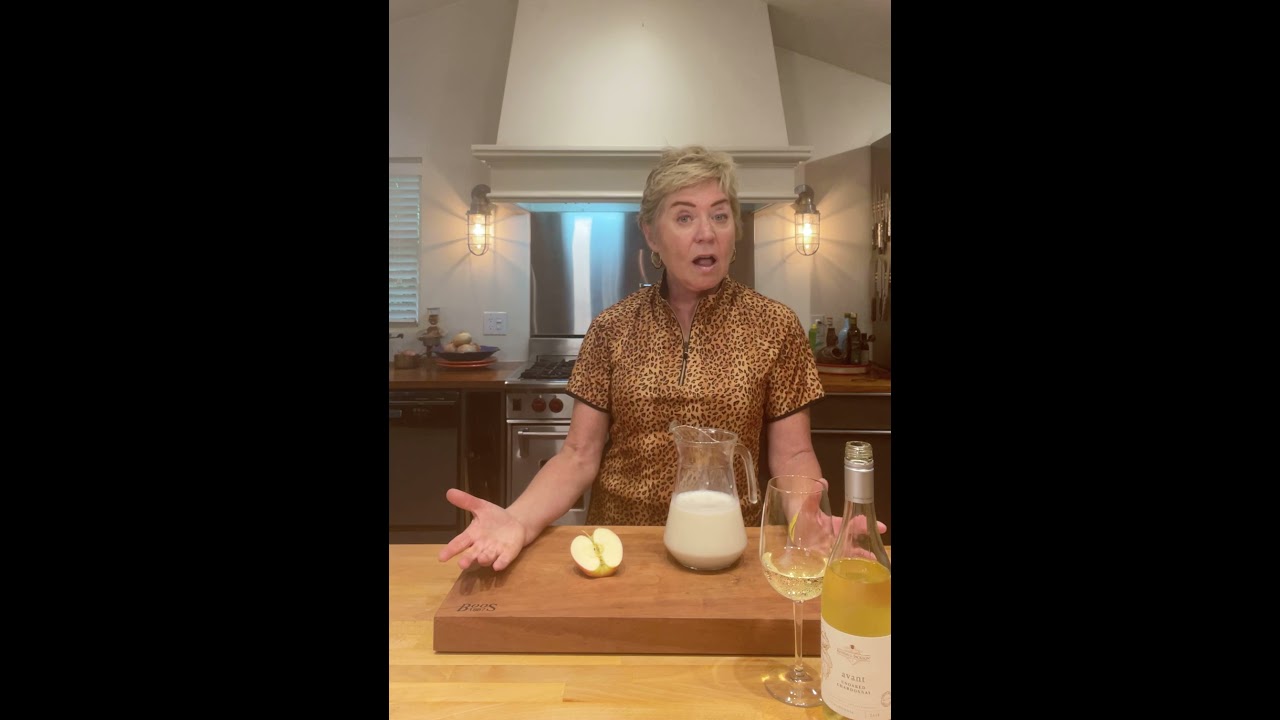
In my glass, is Avant Unoaked Chardonnay from Kendall Jackson – it got crisp green apple, citrus and tropical fruit notes with good acidity and a lingering finish in my mouth. You can find it in the regular grocery store for about $16!
It’s at the correct temperature – 50F and we’ll enjoy it later with a lemon and caper chicken salad. It’ss also great with any kind of Alpine cheese – cow’s milk cheese that is medium in texture and comes from cows that graze at high altitude, like Swiss Cheese, Gruyere or Jarlsberg.
Thanks for joining me on for the scoop on Unoaked Chardonnay. Until the next Weeknight wine – cheers!