
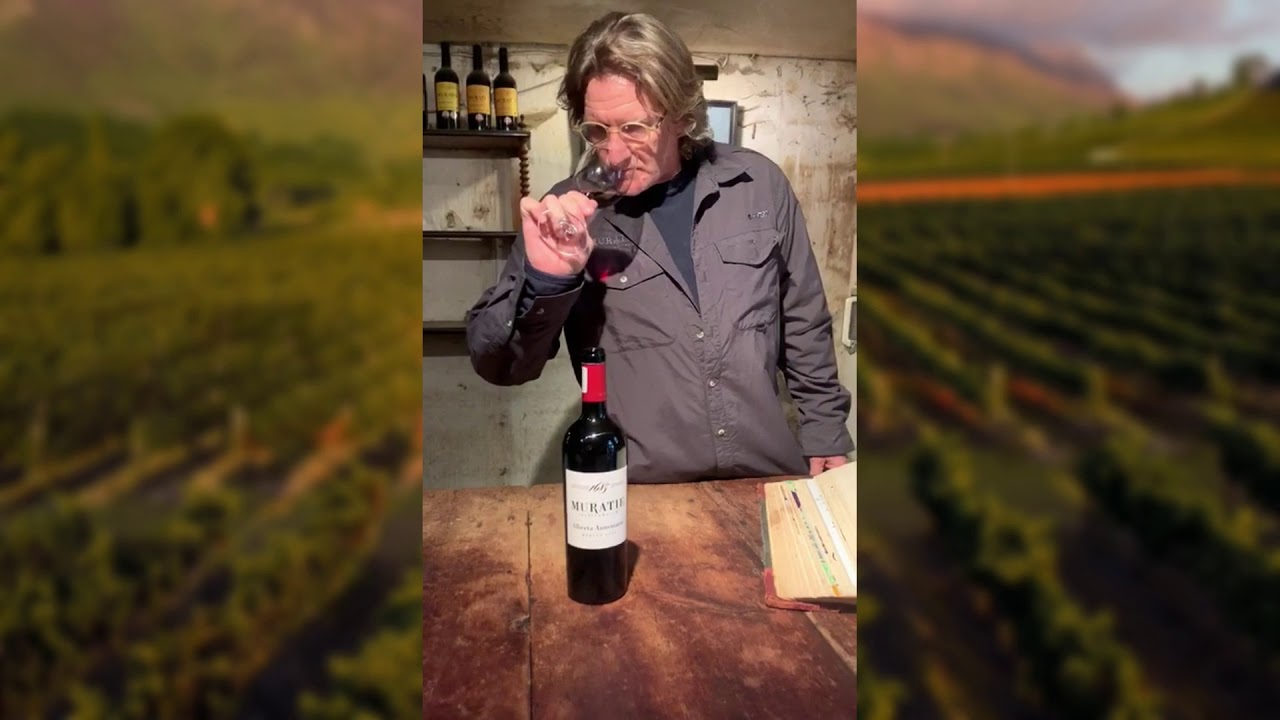
Tucked into the exquisite Knorhoek Valley north of Stellenbosch, Muratie Wine Estate, under the stewardship of Rijk Melck and his family, has been at the heart of a lot of passionate debate. This debate is centred largely around the desire to protect a century’s old wine experience that is a magnet for wine lovers around the world.
The farm itself dates back to 1685 when it was granted by Governor Simon van der Stel who was Governor of the Cape of Good Hope at the time. This makes Muratie one of the oldest estates in South Africa and along with that age comes many characters and truly fascinating stories. The Melck family has revived this rich heritage in an updated yet classical evolution of the brand, naming its range after many of these colourful characters. For example, the MCC bubbly is known as Lady Alice. She is joined by Ansela van de Caab (blended red), George Paul Canitz (Pinot Noir), Ronnie Melck (Shiraz), Alberta Annemarie (Merlot), Laurens Campher (blended white), Isabella (Chardonnay) and Ben Prins (Port).
The wine itself has also undergone incredible changes in quality. This has seen Muratie become a serious and respected player in the Bordeaux blend, Shiraz, Chardonnay and Pinot Noir stakes. Historically, Muratie has been known for being the first producer of Pinot Noir as well as fine ports.
Along with the development of other varietals, Muratie has elevated itself into a new appreciation amongst truly discerning wine lovers.
Tucked into the exquisite Knorhoek Valley north of Stellenbosch, Muratie Wine Estate, under the stewardship of Rijk Melck and his family, has been at the heart of a lot of passionate debate. This debate is centred largely around the desire to protect a century’s old wine experience that is a magnet for wine lovers around the world.
The farm itself dates back to 1685 when it was granted by Governor Simon van der Stel who was Governor of the Cape of Good Hope at the time. This makes Muratie one of the oldest estates in South Africa and along with that age comes many characters and truly fascinating stories. The Melck family has revived this rich heritage in an updated yet classical evolution of the brand, naming its range after many of these colourful characters. For example, the MCC bubbly is known as Lady Alice. She is joined by Ansela van de Caab (blended red), George Paul Canitz (Pinot Noir), Ronnie Melck (Shiraz), Alberta Annemarie (Merlot), Laurens Campher (blended white), Isabella (Chardonnay) and Ben Prins (Port).
It is not only the label that has changed. The wine itself has also undergone incredible changes in quality, under the creative hand of winemaker Hattingh De Villiers and his team. This has seen Muratie become a serious and respected player in the Bordeaux blend, Shiraz, Chardonnay and Pinot Noir stakes. Historically, Muratie has been known for being the first producer of Pinot Noir as well as fine ports.
Along with the development of other varietals, Muratie has elevated itself into a new appreciation amongst truly discerning wine lovers.
At Muratie, the passion for preserving our rich heritage, and the wonderful human stories that are woven into the very fabric of our history, are matched only by the way in which we produce our fine wines.
The wine industry has evolved rapidly in recent years, bringing with it some necessary advances and, sadly, losing at times some of the skill that makes winemaking the enigmatic endeavor that sets it apart in a modern world of mass production. At Muratie we are at pains to balance this blend of tradition and evolution to ensure that we continue producing the same classic wines for which we have become internationally renowned.
For example, we still handpick our grapes. This gives us a better understanding of the quality of the harvest even before we start extracting the juice. Not content with that, we then hand select the grapes on a sorting table – ensuring that only the best bunches are used in the wine making.
Even the way we extract the juice is considered. A 3-ton open pneumatic bed presses the grapes, using a soft membrane. We believe this is the gentlest method, avoiding mechanical crushing and grinding of the skins and seeds.
Blending the best of traditional and modern methods, we employ a combination of classic open fermentors and stainless steel tanks in the fermentation process. After fermentation, the grapes are gently pressed and the wine is matured in French oak barrels until our vintner discerns that it has reached it optimum moment to go to bottle.
Throughout the process – from fermenting to bottling – we use a balance of winemaker’s intuition, time-honored processes and contemporary best practice. Even the vineyards themselves are kept pest-free by ever-vigilant flocks of ducks and geese, avoiding the need for environmentally insensitive pesticides.
If you wish to witness how wine is made in the truest sense, you are invited to visit us at the farm.