
Recipe
2 Egg Yolks
150g Butter
10g whole Black Pepper
1-2 Bay Leaves
1 shallot or onion small size
1 teaspoon of vinegar
1 teaspoon lemon
Malzemeler
2 Yumurta Sarısı
150g Tereyağı
10gr Karabiber
1-2 Defne Yaprağı
1 Arpacık Soğan veya soğan küçük boy
1 çay kaşığı sirke
1 çay kaşığı limon
Follow me on INSTAGRAM:
Türkce aciklama alt kisimda
Hollandaise sauce (/hɒlənˈdeɪz/ or /ˈhɒləndeɪz/; French: [ʔɔlɑ̃dɛz]), formerly also called Dutch sauce,[1] is an emulsion of egg yolk, melted butter, and lemon juice (or a white wine or vinegar reduction). It is usually seasoned with salt, and either white pepper or cayenne pepper.
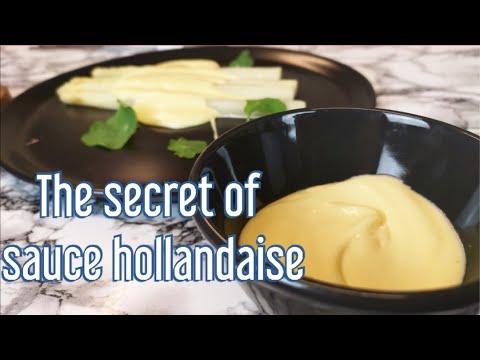
Hollandaise is one of the five mother sauces in French cuisine. It is well known as a key ingredient of eggs Benedict, and is often served on vegetables such as steamed asparagus.
Sauce hollandaise is French for “Dutch sauce”.[note 1] The name implies Dutch origins, but the actual connection is unclear.[1] The name “Dutch sauce” is documented in English as early as 1573, though without a recipe showing that it was the same thing.[1] The first documented recipe is from 1651 in La Varenne’s Le Cuisinier François[4] for “asparagus with fragrant sauce”:[5]
make a sauce with some good fresh butter, a little vinegar, salt, and nutmeg, and an egg yolk to bind the sauce; take care that it doesn’t curdle[5]
Not much later, in 1667, a similar Dutch recipe was published.[6] Thus, the popular theory that the name comes from a recipe that the French Huguenots brought back from their exile in Holland[7] is chronologically untenable.
La Varenne is credited with bringing sauces out of the Middle Ages with his publication and may well have invented hollandaise sauce.[8] A more recent name for it is sauce Isigny, named after Isigny-sur-Mer, which is famous for its butter.[3][9] Isigny sauce is found in recipe books starting in the 19th century.[10][11]
By the 19th century, sauces had been classified into four categories by Carême. One of his categories was allemande, which was a stock-based sauce using egg and lemon juice. Escoffier replaced allemande with hollandaise[12] in his list of the five mother sauces of haute cuisine.[13] While many believe that a true hollandaise sauce should only contain the basic ingredients of eggs, butter, and lemon, Prosper Montagne suggested using either a white wine or vinegar reduction, similar to a Béarnaise sauce, to help improve the taste.[14]
In English, the name “Dutch sauce” was common through the 19th century, but was largely displaced by hollandaise in the 20
As in other egg emulsion sauces, like mayonnaise and Béarnaise,[15][16] the egg does not coagulate as in a custard;[17] rather, the lecithin in the eggs serves as an emulsifier, allowing the mixture of the normally immiscible butter and lemon juice to form a stable emulsion.[18]
To make hollandaise sauce, beaten egg yolks are combined with butter, lemon juice, salt, and water, and heated gently while being mixed. Some cooks use a double boiler to control the temperature. Some recipes add melted butter to warmed yolks; others call for unmelted butter and the yolks to be heated together; still others combine warm butter and eggs in a blender or food processor.[19] Temperature control is critical, as excessive temperature can curdle the sauce.[20][21]. Some chefs start with a reduction. The reduction consists of vinegar, water and cracked peppercorns. These ingredients are reduced to “au sec” or almost dry, strained, and added to the egg yolk mixture.
Hollandaise can be frozen
Türkce aciklama
Mayonez ve Béarnaise gibi diğer yumurta emülsiyon soslarında olduğu gibi, [15] [16] yumurta bir muhallebide olduğu gibi pıhtılaşmaz; [17] aksine, yumurtadaki lesitin bir emülgatör görevi görür ve normalde karışmaz tereyağı ve limon suyu ile stabil bir emülsiyon oluşturur. [18]
Hollandaise sos yapmak için dövülmüş yumurta sarısı tereyağı, limon suyu, tuz ve su ile birleştirilir ve karıştırılırken hafifçe ısıtılır. Bazı aşçılar sıcaklığı kontrol etmek için çift kazan kullanır. Bazı tarifler, ılık sarısı içine eritilmiş tereyağı ekler; diğerleri erimiş tereyağı ve sarısı birlikte ısıtılmasını ister; diğerleri ise sıcak tereyağı ve yumurtaları bir karıştırıcıda veya mutfak robotunda birleştirir. Aşırı sıcaklık sosu kırabileceğinden sıcaklık kontrolü kritiktir. [20] [21]. Bazı şefler bir indirim ile başlar. İndirgeme sirke, su ve kırık karabiberden oluşur. Bu bileşenler “otomatik sekme” ye indirgenir veya neredeyse kuru, süzülür ve yumurta sarısı karışımına ilave edilir.
Hollandaise dondurulabilir