
Coca-Cola is one of the most recognized brands in the world! On a hot summer day, it’s one of the most refreshing drinks to crack open.
With humble beginnings to now being available around the globe, this company has grown fast.
Any lovers of Coca-Cola will love these fizzy facts!
Some people are unsure if this was a fact or a myth, but this one is sort of in-between.
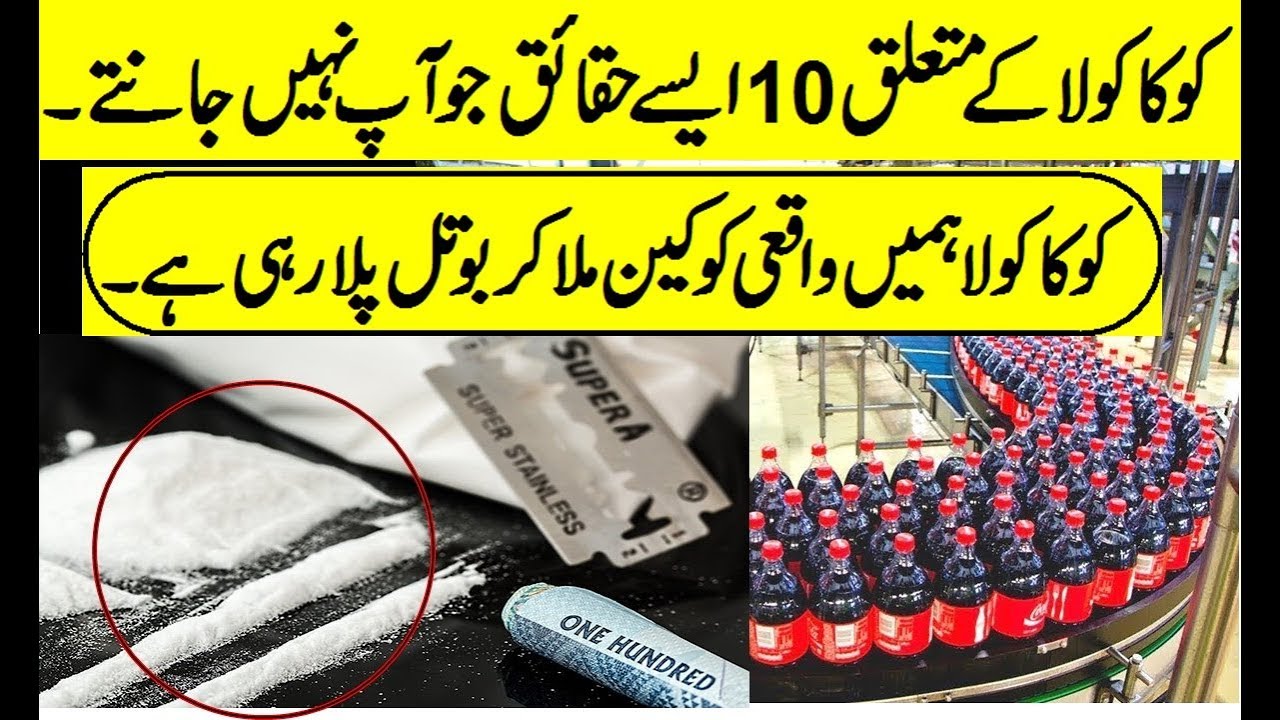
Coca-Cola never explicitly put pure cocaine into their drinks, but they did use significant amounts of coca leaf.
The recipe called for five ounces of coca leaf per gallon of syrup.
Each glass of Coca-Cola contained an estimated 9 milligrams of cocaine per glass. For perspective, an average “dose” of cocaine is about 50-75 milligrams.
Either way, it was removed in 1905 entirely.
These days, Coca-Cola uses a cocaine-free coca leaf extract instead.
Except for North Korea and Cuba, you can easily find Coca-Cola in every country in the world!
When it comes to those two other countries however, it is reportedly a “grey import” in North Korea and Cuba.
This just means that Coca-Cola is imported from another country without the direct permission of The Coca-Cola Company.
From 1886 to 1959, a 6.5 glass or bottle of Coca-Cola was just 5 cents.
They were able to keep their product at such a low price due to bottling contracts, advertising, vending machines, and a low rate of inflation.
The owner of Coke sold the bottling rights for just one dollar, which they never even collected. This was because Coke thought bottling would never take off, and the contract mistakenly had no expiration date.
As the sustainability for selling a 5 cent glass of Coke became less sustainable, Coke even pleaded to the U.S. Treasury to mint a 7.5 cent coin in place of the 5 cent coin.
They even would purposely leave some of their vending machine slots empty so that patrons would have to put in two nickels to get a Coke.
Once inflation started rising, Coca-Cola phased out their 5 cent advertisements in the early 50’s, and by 1959 the last bottle of 5 cent Coke had been sold.
China is a difficult market to adjust to. When Coca-Cola was ready to import to China, they had to find a name that fit with the majority of dialects and languages spoken there.
Originally, they went with “Kekoukela” which sounds similar phonetically, but in certain dialects, translates to “bite the wax tadpole” or “female horse stuffed with wax.”
After further research, they found a name very similar to their original choice which went over perfectly.
Not many brands translate over quite as smoothly as this Coke translation doe. In China, Coca-Cola is hereon called “Kekoukele” which means “tasty fun.
While some think the police carry a couple of two-liters in their trunk, that might just be in case the officers get thirsty.
However, Coca-Cola has indeed been proven to be effective at removing blood stains, and was even tested on the popular show, “Mythbusters”.
Many of these flavors are also available in Diet or Coke Zero forms.
Not all of the flavors are available worldwide, or even available at all anymore!
Some of the lesser known and not so successful flavors are products such as New Coke, Coca-Cola Orange, and Coca-Cola BlaK which was a coffee flavored version.
Coca-Cola BlaK was short lived with a lifespan from 2006-2008 and it was only available in seven countries.
However, Coca-Cola has mentioned plans to release another coffee related product in the future.
John Pemberton has certainly left behind a legacy. Pemberton was wounded in one of the last Civil War battles, at which point he developed an addiction for morphine while in recovery.
His original invention was an alcoholic beverage called “Pemberton’s French Wine Coca” which was a recipe that mixed coca, kola nut, and damiana.
It was meant to be an alternative pain-killer to morphine.
Wanting to make a more marketable product, Coca-Cola was invented as a way of making a non-alcoholic form of his previously sold wine coca.
As Pemberton was testing different concoctions for his new non-alcoholic medicine, he accidentally blended the base syrup with carbonated water.
It was at this point when Pemberton decided to sell his final product as a fountain drink instead of a medicine.
Back in 1990 Coca-Cola released “MagiCans” which gave consumers a chance to win anywhere from $1-$500.
Other cans had coupons redeemable for trips or merchandise. The cans were spring loaded to spit out the prize when opened.
However, the weight of the can had to be disguised so participants couldn’t figure out which cans had a prize and which were just regular Cokes.
The winning cans were filled with a solution of water, chlorine, and ammonium sulfate. It smelled terrible and drinking it was discouraged.
Of course, some people still tried to drink them, but fortunately the solution was harmless for consumption.
Coca-Cola ended the promotion early due to complaints about faulty cans and the negative publicity surrounding them.