The Old-School Squeeze
Centuries before electric blenders and vacuum sealers, farmers relied on brute force and simple mechanics to turn harvests into sustenance. The wooden screw press—often called a “wine press” or “cider press”—is one of those enduring tools. Its design hasn’t changed much since Roman times: a threaded screw, a flat plate, and a barrel lined with cloth or slats. Crank the handle, and gravity meets geometry to force liquid from pulp.
Why This Still Matters
Modern kitchens may favor blenders or juicers, but nothing matches the texture and depth of juice pressed slowly by hand. The slow squeeze preserves enzymes and aromatics that high-speed machines destroy. Plus, it’s zero-waste: the pulp left behind? Feed it to chickens, compost it, or dry it for baking. Nothing goes to landfill.
How It Actually Works
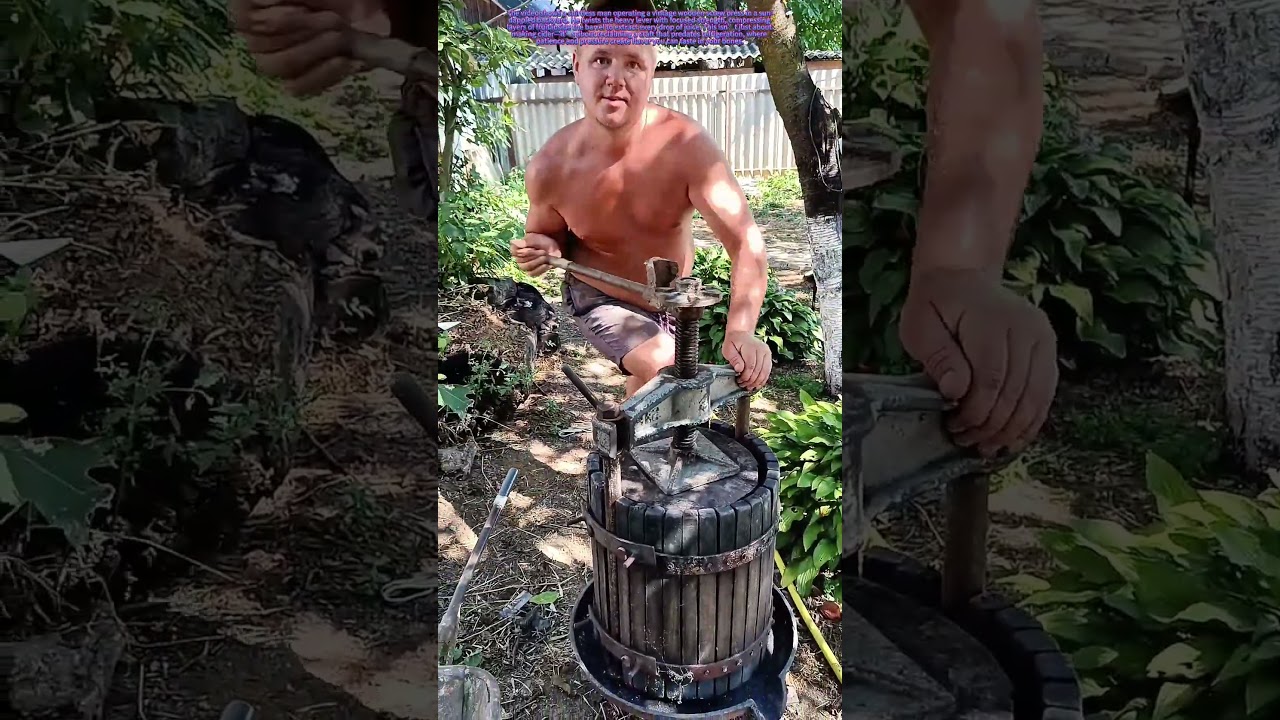
• The screw mechanism converts rotational force into downward pressure. Each full turn of the handle compresses the fruit by millimeters—but over hundreds of turns, that adds up.
• The barrel’s slats allow liquid to drain while holding pulp in place. Think of it like a giant French press, but for apples, grapes, or even berries.
• The tray underneath catches the runoff. In this case, you can see juice pooling at the base—clear, amber, and glistening in the sunlight.
• No electricity. No noise. Just sweat, wood, and physics.
The Man Behind the Lever
He’s not a professional—just a guy who grows his own fruit and refuses to let convenience erase tradition. His calloused hands, the sweat on his chest, the way he leans into each turn—it’s not performance. It’s ritual. He knows that the harder he pushes, the richer the reward. And when the juice finally flows? That’s not just liquid. It’s time compressed into a glass.
Cultural Echoes
This press isn’t just a tool—it’s a bridge to ancestors who fermented without thermometers, who measured ripeness by smell, not apps. In Eastern Europe, these presses are still used for kvass and kompot. In France, they’re heirlooms passed down with wine recipes. In Appalachia, they’re symbols of self-reliance. You don’t need a PhD to operate one. You just need patience, a little muscle, and respect for the fruit.
Final Thought
In a world obsessed with speed, this press is a quiet rebellion. It says: some things are worth waiting for. Some flavors can’t be rushed. And sometimes, the best things in life come from turning pressure into purpose—one slow, steady turn at a time.