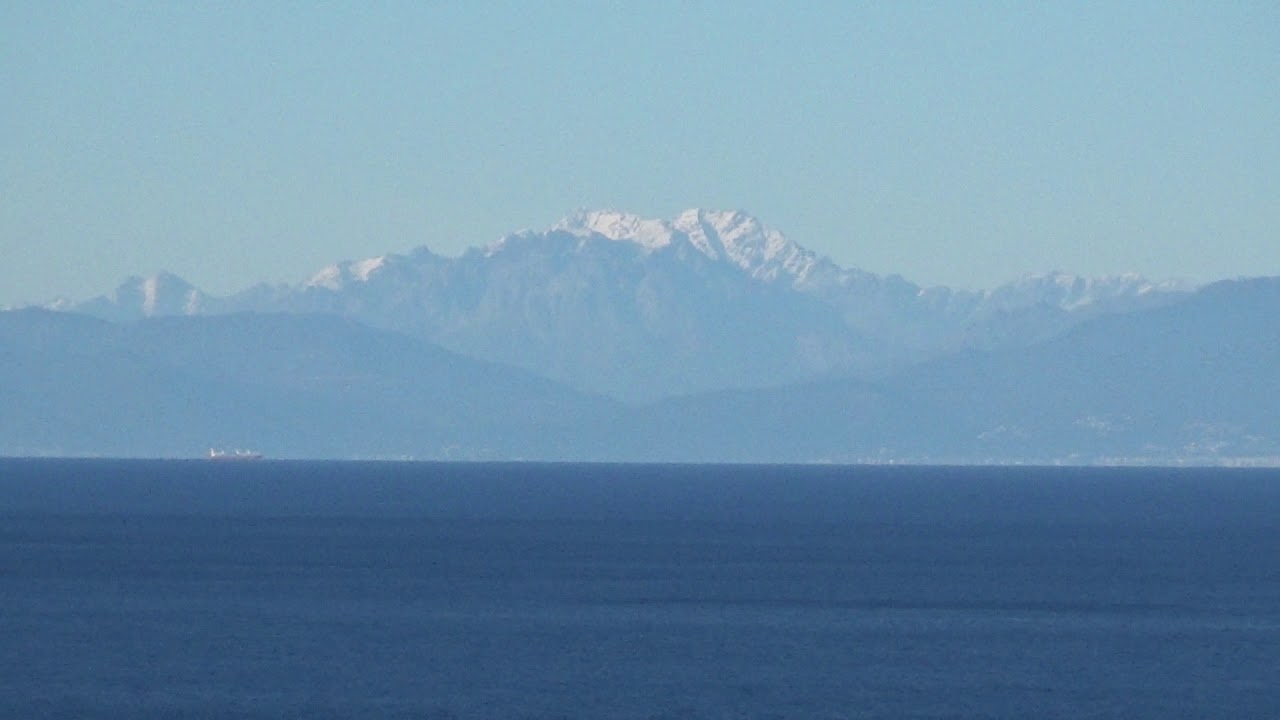
Corsica is a French territorial community, with capital in Ajaccio. Administratively, it was divided into two departments until their merger in 2018: Upper Corsica (2B, Haute-Corse) in the north and Southern Corsica (2A, Corse-du-Sud) in the south. The region includes five districts or arrondissements, 52 cantons and 360 municipalities. The regional territory coincides with the homonymous island, the fourth largest in the Mediterranean by extension (after Sicily, Sardinia and Cyprus). Separated from Sardinia by the short stretch of the Bocche di Bonifacio, it emerges as a large mountain range rich in forests from the Mediterranean Sea, marking the border between its western part, the Tyrrhenian Sea and the Ligurian Sea. Crossroads for 4,000 years of routes and peoples, the island, according to a well-established legend, was called Kallíste (Καλλίστη, or the most beautiful) by the Greeks; other ancient names were Cyrnos (in Greek Κύρνος), Cernealis (Κηρνεάλις), Corsis (Κορσίς) and Cirné (Κιρνή). Today it is called “l’Île de Beauté”, that is “the island of beauty”. It is known as the birthplace of Napoleon (born in 1769 in Ajaccio, three months after Pasquale Paoli’s invasion against the Corsican Republic and a year after the island had been sold as a pledge for debts to Louis XV by the Republic of Genoa ). Although politically part of France, the island is geographically, historically and culturally belonging to the Italian geographical region. With about a third of its territory protected as a natural park, and a large part of the coast still not populated, Corsica, almost depopulated (about 35 inhabitants/km²), bases much of its economy on tourism, which roughly doubles its summer population. The accommodation, well developed and assorted for offers and destinations (from mountaineering to diving), is accompanied by the traditional agro-pastoral and wine economy, which in recent years, despite difficulties and contradictions, has been added a timid opening towards the advanced tertiary sector .