Bordeaux’s classification system initially seems easy (compared to Burgundy or Germany, for example), as people tend to think only of the 1855 Classification… but as you learn more, it gets messier. The 1855 Classification only applies to the Medoc and Sauternes (sort of… as they made an exception for Haut-Brion), and there are multiple systems, often running in parallel, sometimes overlapping, and mostly (but not always) outside the French AOC law.
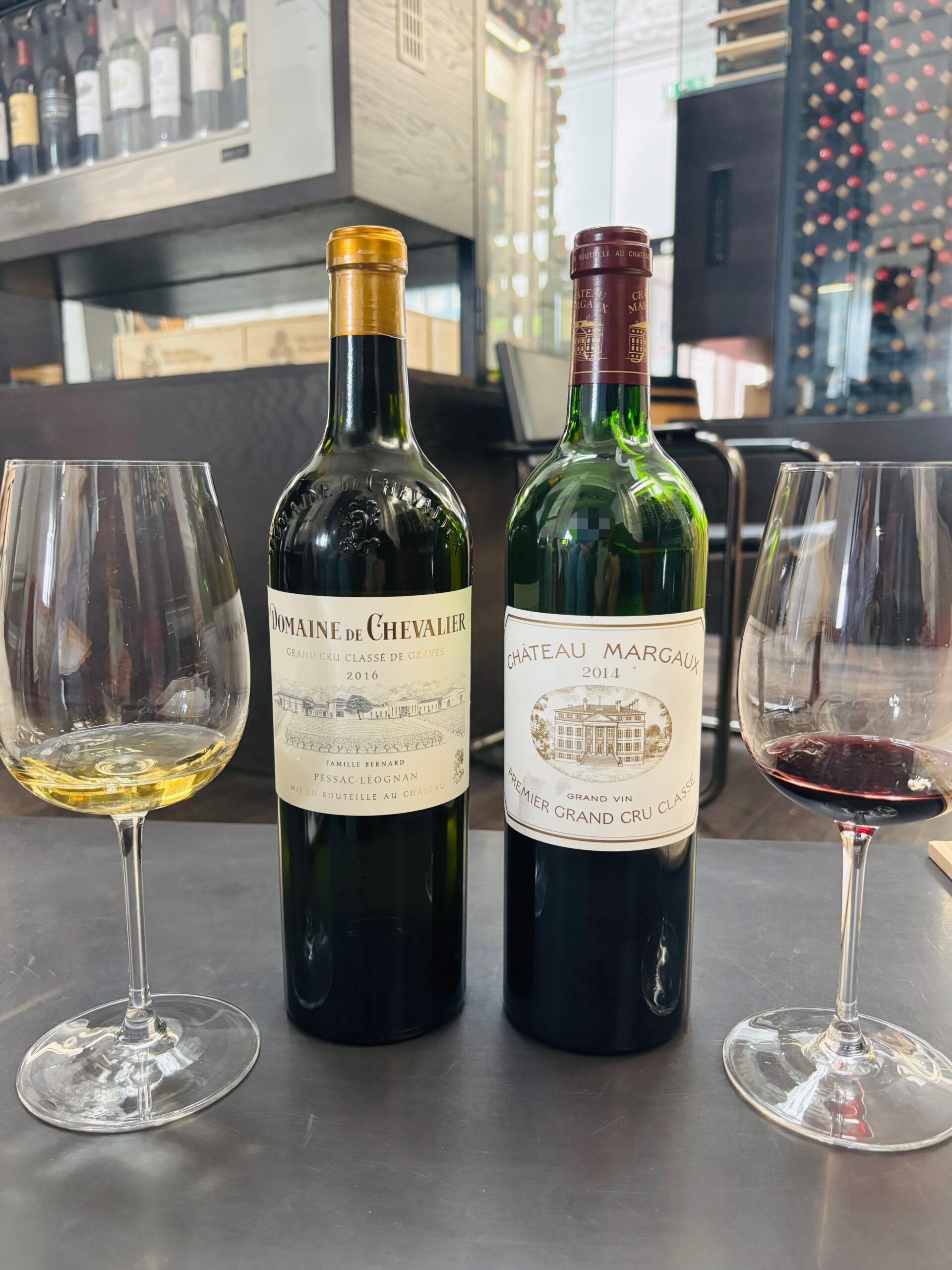
Because explaining all the systems could be a book on its own — and other people have done it much better than I ever could — I’ll focus on just these two bottles, which I tasted at the Max Bordeaux bar.
**Chateau Margaux** likely needs no introduction — it is a First Growth (top tier) in the 1855 Classification of the Medoc(ish), the most famous BDX classification system. By acclamation, Margaux is one of the top red wine producers on earth. This bottle is from the 2014 vintage, which is considered good but not great, with a humid summer saved by a long, dry harvest season. It’s a blend of 90% Cabernet Sauvignon, 5% Merlot, 3% Cab Franc, and 2% Petit Verdot. It was aged 20-24 months in 100% new French oak and comes in at a pretty restrained 13% ABV.
**Domaine de Chevalier** lives outside of the Medoc (and isn’t Haut-Brion), so it wasn’t even considered for the 1855 Classification. Instead, it is a Grand Cru Classé de Graves, a flat (without tiers) classification created in 1959 that only includes estates from Pessac-Leognan (including Haut-Brion), a more specific and prestigious appellation within Graves, but which hadn’t been established at the time of classification. Confusing? Of course. Let’s keep going… this classification includes dry red and white wines — unlike the 1855 Medoc Classification, which is red-only. Chevalier is one of a few estates which has both its red and white wines rated as Grand Cru Classé, and though it makes more red wine, its white is actually its signature and more expensive/coveted wine. This bottle is from 2016, considered a generationally great BDX vintage. It’s a blend of 75% Sauvignon Blanc and 25% Semillon aged in French oak (35% new) for 16-20 months. It comes in at 13.5% ABV.
**Tasting Notes:** – *2014 Margaux:* Deep ruby color. Expected it to be super closed, but opened up beautifully after only 20-30 min. in the glass. Blackberry, blueberry, vanilla, cedar, leather, and baking spice on the nose, with a slightly earthier but mostly matching palate. Lives up to the estate’s reputation for elegance, with a structured but not austere palate, and perfect balance between ripeness and acidity. Long, layered finish that starts fruity and ends earthy and floral. Approachable and a showstopper already, but will almost certainly reward proper cellaring for a decade or two (or three). – *2016 Chevalier Blanc:* Striking pale-to-medium gold color. A bit reductive right off the bottle, eventually revealing some peach, lemon curd, fresh cut grass, and some tea-like chamomile and honey notes. Rich, medium+ bodied palate — almost a bit waxy, but with enough acidity to drink fresh. There’s a ton of structure to age, but I frankly enjoy fruit flavors so I’d probably drink this during the next 5-7 years as opposed to 10+. – *Note: Before someone accuses me — no, this isn’t AI. I just like writing and have been using em dashes since long before ChatGPT. My sources are Wine-Searcher, Wine Cellar Insider, and distributor websites.*
elonsghost
Nice write up. Maybe some day I’ll try one of these classic great wines.

2 Comments
Bordeaux’s classification system initially seems easy (compared to Burgundy or Germany, for example), as people tend to think only of the 1855 Classification… but as you learn more, it gets messier. The 1855 Classification only applies to the Medoc and Sauternes (sort of… as they made an exception for Haut-Brion), and there are multiple systems, often running in parallel, sometimes overlapping, and mostly (but not always) outside the French AOC law.
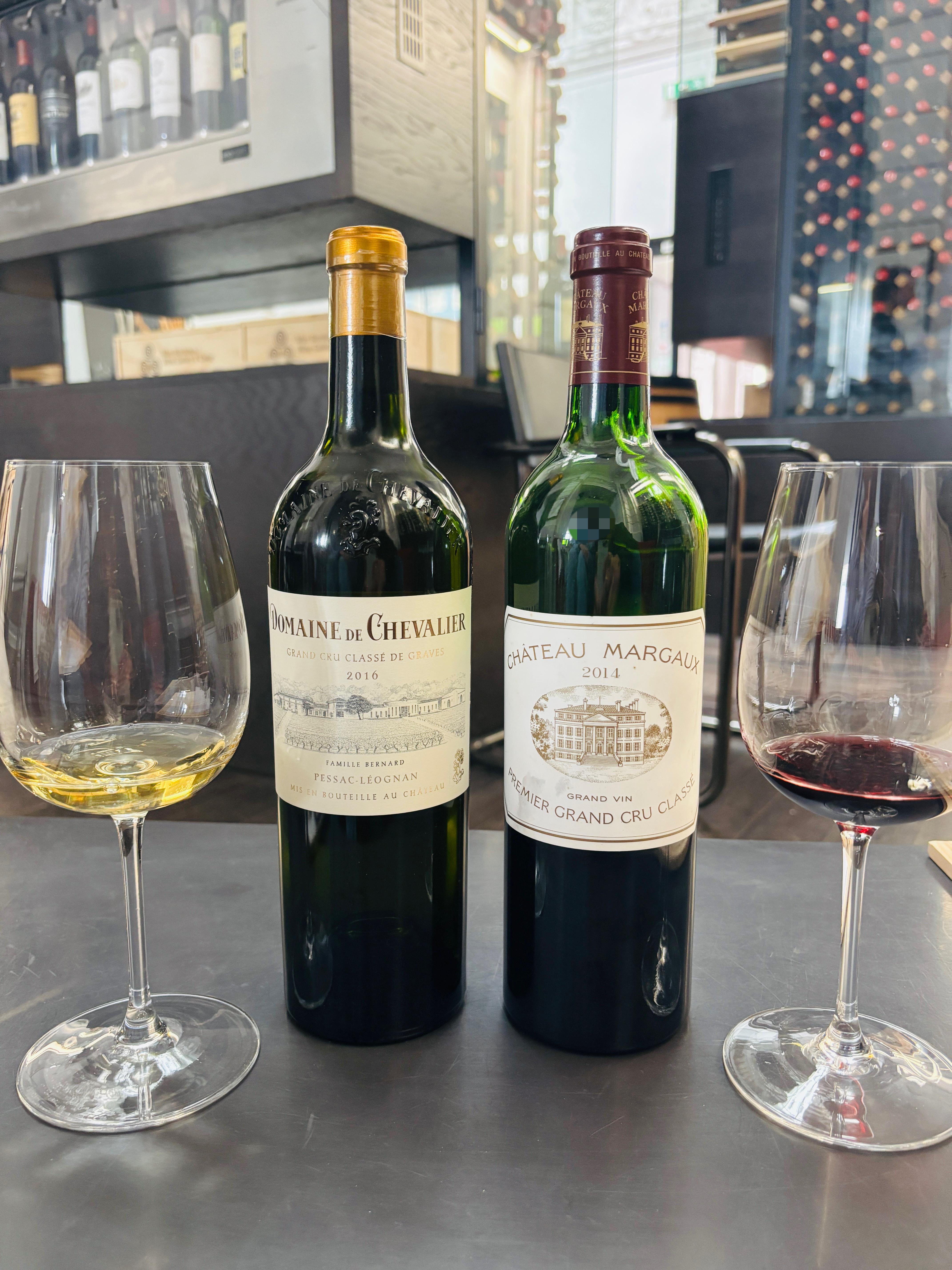
Because explaining all the systems could be a book on its own — and other people have done it much better than I ever could — I’ll focus on just these two bottles, which I tasted at the Max Bordeaux bar.
**Chateau Margaux** likely needs no introduction — it is a First Growth (top tier) in the 1855 Classification of the Medoc(ish), the most famous BDX classification system. By acclamation, Margaux is one of the top red wine producers on earth. This bottle is from the 2014 vintage, which is considered good but not great, with a humid summer saved by a long, dry harvest season. It’s a blend of 90% Cabernet Sauvignon, 5% Merlot, 3% Cab Franc, and 2% Petit Verdot. It was aged 20-24 months in 100% new French oak and comes in at a pretty restrained 13% ABV.
**Domaine de Chevalier** lives outside of the Medoc (and isn’t Haut-Brion), so it wasn’t even considered for the 1855 Classification. Instead, it is a Grand Cru Classé de Graves, a flat (without tiers) classification created in 1959 that only includes estates from Pessac-Leognan (including Haut-Brion), a more specific and prestigious appellation within Graves, but which hadn’t been established at the time of classification. Confusing? Of course. Let’s keep going… this classification includes dry red and white wines — unlike the 1855 Medoc Classification, which is red-only. Chevalier is one of a few estates which has both its red and white wines rated as Grand Cru Classé, and though it makes more red wine, its white is actually its signature and more expensive/coveted wine. This bottle is from 2016, considered a generationally great BDX vintage. It’s a blend of 75% Sauvignon Blanc and 25% Semillon aged in French oak (35% new) for 16-20 months. It comes in at 13.5% ABV.
**Tasting Notes:**
– *2014 Margaux:* Deep ruby color. Expected it to be super closed, but opened up beautifully after only 20-30 min. in the glass. Blackberry, blueberry, vanilla, cedar, leather, and baking spice on the nose, with a slightly earthier but mostly matching palate. Lives up to the estate’s reputation for elegance, with a structured but not austere palate, and perfect balance between ripeness and acidity. Long, layered finish that starts fruity and ends earthy and floral. Approachable and a showstopper already, but will almost certainly reward proper cellaring for a decade or two (or three).
– *2016 Chevalier Blanc:* Striking pale-to-medium gold color. A bit reductive right off the bottle, eventually revealing some peach, lemon curd, fresh cut grass, and some tea-like chamomile and honey notes. Rich, medium+ bodied palate — almost a bit waxy, but with enough acidity to drink fresh. There’s a ton of structure to age, but I frankly enjoy fruit flavors so I’d probably drink this during the next 5-7 years as opposed to 10+.
– *Note: Before someone accuses me — no, this isn’t AI. I just like writing and have been using em dashes since long before ChatGPT. My sources are Wine-Searcher, Wine Cellar Insider, and distributor websites.*
Nice write up. Maybe some day I’ll try one of these classic great wines.