
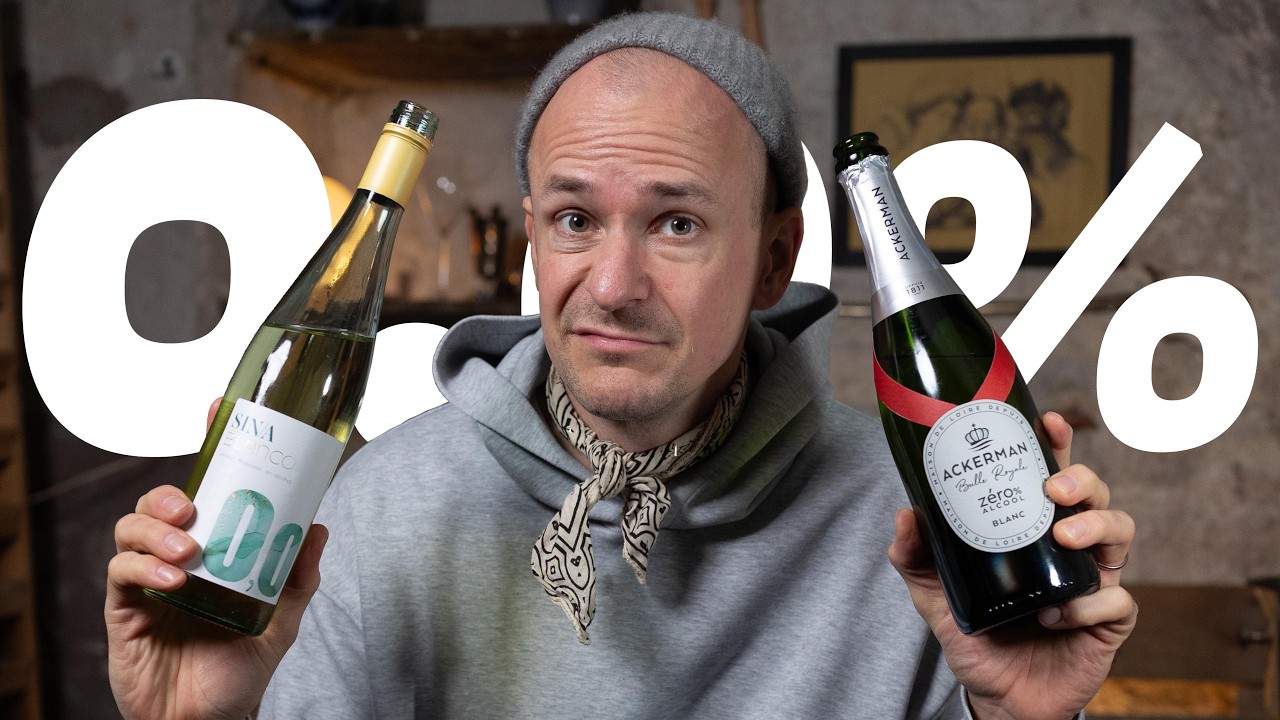
Check out Cellar Class to take your wine knowledge to the next level: https://www.cellarclass.com/
Learn from a Master of Wine at your pace, wherever you are with Cellar Class!
Follow me on …:
https://www.instagram.com/konstantinbaum_mw/
https://www.threads.net/@konstantinbaum_mw
@konstantinbaum_mw
Check out my website:
https://www.cellarclass.com/
https://www.konstantinbaum.com/
https://baumselection.com/
I have used the following glass in this video:
SPIEGELAU Hi-Lite Universal Glass – Get it here: https://www.spiegelau.com/en/shop/hi-lite/universal-glass-1750161?mtm_campaign=2025_cont_ec_baum20&mtm_source=ig&mtm_medium=afp&mtm_content=workshop&mtm_group=bgw&mtm_placement=link
I have tasted the following wines in this Video:
Freixenet Alcohol-Removed Premium Sparkling, Spain
https://www.wine-searcher.com/find/freixenet+alcohol+removed+premium+sparkling+spain?referring_site=KSB
Borgo Molino, “Glera” Vino Frizzante Alkoholfrei 0,0%, Italy
Ackerman Bulle Royale Zero Alcool Blanc, Loire, Vin de France
https://www.wine-searcher.com/find/ackerman+bulles+royal+zero+alcohol+blanc+loire+de+france+table?referring_site=KSB
Manufaktur Jorg Geiger Blanc de Blanc alkoholfrei, Germany
French Bloom Organic French Bubbly Le Blanc, France
https://www.wine-searcher.com/find/bloom+bio+bubbly+le+blanc+france?referring_site=KSB
SIN/A 0,0 Blanco, Spain
2023 Vigneron Pinot Noir DIVIN 0,5 %, France
GSM Limited Edition alkoholfrei Odbird
I use this wine key: Forge de Laguiole Ebony
The 100 Point Scoring System (from www.robertparker.com):
96-100: An extraordinary wine of profound and complex character displaying all the attributes expected of a classic wine of its variety. Wines of this caliber are worth a special effort to find, purchase and consume.
90 – 95: An outstanding wine of exceptional complexity and character. In short, these are terrific wines.
80 – 89: A barely above average to very good wine displaying various degrees of finesse and flavor as well as character with no noticeable flaws.
70 – 79: An average wine with little distinction except that it is soundly made. In essence, a straightforward, innocuous wine.
60 – 69: A below-average wine containing noticeable deficiencies, such as excessive acidity and/or tannin, an absence of flavor or possibly dirty aromas or flavors.
50 – 59: A wine deemed to be unacceptable.
Humans have had a strong connection to alcoholic beverages for thousands of years. We have been making wine for at least 7,000 years.
There are good reasons why, at the end of a long day or during a celebration with friends, we reach for wine rather than grape juice.
Wine offers far more complex flavors created during fermentation. It is not necessarily sweet, which makes it far more versatile with food. And, of course, it contains alcohol.
Alcohol typically accounts for up to 15% of a bottle of wine, yet it plays a crucial role. It stores and transports aromas, adds viscosity and texture, and contributes to the overall structure of the wine. It also has physiological effects: in moderation, it can be relaxing and has been associated with certain health benefits.
However, alcohol can also damage your health and become a serious problem. As a result, global alcohol consumption is declining. In Europe and the United States especially, more and more people are choosing not to drink.
The alcohol-free wine category is growing rapidly. The question is: are these products real alternatives to the wines we enjoy?
Legally speaking, in Europe, wine must contain at least 8.5% alcohol by volume to be classified as wine — with some exceptions. The products we are discussing today are therefore not technically wine. They are classified as dealcoholized wine or alcohol-free wine.
So if alcohol-free wine is made from grapes and contains no alcohol, what distinguishes it from grape juice?
The key difference is this:
Alcohol-free wines are made by first fermenting grapes into wine and then removing most of the alcohol. In the European Union, they may contain up to 0.5% alcohol by volume — roughly equivalent to what is naturally permitted in fruit juice.
To produce alcohol-free wine, you begin with a finished wine and remove the alcohol. The goal is to preserve the characteristics of wine — the fermentation-derived aromas, structure, and complexity — rather than producing something that simply tastes like grape juice.
There are several methods used to remove alcohol, but most involve separating water, alcohol, and flavor compounds and then recombining them without the alcohol.
One method is vacuum distillation.
The wine is placed under reduced pressure, which allows alcohol to evaporate at much lower temperatures. This helps avoid the cooked or boiled flavors often associated with traditional distillation.
40 Comments
“Onions and baby diapers.” Hilarious! 😱🤣🤣
HA HA HA HA HA HA HA HA HA !!!!! just woke up to this !!!!!!!!!!HA HA HA HA HA HA,funny stuff !!!!!!! YUK
I really like that, even though this is probably not something you would want to be subjected to frequently, you gave absolutely everything a fair crack of the whip. It even convinced me to try the Gieger Blanc des Blancs, it could definitely fill a role for teetotal friends.
Can we get a score for the Ackerman?
onions? is it very high in added sulfates?
I think you forgot to give a score to the Ackerman.
you are tasting APPLE in almost all these FAKES. so why not just DRINK some CIDERS???????? some are GREAT.
For me, it's waste of money to drink an alcohol-free drink, you either drink with alcohol or stick with water/tea/coffe/juice. Also, in some case (beer) and alcohol-free it's toxic than the regular one! 😀
Edit: A higher alcohol will carry the taste even longer, which is true especially with spirits drinks…
Interesting about low alcohol wines………………
Maybe beer breweries have been trying for longer?
Certainly the best low alcohol beers are probably not aiming at very low alcohol (just significantly less than 1%), and many are using yeast strains that produce very little alcohol (such as Guinness), rather than removing alcohol after it has been produced during fermentation. (Guinness 0.0 is amazing by the way, if you like Guinness. It is fermented so costs much the same as the real Guinness. If you don't like 0.0, try Adnams Ghost Ship.)
UK low alcohol ciders vary, but they can use standard cider with added unfermented juice, which tend to be sweet(ish) and not taste so bad.
The VERY few low alcohol wines that I have tried in the UK have been………………..far from great…………….
Sorry to be the bearer of bad news, but the claim of health benefits of moderate alcohol use is outdated and not scientifically backed, at least not anymore.
I just finished a few months break from alcohol for health reasons. I drank 0 beers and some of them were really good but the wines other than prosecco style ones used for fizz and sweetness in mocktails weren´t very good and it was easier just to drink regular soft drinks instead. These wines really aren´t wine and I struggle to see what role they actually play.
Yeah, you wont catch me drinking non-alcoholic wine. Grape juice is great. Wine is great. A local winery sells juice made with wine grapes. If I dont want the Welch's Concord but no alcohol I would drink that. This is filling a gap no-one needed. Maybe they wanted it – but be careful what you ask for.
As wine maker and wset 2 graduated-I love,really love wine. But…2 months ago I discovered I have breast cancer. So…what a powerful slap in ny face was to know/realize that I shoud stop drinking any alcohol. So I started to kook after dealcoholized wine like a crazy. And yes,I got to say: what a disapointment. I still looking for wine which will be as close as possble to the regular wine taste. So far red wines are big loosers. Most closest to normal wine were spanish and german wines. Some red you drink like it is some wild verry juice,nothing more. In my country,we don't have any local wineries which produce non alcoholic wines,and only few wineries are imported from abroad . So sad…
Беспонт, ничего не понимаю
This is one of the funniest things I’ve seen. Way to go 😂
Thanks. I have yet to find a de-alcoholized wine to drink.
My wife is pregnant so I’ve started mixing in zero alcohol wines and have tried a ton. Most suck. Villa a la Mer is the only one I can drink regularly.
I buy it for my kids for special occasions. I would never drink it. Lol.
Jörg Geiger is on the forefront of producing alcohol-free substitutes for sparkling wine. He does not try to imitate the real thing. Instead he created a trade of its own. Great!
My wife really enjoyed The Eine Zwei Zero sparkling Riesling when she was pregnant and wanted a grown up drink
We are probably in a similar stage as with alcohol free beer 10-15 years ago.
When producers were trying to make a non-alcohol beer, but failing miserably, because it just wasn't beer.
And to this day, the alcohol free beers do lack the richness, mouthfeel and interesting flavors of real beer (although there are plenty that are decent drinks in their own right, with a similar taste profile, though still not the same. Which is ok.).
But the beauty of wine comes from it's nuances, complexity, aroma from fruit, cellar, storage… To get all of this into a non-alcoholic wine, you'd need to store it, then remove the alcohol, then somehow recatch the aroma that was bound to the alcohol…
Imho it is a lot easier to just drink alcohol free cocktails.
French Bloom was all over every shop in Paris, too. I hated it. Doesn’t taste like wine. Tastes like weird floral fruit juice. Also sweetness overload.
You should try Strauch Blanc Pur, my absolute favourite when it comes to alcohol free wine!
Alcohol free wine is not wine; it's grape juice. Any comparison to wine is misleading. I've tried a couple though and some of them are quite quaffable. However, considering that that you're not supposed to drink more than 1 1/2 bottles of wine a week (14 units UK) the grape juice serves as a decent substitute during the recommended 48 hour hiatus. I watch your clips on a regular basis and always find them informative and enjoyable. Vielen dank.
Yikes, baby diaper?🥲 I haven't found a product worth buying again
Get sold fruit juice on price like wine… Not for me… Thanks Konstantin!
I’m unsettled by this “ Push “ toward alcohol free wine etc. It's very subtle, but it's happening in tandem with a lot of other changes in society. Pubs are closing in the UK at a dramatic rate, hospitality in general is in decline, and running parallel to this we have increased isolation, loneliness, and depression. Some may say there is no link, or a tenuous one at best, but to me it seems obvious.
The culture that I enjoyed as a young man and though most of my life is being supplanted by one which to me seems valueless and superficial.
The Pub was the place where people met, to gossip, and talk through many topics, including sport, music, current affairs and politics. People didn't turn up with the same opinions, often they were poles apart, supported different teams, and different political perspectives. But arguments were had over a few beers, and often taking turns to pay for the round, you could be called a Luny lefty, or Tory bastard, without taking offence, in fact it was a point of pride not to, to show you had the cajones, a stoic resilience 😂🙂.
Anyway, I won't ramble on too much, I haven't got a pint in front of me 😂, but I feel pubs and hospitality where the safety valves where pressure was released, where free speech reigned supreme, where jokes were funny even if offensive. So now where do people go ? Social Media ? A place where people are reporting other people, for having their feelings hurt, and Police investigating 🤔. Seems odd, unnatural, and a great loss has been had.
Now people hide in their homes, with their alcohol free nights, stewing in anxiety, isolated and depressed. We used to say, back in the day, when things were much harder than they are now “ let's go on the lash, we'll all feel better after a good session", and in spite of a few hangovers , we generally did.
Cheers 🍻🍾🍷.
I really think those products are made by people who don't like wine because it's considered "not inclusive enough"/"too elitist"/"too conservative" rather than a genuine attempt to craft a good product everybody can enjoy. They genuinely hate everything wine represents.
You can't or don't want to drink wine? No problem, my friend: just grab a ginger beer, a fruit juice, or sparkling water. And if you're afraid of being judged by others for not drinking alcohol, change your friends or develop confidence in your own life choices. But, wine amateurs don't have to inflict those horrible drinks on themselves to avoid hurting non-drinkers' feelings.
Love the Jorg Geiger products, for 0.5% wines only Bolle are compatible to wines with positive alcohol percentages.
You should definitely seek out their Grand Reserve and a new dealcoholized Bourgogne Blanc (worlds first)
They double ferment all their wines which makes they very unique in a positive, savoury and complex way
why have sex without orgasm=same dinge!
Ich habe den Sekt von Molitor probiert und ihn einigen schwangeren Bekannten ausgeschenkt, die gemeint hatten es wäre seit langem mal wieder ein trinkbarer Genuss.😅 ich hab ihn selber benutzt, um alkoholfreie Hugos zu machen und die waren durchaus genießbar. Bis jetzt der einzigste Sekt, von dem ich das sagen konnte.
Me, I'd rather have some juice and soda or whatever. I'm resigned to the alcohol content, or it is not wine. Can you imagine trying to get a de-alcoholised Sauvignon Blanc to be described as 'chewy', when as I understand it that very 'chewiness' comes from the effect of the alcohol on the mouth feel?
Interesting indeed, I don't think I'll be changing my view on this one.
Nice one Konstantin! ✨🌟👍
The world of dealcoholized beer is doing amazing things (e.g., Partake, Guinness 0). I never tried dealcoholized wine until my friend became pregnant. To celebrate, I found a local store that specializes in dealcoholized wine – and my mind was blown! I had the Les Marees Sparkling Blanc de Blanc, Goodvines Sparkling Riesling, and the Goodvines Black Label Sauvignon Blanc, and they were surprisingly delicious!
In a blind tasting, someone could surely be confused. Interestingly enough, Goodvines is made in Baden, Germany, and it made me think of you, Konstantin! Please give these a try and I would be curious to hear your thoughts. While the RS per standard glass is what I usually get in a whole bottle of regular wine, they surprisingly drank balanced with acidity. I haven't tried any reds yet, but I'll try that PN you reviewed if I can find my hands on it – I love PN!
I prefer botanical drinks over dealcoholised wines. I agree with you on the beers. Some good options there (and also a lot of rubbish).
Smell like fruity onions 😂😂😂
No and what’s the point…drink cordial if u don’t want booze – thanks for taking one for the team…alcohol, underarm hair free liquid is in the blue ‘wine’ category.
Interesting. I’ve not had a lot of de-alcoholized ones, but those I have had were unenjoyable. Thank you.
SWALLOW! haha
Don't waste my time.
Taking one for the team.