
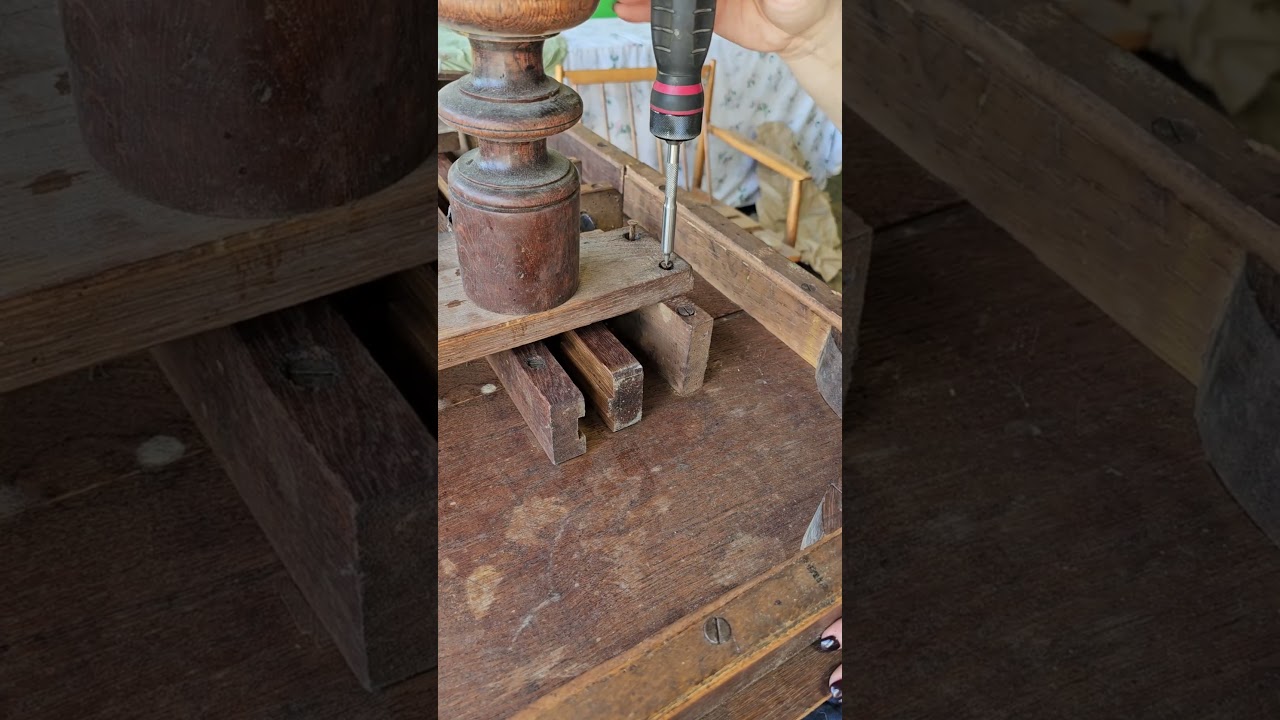
What I can say with confidence is this: it is French. There is a handwritten French paper label underneath, faded but still present. The construction supports that as well. Pegged joinery. Strong, architectural turning.
The extension system uses early turnbolt style latches, which predate the later gear and track mechanisms that became common toward the end of the 19th century. Based on construction and style, I would place it somewhere between 1860 and 1870.
Functionally… that is where it gets interesting. It’s missing its extension leaves. Dining table right? As it sits, it measures 27 inches tall. It’s not uncommon for legs to have been shortened for various reasons.
Was it originally a dining table that was altered at some point? Were the feet intentionally removed? Or was it always slightly lower and intended for a salon or parlor setting?
I’m confident in its age and general origin. I’m just still working through its original purpose.
If you’ve encountered something similar or can shed light on the mechanism or proportions, I would genuinely value the discussion. The research is half the joy of working on pieces like this.
20 Comments
Beautiful. I'd use it as a library table. To plan cookbooks garden and building plans
Very cool
Stunning piece
Very nice antique table❤
Furniture made long ago was not only beautiful, also practical. The detail. The workings underneath. Nice.
Looks lije a card table.
Show how it ended pls
Beautiful ❤❤❤❤
It is called a table.
It was used fur a formal dinning table but a library table would just as nice. They made furniture to last be functional and beautiful at the same time
Looks Jacobean…
An extending table…. You’d also need the extra leaves to put in the middle..1-3. Some are of more simple wood, some the same… Enjoy!
Table de salle à manger de style Henri II Français
I have a table less detailed but similar and have been looking for a table leaf or 2 that I think matches the same top as your piece
"No idea" what a table is… ok…
Gorgeous table! My grandma had a similar one. My daughter has it.❤
Ho due tavoli come questo, possono essere utilizzati come tavolo da salotto, ma anche come tavolo da pranzo alzando il Piede e aggiungendo le prolunghe.
Vengono dalla Francia.
😊 love how people really believe you don't know what it is
Very funny. U know what it is
It's a Duncan Fife table. I had one many years ago that I inherited through my aunt's property but a long since let it go it was a great table.