
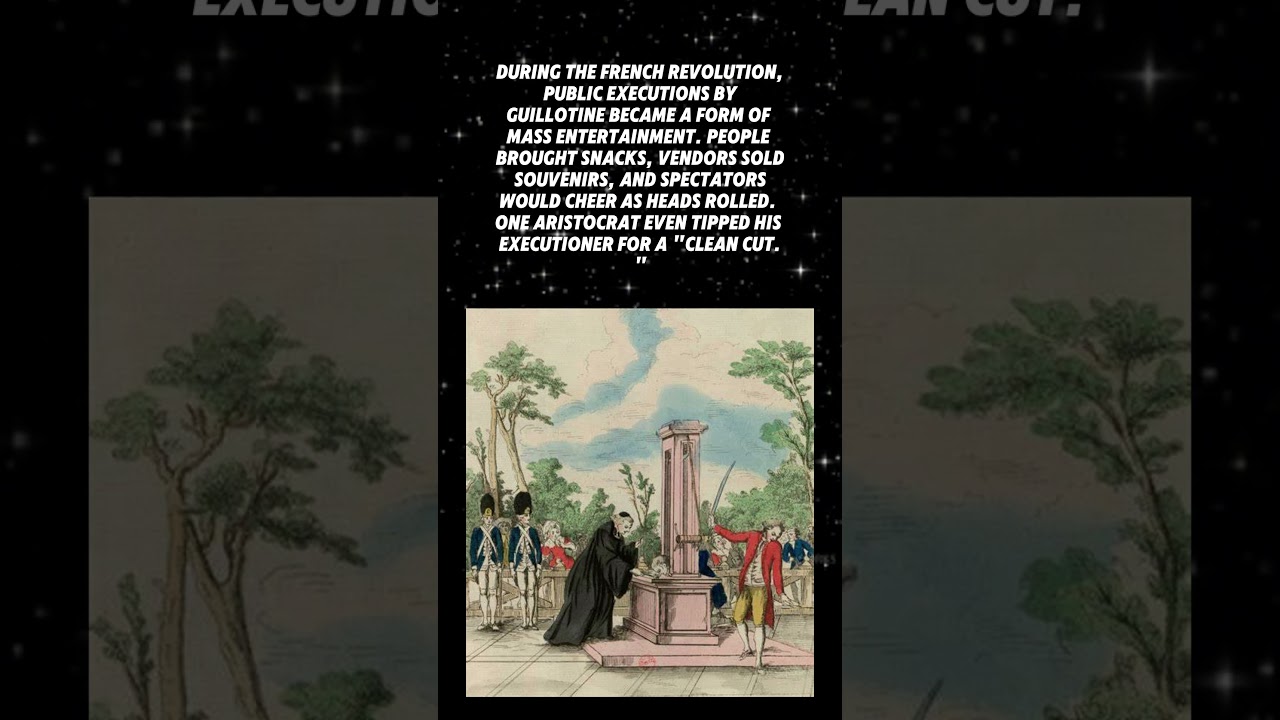
⚔️ The Guillotine: More Than Just a Machine
Invented by Dr. Joseph-Ignace Guillotin, the guillotine was originally meant to be a more humane method of execution. Before that, beheadings were often botched, messy, and slow. Guillotin, ironically, wanted an “equal” form of death for all classes—so nobles and peasants would be executed the same way.
But instead of being just a practical tool for justice…
🎭 It Became a National Obsession
Once the French Revolution spiraled into what’s known as The Reign of Terror (1793–1794), the guillotine turned into a macabre celebrity.
Nicknamed “The National Razor”, it stood in Paris’s Place de la Révolution (now Place de la Concorde) and ran constantly executing thousands, including King Louis XVI and Marie Antoinette.
Crowds would gather daily, like going to a show. People brought food, wine, and even kids.
Some women, called “tricoteuses”, sat knitting beside the scaffold, calmly watching the executions as if it were an afternoon pastime.
🛍️ It Sparked Merch and Pop Culture
No joke—there were guillotine-themed souvenirs.
Little toy guillotines were sold to children.
Revolutionary songs and poems were written to celebrate it.
Some women wore guillotine necklaces—a red ribbon tied around their necks to symbolize a severed head.
🧠 It Messed with People’s Heads—Literally and Figuratively
There were rumors (and even scientific curiosity) about how long someone stayed conscious after being decapitated. Some witnesses claimed the heads blinked, looked around, or had expressions of shock after separation.
The whole era blurred the line between political justice and gruesome spectacle. What started as a tool of “rational” Enlightenment justice ended up embodying the madness of mass paranoia and mob rule.
5 Comments
A CUT. ABOVE THE REST😂😂😂😂😂😂😂😂😂😂😂😂😂😂😂🎉🎉😂
It's in the DNA
Barbarism 😮
We badly need that in America now.
I believe the last execution by guillotine was in France in 1977 or 79
Guess what other forms of public execution did this? Hint: they did it in the south.