
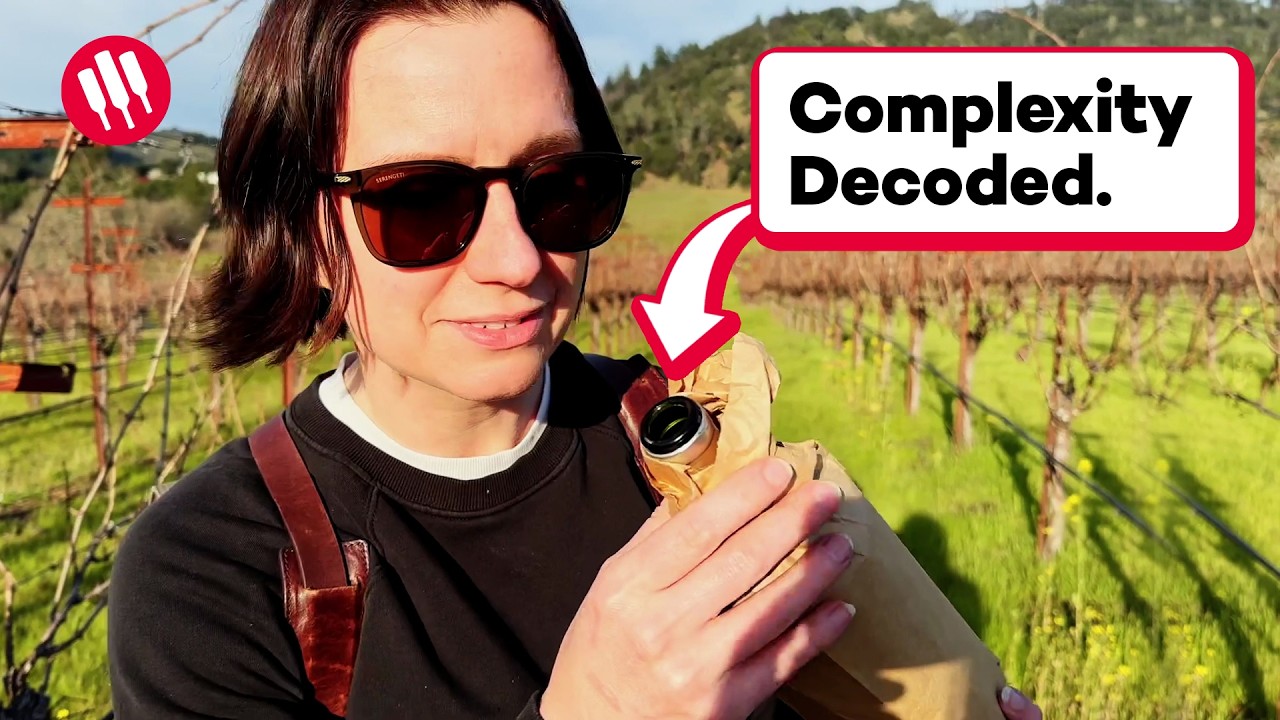
Discover how wine tasting sharpens your senses and boosts brainpower! Learn about wine aromas, impact compounds, and blind tasting in this fun adventure. *Sign up and learn more at https://winefolly.com*
Video Chapters:
00:26 – Wine Tasting Trains Your Brain
01:08 – What We’re Learning Today
01:33 – How to Find Aromas in Wine
02:29 – Science Behind Wine’s Aromas
03:45 – Rotundone (black pepper aroma)
04:22 – Pyrazines (bell pepper aroma)
05:08 – Sotolon (maple aroma)
05:44 – cis-Oak Lactone (coconut-vanilla aroma)
06:52 – TDN (the Riesling aroma)
07:41 – Diacetyl (the buttery aroma)
08:32 – beta-Ionone (the violet aroma)
Thank you to our sponsors and members who support this channel! Featured wines or wineries in this video is to help create education and is not a direct rating or recommendation.
You can find Wine Folly in other social spots:
https://www.instagram.com/winefolly/
https://www.linkedin.com/company/wine-folly/
https://www.facebook.com/winefolly
*Bio:*
Wine Folly is a wine education company dedicated to making the world of wine more approachable and enjoyable for everyone. Through engaging content, visually stunning guides, and expert insights, Wine Folly helps wine lovers worldwide learn more about wine in a fun and accessible way. Founded in 2011 by Madeline Puckette, Wine Folly offers an online wine school and publishers books, guides and more to help you become wine smart.
Whether you’re a beginner or a seasoned enthusiast, you’ll uncover the secrets behind why wine smells the way it does and how to identify its unique characteristics.
**Wine Aromas: The Hidden World in Your Glass**
Wine isn’t just about grapes—it’s a sensory experience! Through fermentation and aging, wines develop thousands of aroma compounds through interactions between esters, thiols, isoprenoids, and phenols. It’s why you can smell things like strawberries, chocolate or even green bell pepper in a glass of red wine. They’re not just figments of your imagination.
**Impact Compounds: The Key to Blind Tasting**
Ever smelled black pepper, coconut, or even kerosene in wine? These are examples of “impact compounds,” specific aroma molecules strongly associated with certain wines or winemaking processes. Here are some highlights:
– **Rotundone:** Found in red wines like Syrah and Grenache, giving black pepper notes.
– **Pyrazines:** Responsible for green bell pepper aromas in Cabernet Sauvignon and Sauvignon Blanc.
– **TDN:** The compound behind the petrol-like scent in aged Rieslings.
– **Cis-Oak Lactone:** Found in wines aged in American oak barrels, imparting coconut and dill aromas.
**How to Train Your Nose and Taste Buds**
1. Use a bowl-shaped glass to collect and concentrate aromas.
2. Swirl the wine to release its smells.
3. Close your eyes and take slow, deliberate sniffs to focus on individual scents.
Don’t worry if you can’t detect everything right away—training takes time!
**The Science Behind It All**
Studies show that professional sommeliers have higher volumes of gray matter in their entorhinal cortex—a brain region critical for memory and navigation—thanks to their sensory training. By learning to identify wine aromas, you’re essentially giving your brain a workout!
**Your Challenge: Can You Identify These Aromas?**
Next time you try a glass of wine, be it red or white, take your time and try to identify 5 individual aromas. (By the way, this is much easier in higher quality wines with added complexity)
**Join the Journey**
Wine is more than just a drink—it’s science, art, and adventure all rolled into one! Whether you’re swirling at home or exploring wineries, there’s always more to discover.
#wine #drinks #bartender
14 Comments
Great videos❤❤❤
Thanks for such great educational content .
This is the first time I have heard anyone even remotely mention the 'petrol' like aroma. I know you said it's common in Riesling, but I have been detecting it in red wines. Is that even possible? We often buy rather inexpensive 'every day wines' at the supermarket; usually red blends, but sometimes straight Cabernet or Malbec. I often detect a lot of that kerosene/petrol/diesel smell and could not find it described regarding wines, anywhere. Maybe I'm overly sensitive to it. I'm disappointed too because once I detect that, it over powers the fruit and other aromas that I WANT to smell. You also said it isn't present in fresh grapes and increases as they age – trust me, these inexpensive wines are very young (like yesterday 😂), so maybe it isn't the TDN, after all. Apparently I just need to start buying better wine. 😜
Lots of useful info ❤.The warehouse with barrels looks amazing.
Fantastic video Madeline, very informative, educational, as well as entertaining. Cheers, we all enjoyed it!!
That’s crazy that i guess silver oak With just the aromas 😮 🍷
More like this please!
Super interesting video.
Very helpful video!
65 DEGREES Celsius is pretty hot! 🤣
Blinded by science! Maybe your best integration of education and entertainment yet (“…in the best way possible”..😂). How do I know? I didn’t want it to end. I know a lot goes into making vids like this, but would love to see more. 🍷
Very good video and breakdown of wine smells. Thanks
And as always: Enjoy the sunlight held together by water 🍷
Well maybe do a sound check before you record. It was horrible in the last area. I had to listen 3 times and still didn't get what you said. Thank goodness for closed caption.
ConnAisseur 😜 in french