Japanese knives don't have to be expensive, or high maintenance, if you're looking for quality.
I recommend looking at the Tojiro Classic line of knives as an entry level point for someone curious about Japanese knives, they're hard steel, sharp, and less far less expensive than 200-300 per blade
(Tl;Dr : The things that are bad for Japanese knives listed in the video are bad for all knives, and there is not really any more maintenance involved in stainless steel Japanese knives than stainless steel knives made anywhere else)
If you want something handmade, or VERY high performance, it is easy to spend a lot, but it is a bit misleading to say that all quality Japanese knives suffer from this.
They are usually made with harder steel, which is actually easier to sharpen and to keep sharp, so long as you treat them well, and learn to sharpen them, or go to somebody who knows how (if treated correctly, most stainless steel knives made in Japan can cut nicely for 12-18 months between sharpening)
Stainless steel knives made anywhere in the world are pretty resistant to rust, but depending on where you live and what your use cases are, your mileage may vary.
Oiling your blades is really only necessary in particularly humid climates – if your kitchen window opens directly onto the bay, you may need to oil a carbon steel blade every so often, but even then, it's a few moments once a week or so.
If you love to put your knives in the dishwasher, avoid high quality stuff no matter where it's made – A 7" Henckels will lose its edge, show handle damage, and begin to get spotted with rust just as easily as a stainless Japanese knife in those circumstances.
The largest trade-off for most people when using Japanese knives is well pointed out in this video – the sharper blades are more prone to chipping, because you are able to sharpen at a more aggressive angle, and produce a narrower cutting edge of core steel. Generally it is best not to use Japanese knives on anything you would not bite through with your front teeth, as the steel is sharpened quite thin. This also means you want to avoid twisting or dragging your blade and it's tip across the cutting board, though you can always use the spine of your knife to push your chopped vegetables off to one side.
Steels like the one in the video are alright for truing edges, but Japanese knives benefit from ceramic honing rods a lot, helping to keep the blade as straight as possible.
Pull through sharpeners aren't good for most knives, as the angle they produce is inconsistent and the steel they use to strip your blade down tends to be fairly low quality and causes an uneven edge. They'll do in a pinch, but they're more like a spare tyre solution – only good until you can deal with the problem properly.
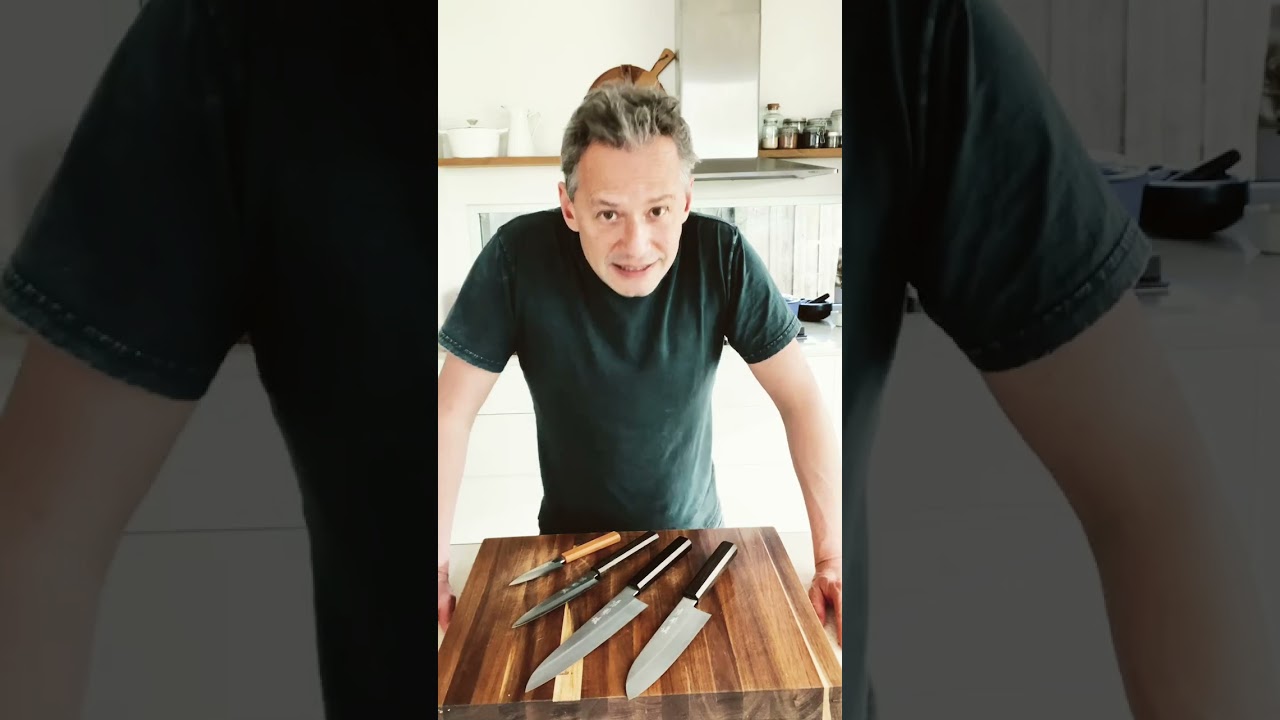
I'm excited to see this series of shorts go up as an introduction to Japanese knives, but I think the majority of the points mentioned as negatives are easily misconstrued.
All of the problems mentioned are technically true of any knife, especially as you get into higher quality products, regardless of where they are manufactured.

3 Comments
Japanese knives don't have to be expensive, or high maintenance, if you're looking for quality.
I recommend looking at the Tojiro Classic line of knives as an entry level point for someone curious about Japanese knives, they're hard steel, sharp, and less far less expensive than 200-300 per blade
(Tl;Dr : The things that are bad for Japanese knives listed in the video are bad for all knives, and there is not really any more maintenance involved in stainless steel Japanese knives than stainless steel knives made anywhere else)
If you want something handmade, or VERY high performance, it is easy to spend a lot, but it is a bit misleading to say that all quality Japanese knives suffer from this.
They are usually made with harder steel, which is actually easier to sharpen and to keep sharp, so long as you treat them well, and learn to sharpen them, or go to somebody who knows how (if treated correctly, most stainless steel knives made in Japan can cut nicely for 12-18 months between sharpening)
Stainless steel knives made anywhere in the world are pretty resistant to rust, but depending on where you live and what your use cases are, your mileage may vary.
Oiling your blades is really only necessary in particularly humid climates – if your kitchen window opens directly onto the bay, you may need to oil a carbon steel blade every so often, but even then, it's a few moments once a week or so.
If you love to put your knives in the dishwasher, avoid high quality stuff no matter where it's made – A 7" Henckels will lose its edge, show handle damage, and begin to get spotted with rust just as easily as a stainless Japanese knife in those circumstances.
The largest trade-off for most people when using Japanese knives is well pointed out in this video – the sharper blades are more prone to chipping, because you are able to sharpen at a more aggressive angle, and produce a narrower cutting edge of core steel.
Generally it is best not to use Japanese knives on anything you would not bite through with your front teeth, as the steel is sharpened quite thin.
This also means you want to avoid twisting or dragging your blade and it's tip across the cutting board, though you can always use the spine of your knife to push your chopped vegetables off to one side.
Steels like the one in the video are alright for truing edges, but Japanese knives benefit from ceramic honing rods a lot, helping to keep the blade as straight as possible.
Pull through sharpeners aren't good for most knives, as the angle they produce is inconsistent and the steel they use to strip your blade down tends to be fairly low quality and causes an uneven edge. They'll do in a pinch, but they're more like a spare tyre solution – only good until you can deal with the problem properly.
I'm excited to see this series of shorts go up as an introduction to Japanese knives, but I think the majority of the points mentioned as negatives are easily misconstrued.
All of the problems mentioned are technically true of any knife, especially as you get into higher quality products, regardless of where they are manufactured.
I posted that comment on the wrong short oh no
Because I'm a 6'4" 275 pound brute who snaps the tips off chef knives those dainty girly knives from Japan would last 5 minutes with me using them.