
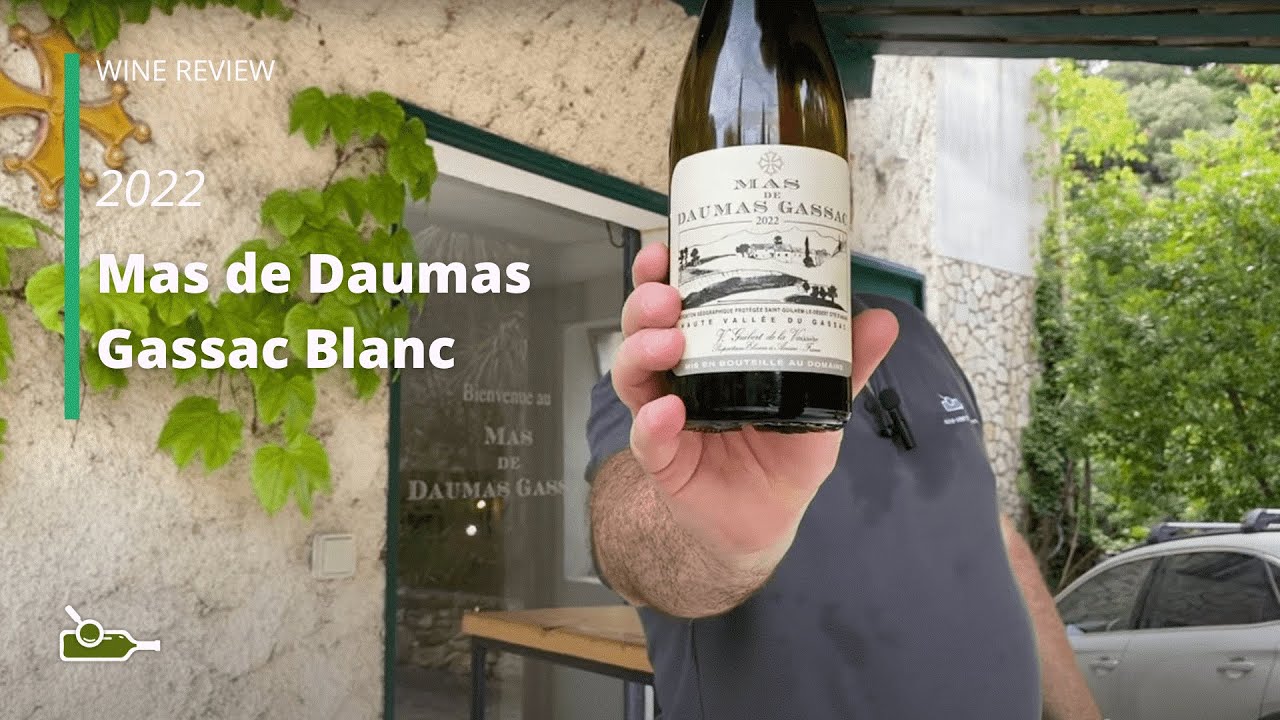
For today’s tasting Wine-Searcher’s Wine Director, David Allen MW is in southern France – in the Herault – visiting a producer called Mas de Daumas Gassac, tasting their current releases. Here he tries the 2022 vintage of Mas de Daumas Gassac Blanc.
N.B. When detailing the blend David gets a little over-excited and mentions Chardonnay twice, the second time he should have said there was 9% of Chenin Blanc in the blend. Sorry for any confusion.
Mas de Daumas Gassac is a wine producer in the Languedoc region of France, around 40 kilometers (25 miles) west of Montpellier, near the town of Gignac. It is well-known for the high quality of its Cabernet Sauvignon-predominant flagship wine, earning the estate the nickname “the Lafite of the Languedoc”. The winery is built in the foundations of a Gallo-Roman mill and on the site of its former pond. Sited away from established, well-known appellations, the wine has been produced as a Vin de Pays, with recent vintages being classified as IGP St. Guilhem-le-Désert – Cité d’Aniane.
The first vines at Mas de Daumas Gassac were planted in 1972. Véronique and Aimé Guibert had found the property two years earlier while searching for a new rural home; in 1971 their friend, Professor Henri Enjalbert, a geologist with specialism in vineyards told them that they could make Grand Cru quality wines here. The renowned oenologist Emile Peynaud consulted on the first vintage in 1978. Aimé Guibert, who died in 2016 aged 91, was a champion of the Languedoc who became well known for his battles with the Robert Mondavi company. The estate remains family-owned and is run by four of Aimé and Véronique’s five children.
Wines are vinified in stainless steel vats with natural air conditioning provided by two springs running under the cellars. This slows down ferments, allowing complex flavor development.
The Mas de Daumas Gassac red is an aromatic, full-bodied wine made from around 70 to 80 percent Cabernet Sauvignon with a mix of 17 other indigenous and international varieties such as Merlot, Malbec, Pinot Noir, and Tannat. The wine is fermented in stainless steel tanks, aged for 12-15 months in oak barrels, and bottled unfiltered. It can be laid down for several decades, but is also approachable when young.
In exceptional vintages the estate has produced a limited-production wine made with 100 percent Cabernet Sauvignon called Cuvée Émile Peynaud. The estate also makes a white wine from Petit Manseng, Viognier, Chardonnay and Chenin Blanc, a Rosé ‘Frizant’ sparkling wine and a sweet wine called Vin de Laurence.
Discover more about this wine, see its pricing and find out where to by it on the Wine-Searcher website by following this link: https://www.wine-searcher.com/find/mas+de+daumas+gassac+blanc+igp+st+guilhem+le+dessert+pays+france/2022
#masdedaumasgassac #daumasgassac #languedoc #stguilhemledesert #masterofwine #winesearcher #winelovers #tastingwhitewine #winetasting #winesoffrance #frenchwine
hello there today I’m lucky enough to be in southern France in the Aral in the gasak valley at M mag gasak the wine I have in my glass is M mag gasak Blanc 2022 so this is a wine that is designated as an igp from sanm Le desert when this wine was first produced it was made as a Vander erald but now it has its own special designation there so the property here is a wonderful example of organic viticulture and biodiversity it was purchased late 60s and developed in the early’ 70s by the late Amy gber and his wife veronique and originally he was a leather maker and and she was a a university lecturer and they were living around Melo and they were looking for somewhere to purchase to live and they found this beautiful lot up in the hills that was inhabited by by an older man and his two sisters and the had fallen into some disrepair and they came and they planted Vines and they they resurrected the place and very much here you have a large area of the gig the sort of the the forest and scrub of Southern France individual Vineyards cut into that now the the white wine here is a blend of a diverse number of varieties grown on caleria soil broken limestone in the higher cooler portions of of The Vineyards here so The Vineyards on the estate go up to about 300 M of above sea level and it’s those higher Vineyards that are used for the whites so this particular wine is a blend it’s predominantly VI 48% with 13% of Shard 13% of menang now they don’t say that petty menang grow menang or a combination of them both there’s also 9% of sharp and then the remaining 177% is simply described as other varieties now those other varieties include ities such as Claret Musa Masa rousa now this particular wine was picked over a period of 5 days the fruit was initially picked into shallow baskets and taken straight to the winery it’s not more than 10 minutes to get here in these shallow baskets sorted here dest stemmed crushed and went into stainless steel tank and there in the presence of oxygen it was allowed to mate to do what they call it masion pelicul and that allows some oxidation to go on and oxidizes the precursors of oxidation which therefore ensures the wine is more oxygen stable after fermentation so cool for this Masari on pelicul for a few days then fermentation goes on at about 20° C so relatively cool fermentation not too quick retaining all the lovely Aromas of those beautiful varieties being used my memory is that older vintages of this had been aged in Oak evidently they don’t feel the need to do that anymore because the vines are now older some of these Vines are 40 years old so the concentration of the fruit that that is here means they don’t need Oak Aging for the extra waste in fact they felt that the oak really rather closed the wine up now the other thing to mention is that the vulture here is entirely organic although I I don’t see an Organic certification on the label but the other thing is that there is so much concentration on biodiversity and sustainability here very much it was decided when when the the family set out in fact veronique decided that that she didn’t want any trees cut down while The Vineyards were being planted so there’s always been an intention to look after the wildlife in this location and in fact on the audio of this V video I hope you can hear the wonderful diversity of bird song that’s going on you’ve possibly seen the insects there are butterflies flying around everywhere this is a really beautiful part of the world and it feels really tranquil and really natural this is a place where farming has never involved chemicals the old man who farmed the property before the G Bears just used to plow with a horse he didn’t own a tractor there were no chemicals used here somehow the the B biodiversity that’s here actually makes this place even more special so anyway let’s see what we make of the wine shall we first thing to say is looking at the color it’s it’s a medium to deep yellow it’s it’s lovely and vibrant there’s almost a slight greenish hint to it and yet it’s got a lovely depth now the wine only has 13 1 12% alcohol but it’s actually throwing some some quite noticeable tears there on the side of the glass and I think some of that is the skin contact the masion pelicul making it quite a viscous wine so let’s see what make of the Aromas the Aromas are beautifully intense I I really could stand here and smell them Fe for a long time there’s a richness it’s a rich ripe stone fruit now it comes to the four there’s an intensity of APR almost to a dried apricot richness there’s ripe nectarine there’s ripe Peach those notes are all there almost as if there’s a vanilla note and yet we know that the wine hasn’t seen any Oak it’s just the richness and the juiciness of the fruit doing that lovely but I must move on and taste it on the palette the Wine’s completely dry there’s a lovely freshness at the front of the M all the richness of the Aromas is there with a sort of a ripe apricot and juicy nectarine note from the outset and yet it actually develops into a into a much more fresh lean and elegant note from the mid pallet onwards it’s almost like you’ve got the of the two different iterations of condrea in one glass you’ve got that real richness and ripeness to begin with then you’ve got the more delicate elegant and slightly minerally note that you have with the more Elegant Style of condrea and they’re both developing in the same glass which is fantastic towards the Finish you you’ve got almost a sort of a honeyed richness and yet no sweetness but there is just such a lovely intensity as I say again it’s almost as if there’s a vanilla in there and then actually that’s the other thing the wine is a midweight it’s got balanced alcohol and yet the texture there’s a lovely almost sort of velvetiness to the texture the Wine’s lasting really well there’s this fresh mineral acidity at the very end that’s not inhibited by particularly high alcohol this is a really lovely wine I suspect it will age for four or 5 years quite happily but at the same time it certainly wouldn’t in my sellers because it’s so attractive now it’s got that intensity it’s got so much complexity and a beautiful harm so yes A really lovely wine so thank you so much for joining us I do hope you’ve enjoyed the tasting if you have do please press the like button if you have friends you think might like to watch it do please share it with them we’d be most that you would if you’d like to watch more of these tastings do please sign up and subscribe to our YouTube channel if you have any comments please leave those in the comments box below that would be fantastic we’d love to hear what you think about the wines the tasting or anything else relating to that I’ll leave a link to the page that we have for this wine on our wine Searcher website so you can find more information about pricing availability and any other background information you’d like to find there so thank you so much for joining us and I do hope you’ll find some time and come and join us for another tasting in the near future bye for now