
VIDEO CHAPTER INDEX:
=====================
00:00 – FAMOUS WINE SIBLINGS: Malbec and Merlot
00:39 – FRANSCHHOEK’S FAMOUS SOUTHERN RIM VINEYARDS
01:03 – WHAT IS IN THE COTERIE CAB FRANC / MALBEC BLEND?
02:33 – WHAT DOES THE WINE TASTE LIKE?
03:49 – HOW IS THE WINE MADE?
=====================
The Wildeberg outfit are a delightfully creative bunch who have made their home on the very southern end of the Franschhoek Valley – in what is collectively called the Franschoek Southern rim. Their small estate sits up against the Hottentots Holland Mountains, and from that perch they produce not only a range of estate wines, but also some rather lovely bottles made with fruit sourced from prized vineyards around the Cape Winelands.
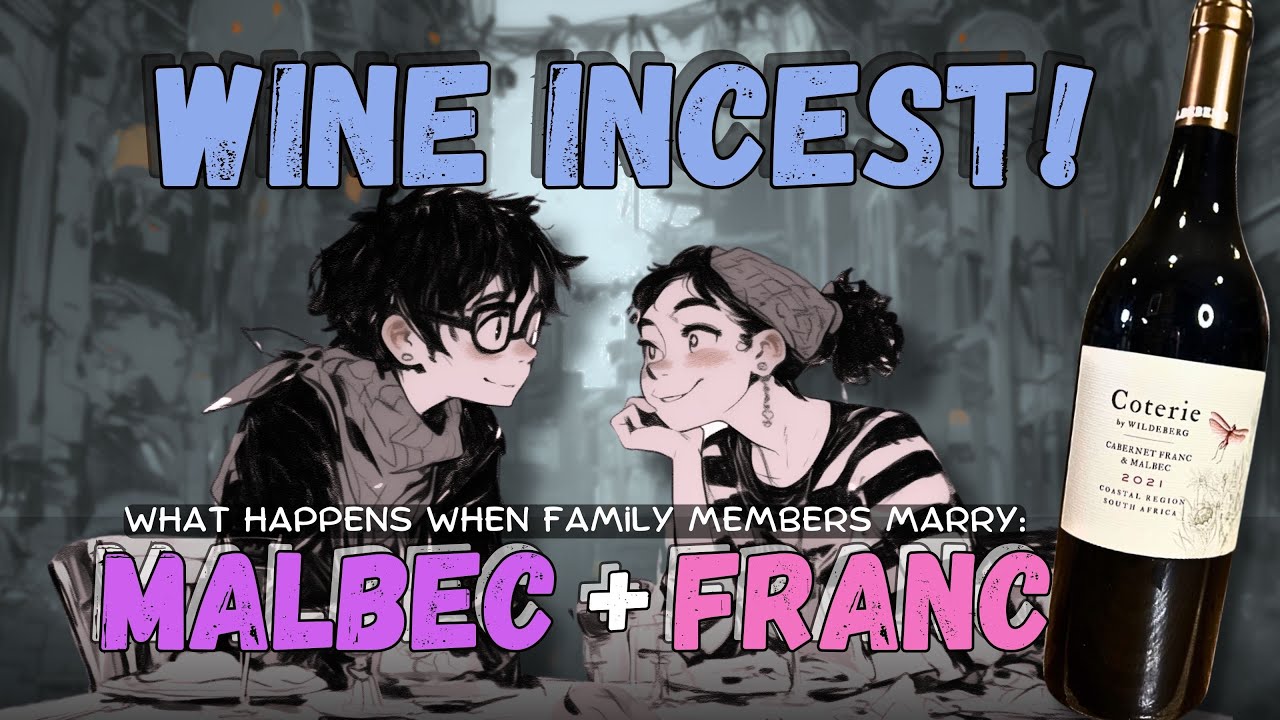
Winemaker JD Russouw and his team have managed to produce something of a conundrum in this bottle, in that the fruit mix is that of Cabernet Franc and Malbec; all sourced from the rather warm regions of Paarl and Franschhoek, and bottled at a rather high 14.5% alcohol. And yet when one gets into the bottle, the profile of the wine is rather suprising…
Of course, if you have yet to sign up for your Monthly HanDrinksSolo Wine Subscription then you’ll have to hunt this wine down in your own time. But until then, I’ve left you my tasting notes and some technical specs:
TASTING NOTES
👃🏼 A fairly serious nose that blends herbs and fruit. blackcurrant fruit, and raspberry, with herbal traces of fennel, heather, and violets.
👄 The palate carries surprisingly zingy raspberry acidity and red cherry fruit which races out the gate, tailed by more ambling black fruit elements. That burst of berry brightness can seem a little tart at first, but the sweeter black fruit slowly spreads across the palate, balancing it all quite nicely. The tail end features a lovely little floral burst, with some more of those herbal fennel type flourishes. Tannins are fairly fine, most likely due to the very gentle treatment of the fruit, and the fact that everything is done as whole bunch.
TECHNICAL SPECS
🔬All fruit is hand-harvested in February from selected sites in Franschhoek and Paarl. Both cultivars are fermented as whole bunch. There is no crushing prior to fermentation. Once spontaneous fermentation commences, the cellar team perform one pump per day. The components are racked to French and Austrian oak demi-muid, new and old,
for 20 months before the blend is decided. This blend is then allowed to marry for 6 weeks prior to coarse filtration and bottling on the farm.
Wine of Origin Coastal Region
| Alc 14.5% | RS 1.8g | TA 5.6g | pH 3.47 |
=======================
HanDrinksSolo is South Africa’s most adventurous wine club. Each month subscribers receive a mixed case of 2, 4, or 6 bottles, packed with limited wines, undiscovered gems, natural wines, and weird cultivars (without neglecting the classics). Each bottle also comes with a QR code linked to an educational video on that wine. The videos are packed full of wine trivia, wine science, and fun facts. You know, for those awkward silences at dinner parties. Everyone loves a know-it-all!
Subscribe now and join the community!
http://handrinkssolo.com/wine-club/
====================
foreign is also one parent to the cultivar of Merlin Merlot’s father of course is Cabernet Frank a wild and ran the old Nave who parented a number of cultivars including common area and Cabernet Sauvignon and the relevance of all this is that today’s Hendrick solo wine info video is really some sort of multi-generational extended family blend of Malbec and Cabernet Franc put together by wymaker Jaden Russo and his team wildeberg have made their home on the very southern end of the Frantic Valley in a really premium little stretch of elevated Vineyards that I call Frances Southern Rim this little sub-region which includes the blue Hook is home to producers like booknote Cliff horteswa Stony Brook as well as the now world famous lacqueline Old Vine Vineyards which provide fruitful producers like damocin and All Height wines the wildeberg code 3 Cabernet Frank Malbec blend is a mix of 60 Cabernet Franc and 40 Malbec for the kotary range the wildeberg team sourced fruit from a number of pockets around the cape Winans and for this wine all the fruit comes from either franchuk or Paul now when when hears of regions like Franco and Paul the first Association that pops up is often those of Big Rich ripe wines and this is mostly because both these regions can get quite warm in the summer bringing maximum ripeness to the fruit what’s more warm climate Malbec is known for its Inky thick concentrated black fruit and even in the cooler French climate of cowork Malbec was known and renowned for once delivering the black wines of cowork due to its Super Rich color and one of the Cabernet Franc in the blend well we know that Cabernet Franc is medium bodied and often more known for its red fruits and herbs and florals especially in the cooler climates like the lower in France but warmer climate Cabernet can get really quite Jammy delivering higher alcohols and ripe blue fruit especially in regions like franchuk or Paul and finally to add one more little bit of relevant information when we check the label on the bottle we see an alcohol level of 14.5 percent and so any half decent wine sleuth would assume that she was in for a huge Blockbuster of a wine but when we get into the glass and taste the swine you’ll see that winemaker JD Russo has managed to deliver something remarkably different to what one’s expectations might have predicted foreign we are surprisingly met by a rather serious nose that blends a little bit of fruit with quite a lot of herbs on the fruit side of things we do get blackcurrant and some richer sweeter Black Plum but then we also get far more vibrant notes of raspberry and red cherry on the herb side we get a delightful fennel note and also a kind of sweet slightly grassy Heather element finished off quite nicely with the more typical Cabernet franc-esque Violet florals and finally as a very subtle framing to all the primary stuff that’s going on there is a hint of Oak spice to it in the form of notes of cocoa dust and some vanilla spice and when we get to giving this guy a sip well it’s perhaps here there are preconceptions of the wine are defied most comprehensively because the acidity on this is really quite pronounced or perhaps another way of putting it is that those red fruit Notes The Brighter juicier cherry and raspberry race out the gate to you but then those riper black fruit notes of black currants and Plum do slowly catch up and restore a sense of balance as we move into the Finish we find the black fruit retiring a little more quickly and what lingers are those notes of cherry and raspberry once again these are of course kept accompanied by those herbal elements on the end a slightly bitter fennel note and more of that Heather that we described on the Aromas so how does JD Russo take molbeck and Cabernet Franc from warm climates with high alcohol and manage to produce a wine that is anything less than a big ripe color and fruit bomb or perhaps the first key lies in the fact that all the fruit is fermented as a whole bunch there’s absolutely no crushing prior to fermentation this means that the extraction levels are both color and tannin will be slightly lower and some of you might say but hang on I thought if we added stems we adding tannins in there and this is true but generally with whole bunch of fermentation the overall more gentle winemaking style overrides any additional tendons that might be added by the stems what the stems will add is a sense of herbal green rocket Leaf spice and we do pick up some of that in this one another element that may have had an influence is that JD Russo relies purely on Native yeast or spontaneous fermentation and so there are none of those super yeasts that might encourage or increase the extraction of anthocyanins into the final one finally the oak regimen is also fairly gentle because the team uses slightly larger 300 liter barrels which obviously reduces the ratio of Oak surface to wine and then once the 20 month maturation process is completed the wine is coarse filtered before bottling now we can talk about the difference between fine filtered and coarse filtered on another day because that’s all we have time for today so if you have any questions leave them on the site and I will get back to you as soon as possible and if you enjoyed the video then support us on patreon And subscribe to the handling solar YouTube channel because we publish at least six videos every single month where we talk about wine science wine history unusual cultivars and some of the rising winemaking stars coming out of the dynamic South African wine [Music] foreign [Music]